


10 more demos from Steam Next Fest you should check out
Our mid-week roundup of Steam Next Fest demos



During every Next Fest, hundreds of demos get released. A lot of them are, quite frankly, slop. But we've been digging through the flood of games looking for the gems this week — we already published our first roundup on Monday. Halfway through the week and halfway through this Next Fest, it's time to roundup some more of our favorites.
Birds Watching
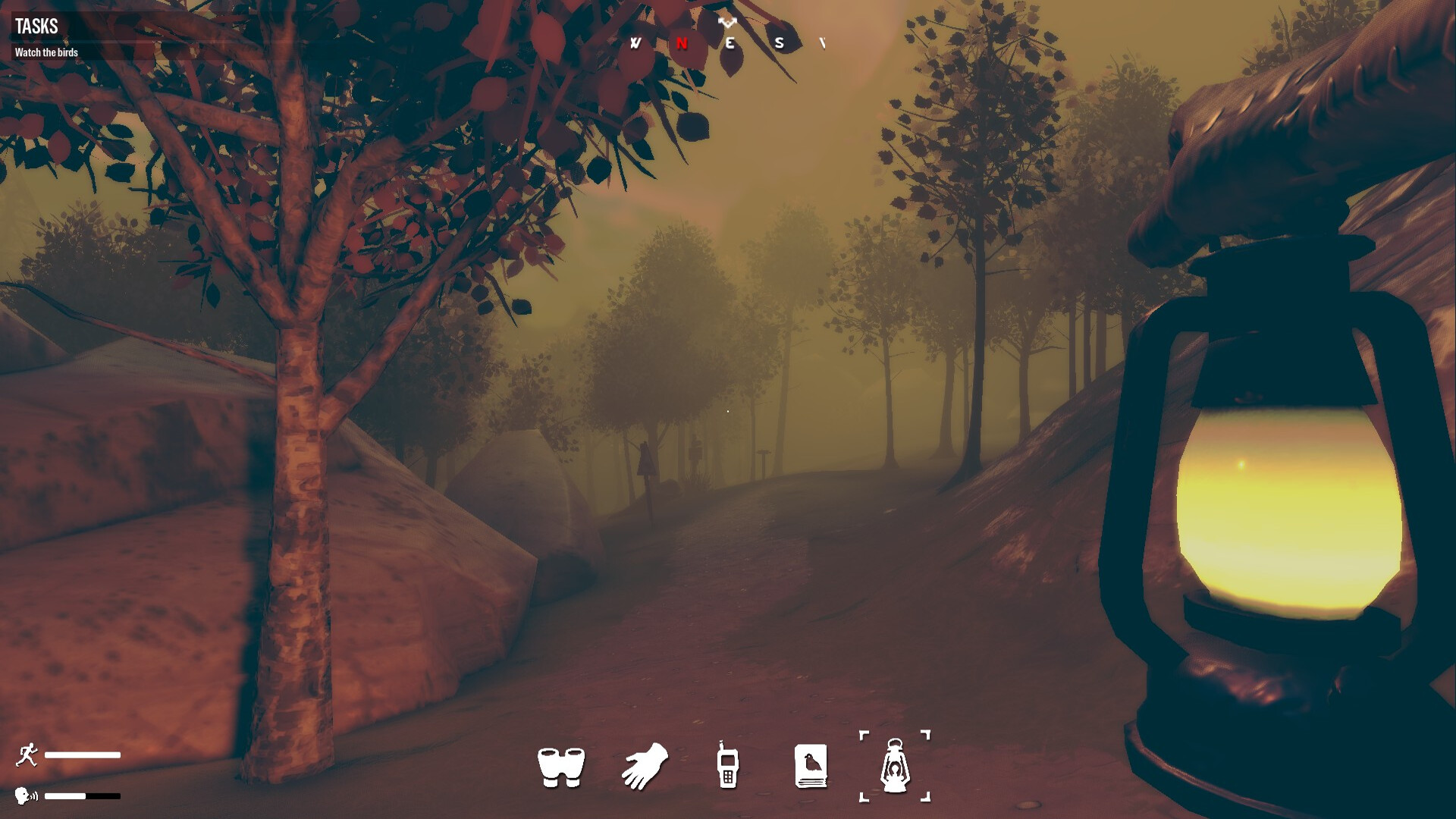
You might think that Birds Watching is a bird-watching game. And you’re not wrong. But you’ve also kind of got it backward?
Birds Watching takes place in a world where the planet has been devastated by a global fire. Everything is ash except for one place, the mountaintop where your character has taken refuge as the last surviving human. And you’re joined there by the many birds who also fled the flames, including a nameable bird companion, a burrowing owl who sits on your arm.
And at first, Birds Watching is just that — a soft-lighted, vaguely sepia-toned, bird-watching sim where you walk around your mountaintop sanctuary and look at birds through your binoculars. But then a mysterious radio message shatters the illusion of your refuge and everything takes a sharp turn into surreal horror.
It’s an utterly unexpected swerve that absolutely hooked me. The demo is pretty quick — about 15 minutes — and it ends at exactly the right time to make you want more. Luckily, we only have to wait a couple weeks for the full release on March 6.
-JP
Cleaning Up!
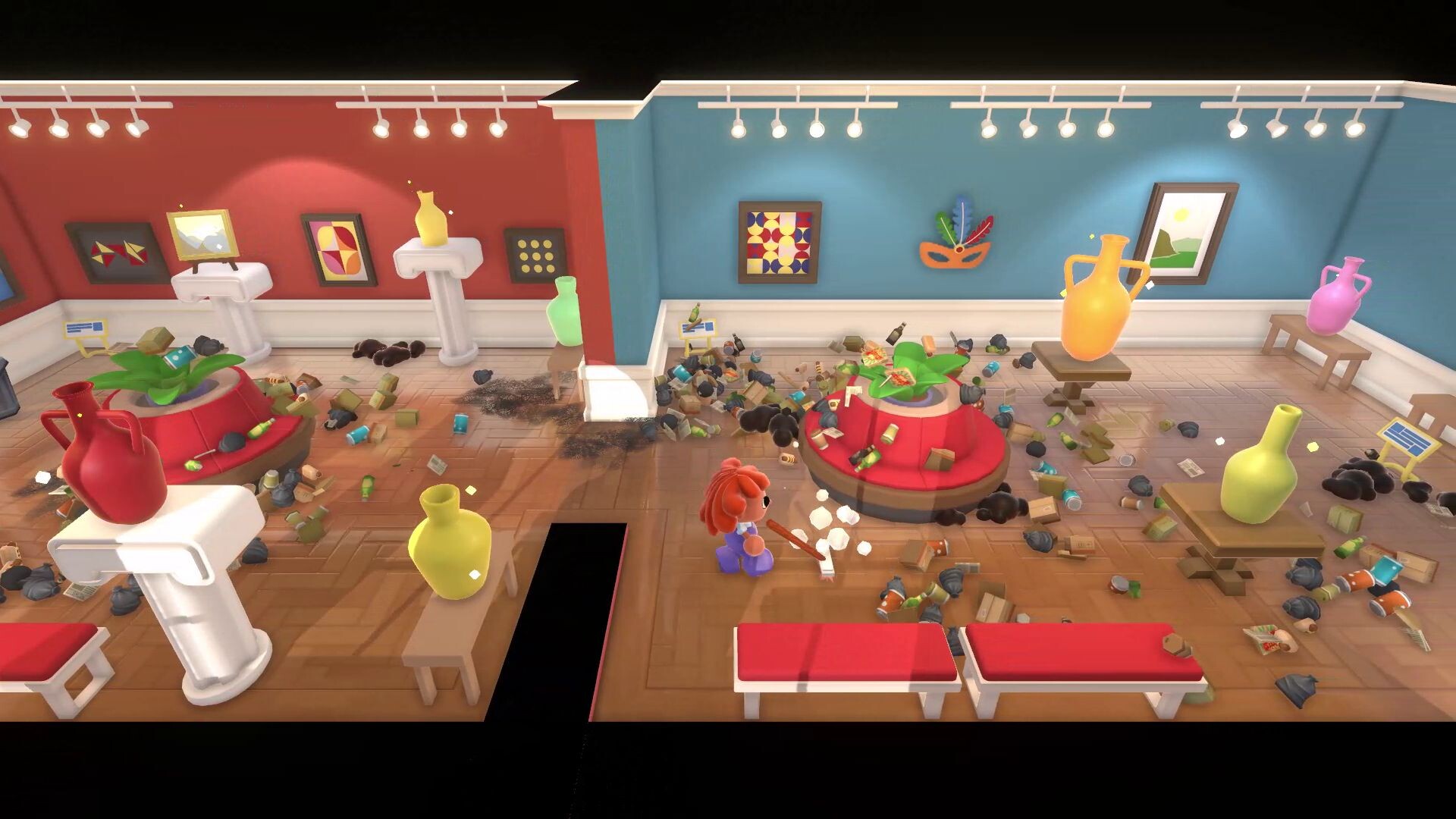
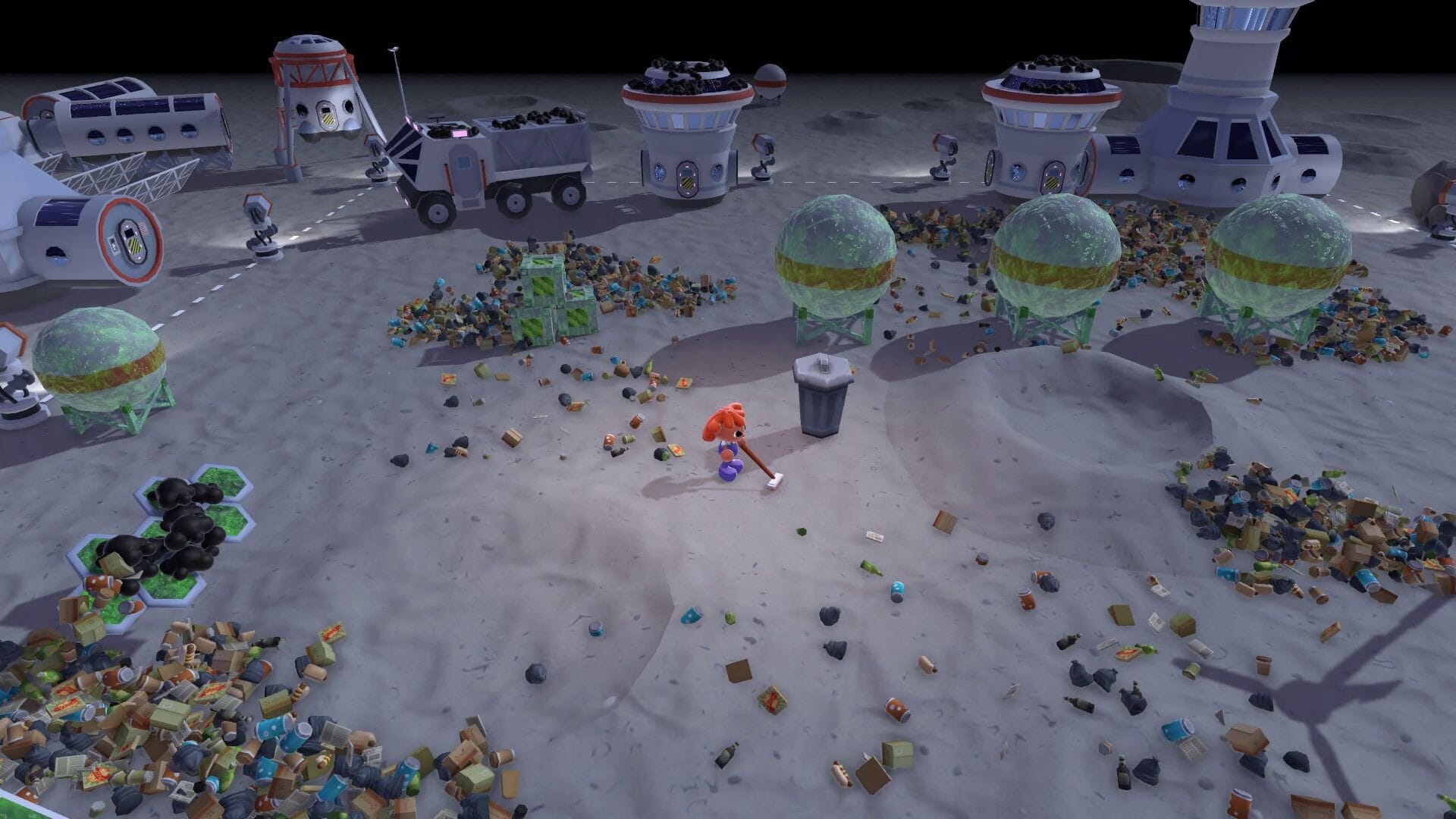
Whenever a game’s core mechanic is about cleaning up or doing some mundane chore, like PowerWash Simulator or Crime Scene Cleaner, one of the things that says, at least to me, that the game truly has the sauce is I find myself playing it instead of doing the actual, real world cleaning I need to do in my real apartment that I live in. Well, Cleaning Up! made me ignore the real world papers piled up on my desk so I could vacuum a video game streamer’s nasty little gaming hole. And you know what? I enjoyed it thoroughly.
The game has some charming little jokes nestled in between cleaning sessions; while downloading the ‘Clyner” app that connects me with messy clients, I see an ad for “JakeVPN” wherein Jake is just a guy who’s offering to handle all of your internet stuff. Seems legitimate! An AI-powered Clippy-like sponge guides me through the tutorial, gushing that an entire town in Wales is without power for a week so that he can run me through the basics of my new job. “Isn’t that neat?” he asks with a gormless grin.
Cleaning Up! is one of those beautifully head empty, no thoughts games that I need to indulge in sometimes. It can’t always be high stakes narratives and heated combat. Sometimes, I just wanna vacuum a big pile of trash and listen to the appealing bobble-bobble-bobble sound the trash makes as I suck it up.
-CM
Cloudscrapers
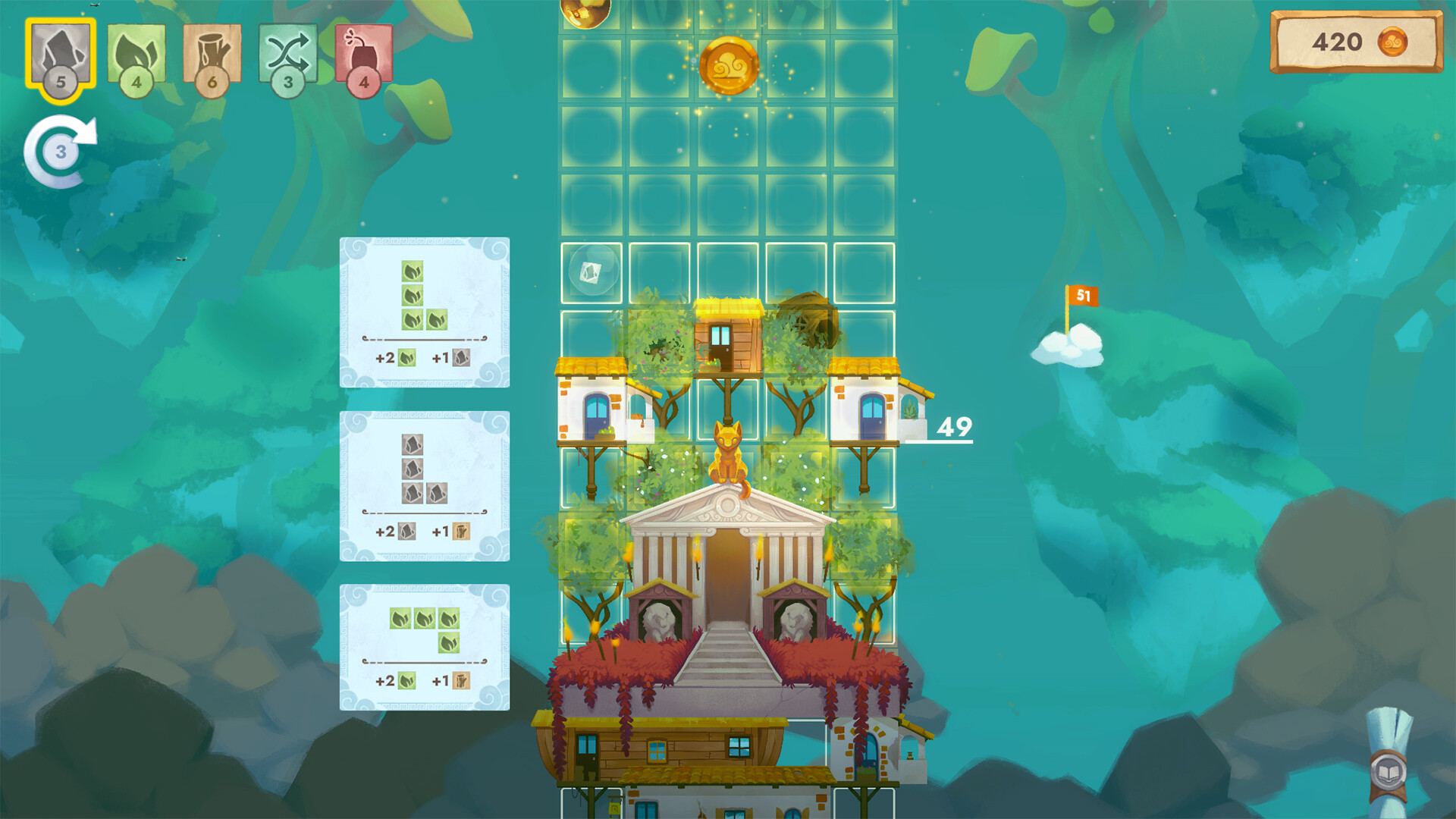
Cloudscrapers is kind of like puzzly Jenga? It’s a roguelite, of course, and the goal is to build a tower as high as possible. It’s shockingly simple, and the art is gorgeous. You’re able to swap between stone, wood, and nature blocks, all of which stack on top of each other in unique ways, ensuring you make an interesting looking tower each run.
You start with a very limited number of blocks, and to get more you need to complete quests, which involves placing specific blocks in a specific pattern on your tower. This gets a little more complicated when you realize that you need to put at least three blocks on the five block capacity rows before you can build your tower any higher.
As you climb there are coins and things to get, as well as blueprints that allow you to make more complex buildings that have cool effects, but the gameplay remains relatively simple, which is a breath of fresh air. Even the upgrades available in the demo are quite simple, like the addition of more starting blocks.
If you just want to zone out and puzzle a bit while looking at some gorgeous art, you should definitely check out Cloudscrapers.
-RG
Cropdeck
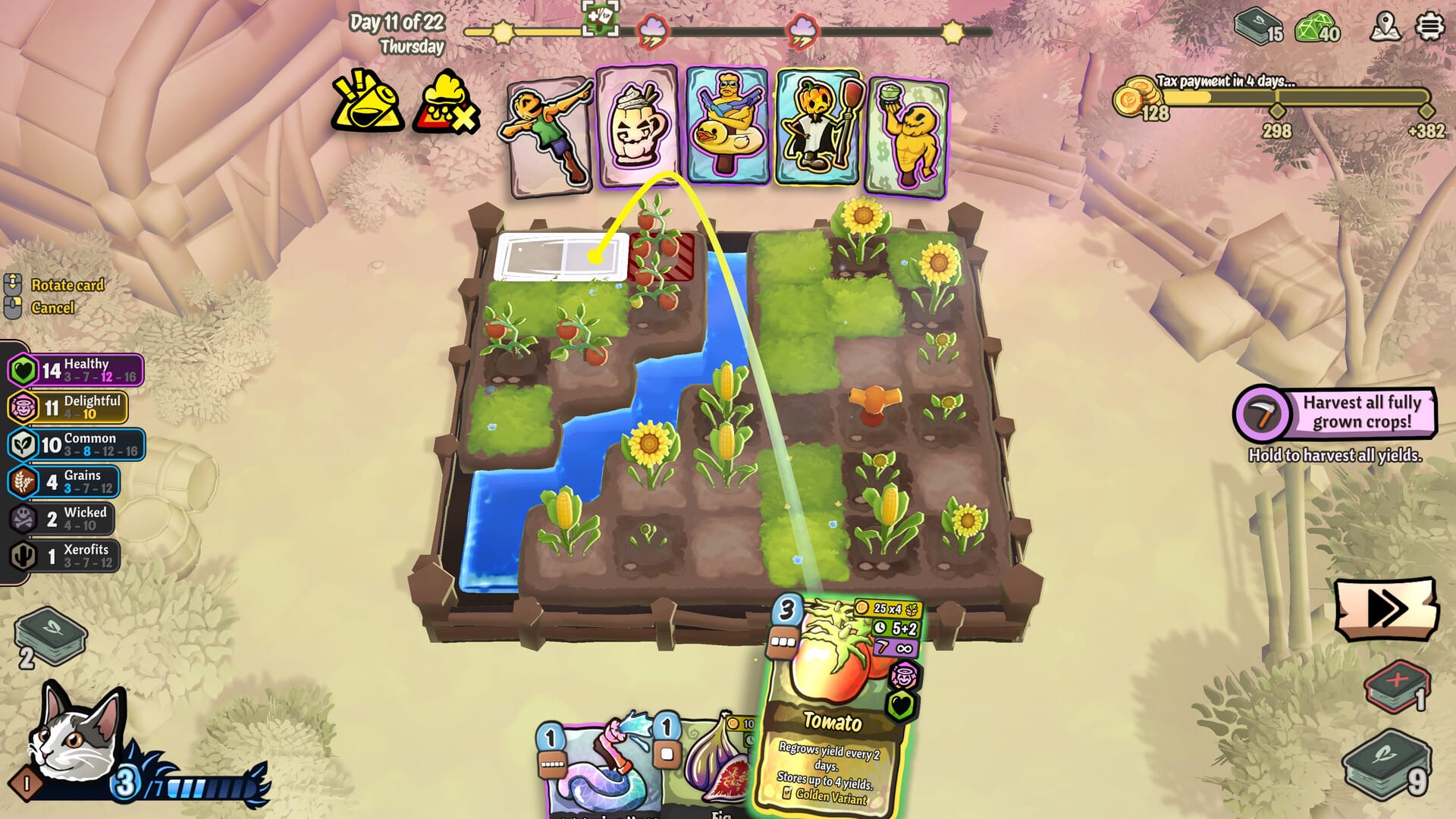
Cropdeck is yet another game that falls into the “but it’s Balatro” category. This one is a farming game with no enemies and a real pleasant vibe. The idea here is that you’re a farmer, and your landlord demands a certain amount of taxes from you each level (which you pick out of a Slay the Spire-ass map, of course).
To hit these tax goals, you’ll need to play cards (I KNOW, stay with me) on your little field map. The cards mostly fall into three categories: plowing, watering, and planting. Planting is pretty much what you’d expect, with various vegetables and things that you can plant into the dirt. But in order to plant something, you first have to plow the grass off of it – or uproot weeds if it’s been taken over. And then you have to keep those plants watered over its growth period before you can properly harvest them and make some cash for your landlord.
All of this is then complicated further by the various board events that can happen each level – like crops freezing temporarily, or being struck by lightning – and scarecrows, which act like Jokers in Balatro. There is some meta control as well, with different pets to unlock that determine some starting passives and difficulty.
I love me a farming sim, and Cropdeck is a surprisingly nice little roguelite that both scratches that itch while also offering something a little more high stakes.
-RG
Forbidden Solitaire
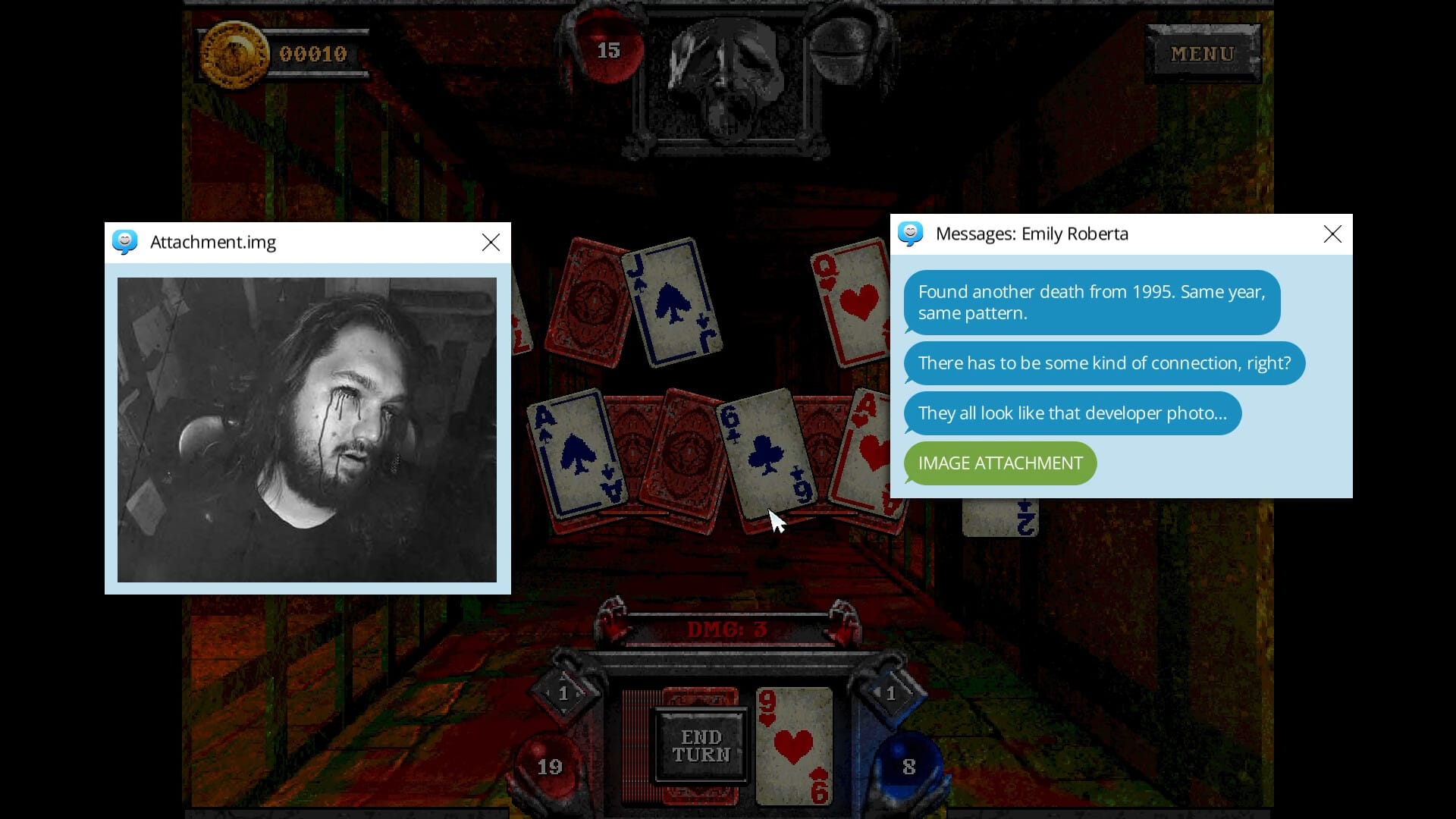
Forbidden Solitaire is a trip back to the 1990s, an era where graphics weren’t as high-res, gaming wasn’t so socially accepted, and a wizard gouging his eyes out is enough to spur controversy and outrage from concerned moms. I play as Will, a gamer from the more modern era of 2019 who has just acquired a rare and controversial relic called Forbidden Solitaire (much like Inscryption, it’s a game inside a game, and they share the same title.) My sister Emily is pumped; she demands to borrow the copy after I’m done, since it’s such a rare game — it’s not even on any of the torrent sites.
As I delve into the mysterious dungeons in Forbidden Solitaire, Emily pings me with more info about the game itself, including a link to a news broadcast that spooked our mom so bad, she refused to let us play the game. A protesting mother screams that there’s no need for this game to be so violent, since “It’s fucking Solitaire!” Indeed, while I find cannibalistic ghouls and mysterious locks inside these foreboding dungeons, most of the gameplay is me clicking cards and racking up combos. I also have some sick wizard powers, like the ability to fill my mana orb and zap cards off the board.
But there just might be something to all of that hubbub in the media, because there’s something wrong with this game. Why is it so hard to find, despite being so controversial and popular? Could it have something to do with the mysterious suicide of one of the developers? It seems like there’s also something wrong with Will, who clearly keeps some distance from his sister. These are great prompts for a disturbing mystery, and the demo certainly has me intrigued for the full game’s answers.
-CM
Hear The Bell Toll
[Thanks to irunas on our Discord server for the suggestion!]
Hear The Bell Toll looked initially like a 9 Kings-like game, which had me quite excited. It’s not really that, and falls into more of a deck building Balatro-like (at this point, that should be the name of this website) that manifests as a city builder. But past the multiple run-ending bugs I encountered (it’s a demo, folks), I think there’s quite a bit of potential here.
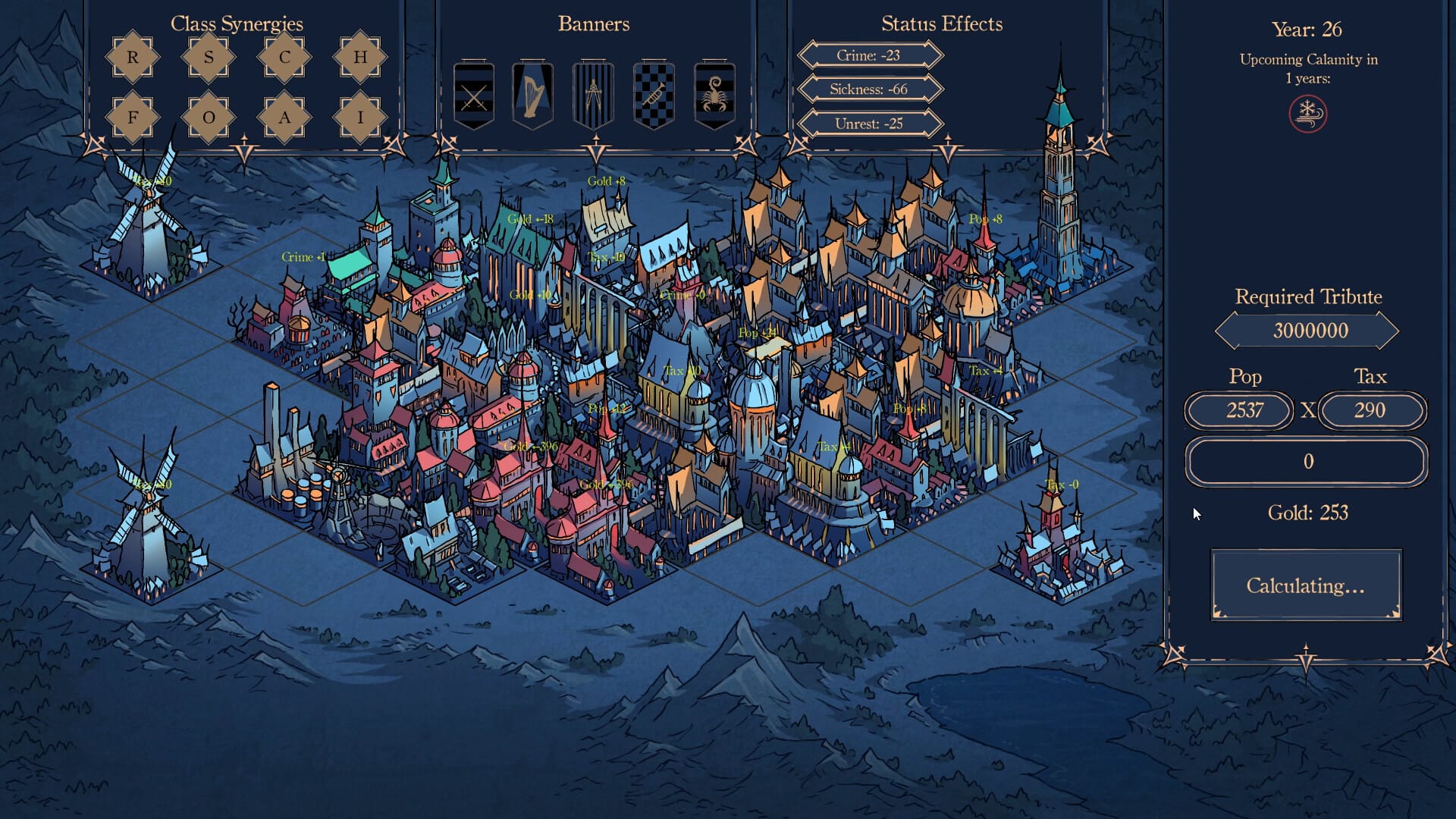
The idea for Hear The Bell Toll is that you’re basically a city builder and you have to place buildings down on this large grid. Each building has unique effects and a tag that fits them into a wider group, like residential or industrial. You purchase cards from the shop each round using gold, which is a separate currency from the taxes you’re trying to collect from your citizens.
The tax equation is very simple: population x tax = income. Your income needs to reach a certain threshold each year (turn) in order for you to move on. There are Joker equivalents in here that are interesting, but the thing that really keeps you thinking is the constant balance between sickness, crime, and unrest. Getting these negatives under a certain threshold will net you some big benefits, but going over will penalize your population or your taxes. You can offset that with some interesting buildings, however, like a witch’s hut that grants more tax the sicker your population is.
It’s a pretty neat game with some interesting art. The runs are snappy as well, so even when I’d get hit with a bug, it was easy to say “ah, one more try” and dive in for another one.
-RG
The Ratline and Lost Wiki: Kozlovka
[Thanks to irunas on our Discord server for the suggestions!]
I’m combining two games in one recommendation here — The Ratline and Lost Wiki: Kozlovka — because they’re both in the same genre. I’m not sure if that genre should be called “detective puzzler” or “Golden Idol-like” or “Roottrees-like,” but, if you know those games, you get the idea. You pore through documents, find words and factoids, and then slot them into blanks to form your deductions.
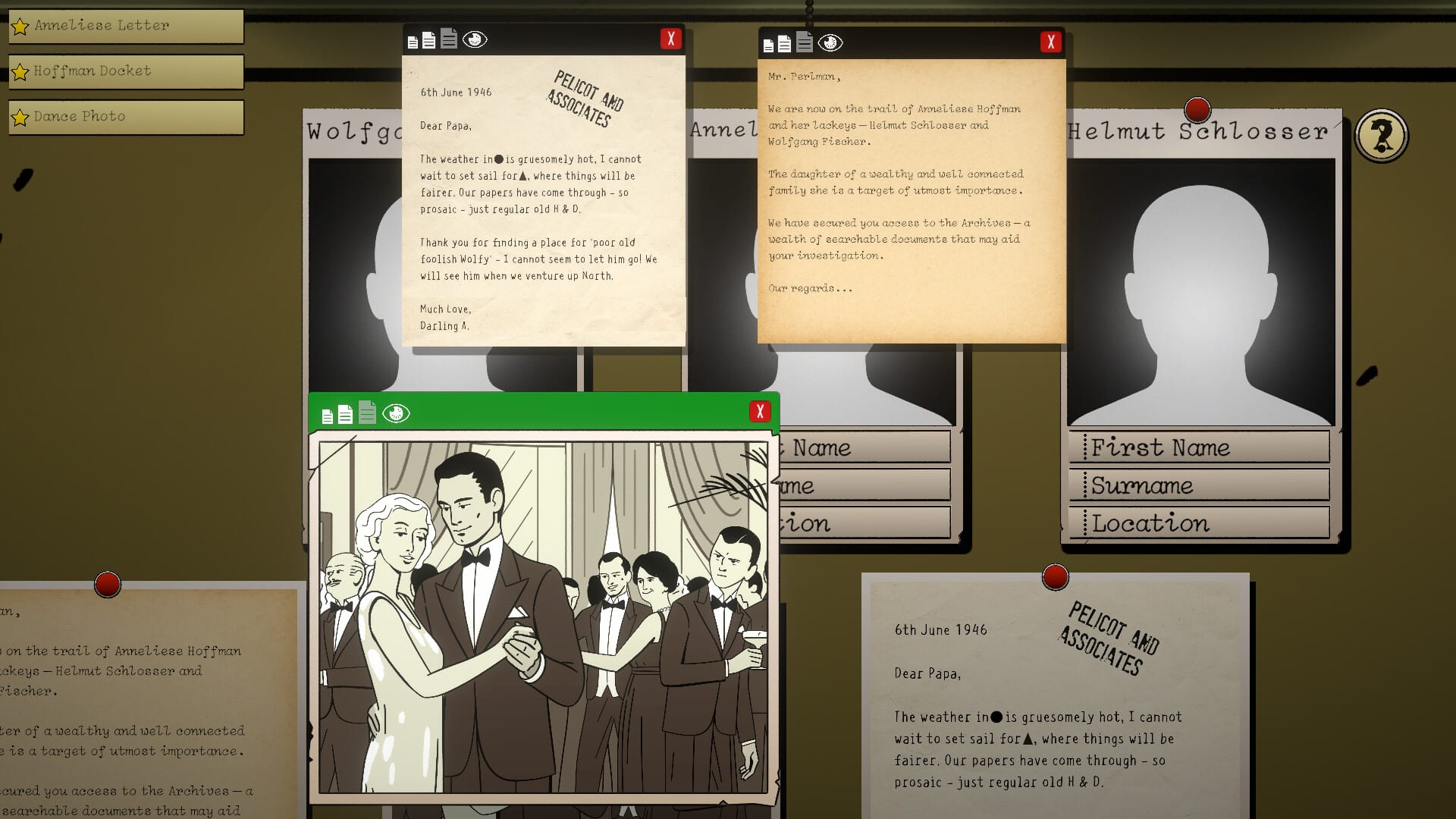
In The Ratline, you’re a detective in the early 1970s tasked with tracking down Nazis who fled Germany after the war. You get a dossier with some hints and photos included, a Rolodex and a landline, and a library database (that is mildly anachronistic, but who cares). And you use all of those to find the current locations and aliases of the Nazis who escaped justice. The mysterious person giving you the cases is unclear about what happens next.

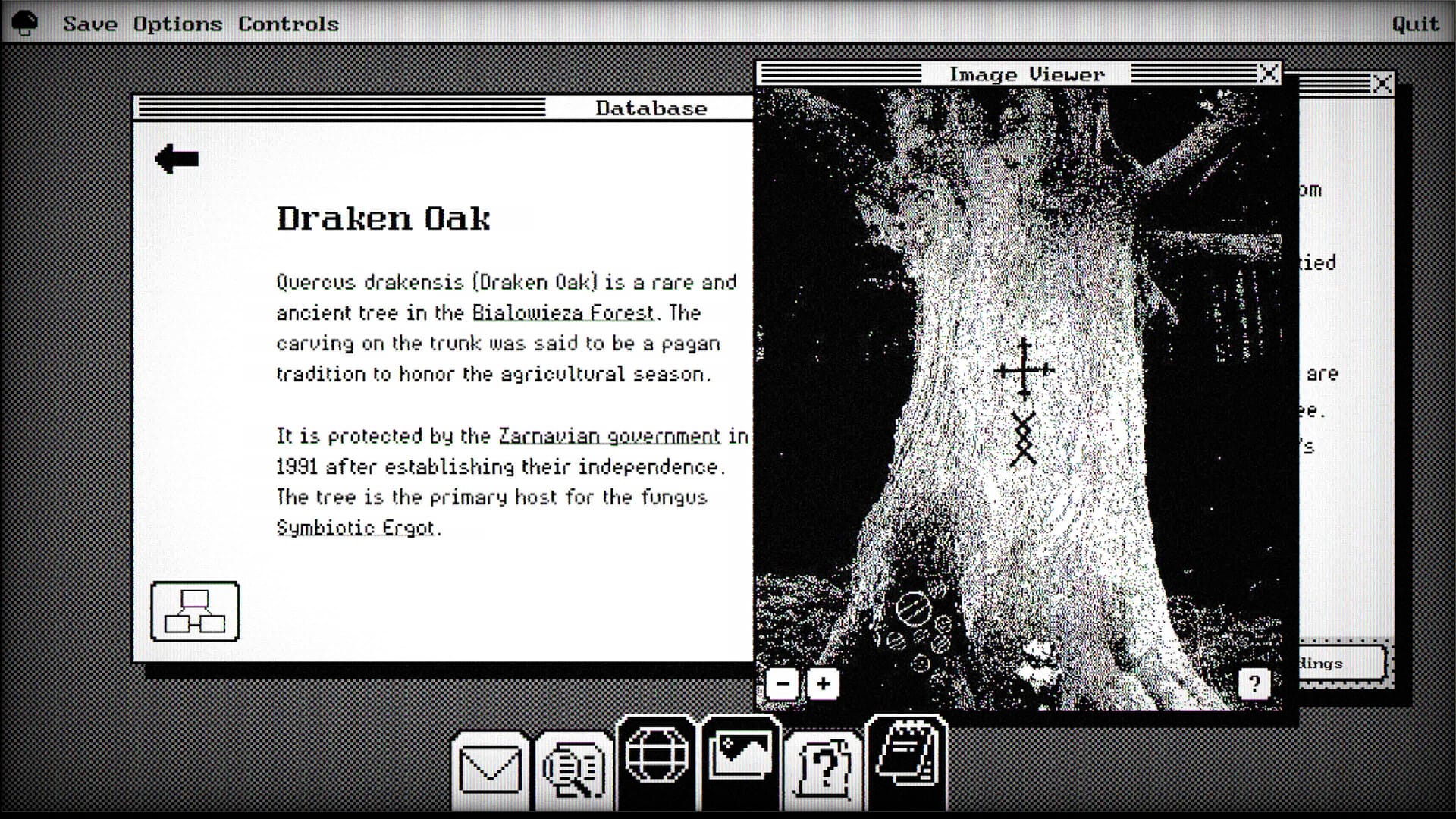
Lost Wiki: Kozlovka is set in the 90s. You’re a journalist and all of your research is done in a, basically, hyperspecific proto-Wikipedia on an old not-Mac. The demo is fairly short, but it teases a mystery surrounding an Eastern European town, a dark forest, pagan symbology, ergot fungus, and disappearances.
Ratline is a little more polished and has more varied research methods, but both are excellent demos that promise solid full releases.
-JP
Slaughter Void
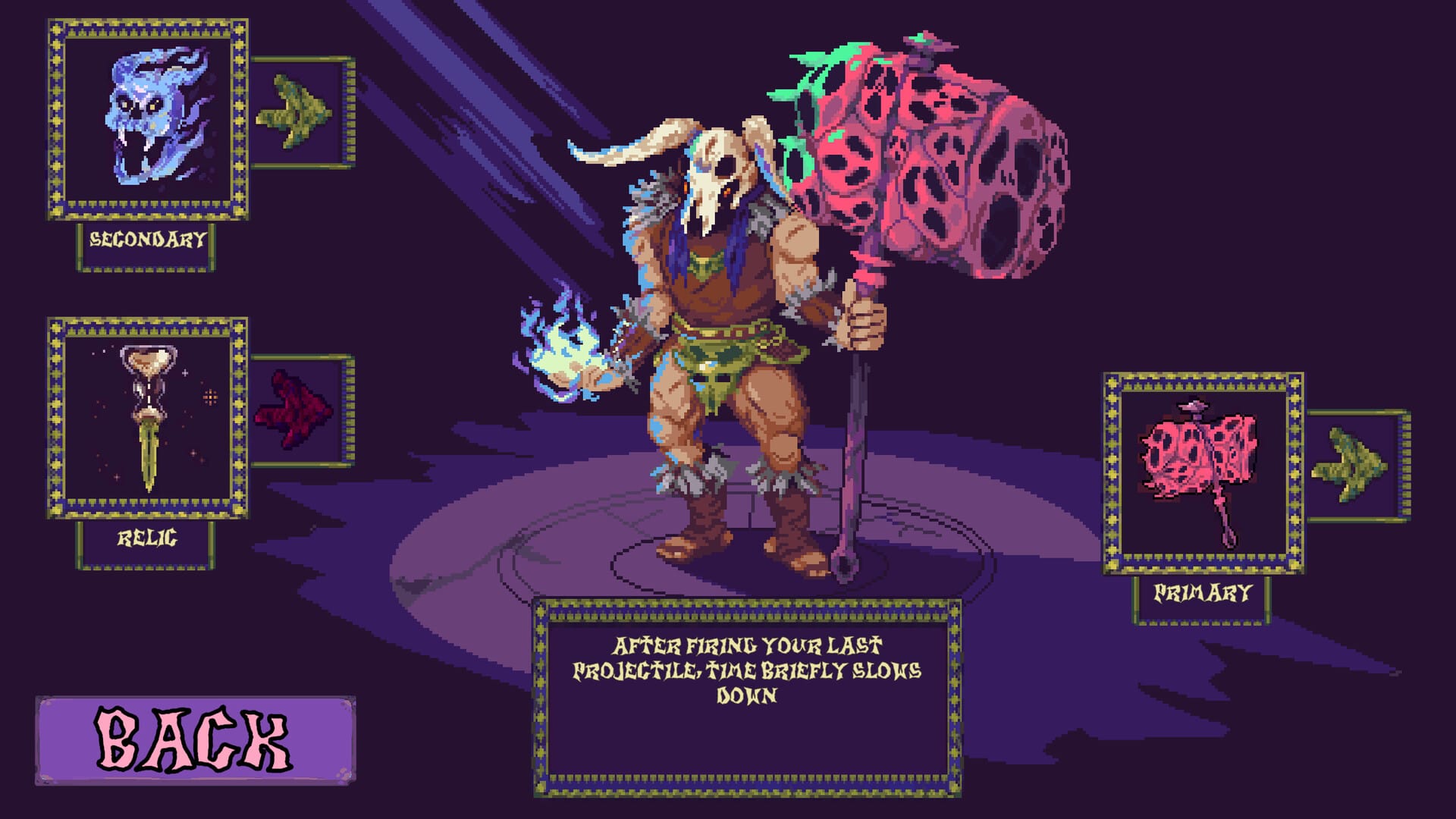
Slaughter Void is, during the first few levels, an assault on the senses. The art style is somewhere between classic pixel art, the doodles in the margin of a high school metal fan’s notebook, and the mural you’d see on the side of a van. But eventually, I fell into a groove. I play as a musclebound warrior who would put Conan the Barbarian to shame, complete with a horned headdress and a giant axe.
This is a Hotline Miami-alike that wears its inspiration on its sleeve. I kick down doors, throw knives to eliminate enemies from afar, and swing my axe. When I build up enough of a combo, I earn a shield that protects me from damage. This means when I’m successful, I snowball hard, ripping through levels in seconds. When I fail, I’m eviscerated, and have to launch the level again.
I hope the final release offers a slightly cleaner toggle with fewer visual effects, simply because it can be overwhelming to play in a way that conflicts with the quick, lethal gameplay. But I respect the ambition behind the visual style; it invokes old comics, pulp novels, and B-movies. Any game that lets me kick a door open, eliminating enemies with the splintering shards as I barrage into a room, is doing something right.
-CM
Will: Follow the Light

Will: Follow the Light is a morose, contemplative, slow-paced combination of an immersive sim and puzzle game. In the demo, you play as a boy named Will. For the first section, you learn the mechanics of sailing and navigating from your father. For the second half, you play as a grown Will as he sails to a rocky island where you must solve a series of puzzles to restore power at the lighthouse there.
Will is lonely and atmospheric. And it’s gorgeous to look at. The sailing mechanics are fidgety without being tedious in a really satisfying way. The puzzles have excellent contextual and environmental clues that makes solving them just the right kind of challenging — not too hard (or guess-y) without ever giving you the answer outright.
The trailer for the full game promises dog sledding as well as sailing, and a much more detailed story and mystery. It’s not an action-packed game, but the demo is a great way to spend a cozy (and a little creepy) hour.
-JP