


AI propaganda and the death of the internet
None of this is inevitable

A long time ago, every search engine’s function and design philosophy revolved around “10 Blue Links” — when you typed something into the search box on google.com, it would return you 10 hyperlinks to websites that contained information about that search. Those 10 links were ranked by relevance, exactness-of-match to what you searched for, and popularity. I genuinely can’t find the origin of that phrase, but Ask.com said it was dying in 2007, Yahoo had a whole keynote about the “End of the 10 Blue Links” era in 2009, and even Google threw a little shade at it in 2016.
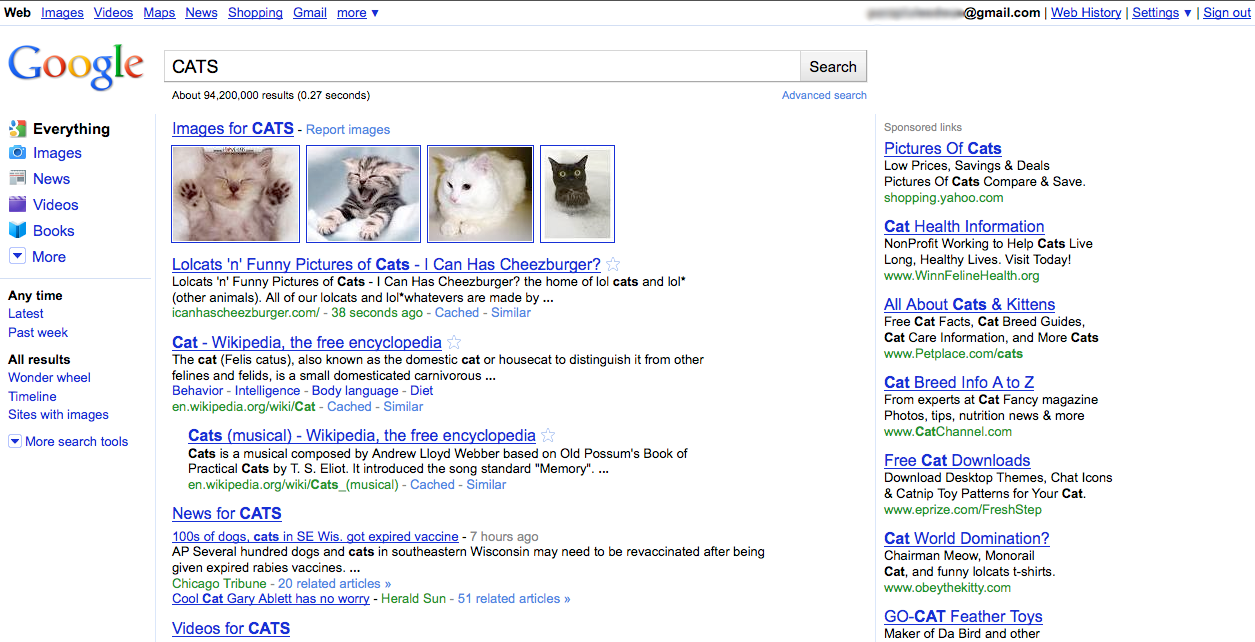
Some of that change was good. Instead of just links, search results started mixing in videos, book excerpts, and news. This is also about the time (2012 to 2013 or so) that Google leaned more heavily into intent than query — predicting what you were looking for rather than responding to what you typed. This is why I can type something as dumb as “that guy with the face what grows space ptotooes in a moovy” and still get a bunch of “Matt Damon in The Martian” results. It’s also why that same phrase doesn’t give you Damon-related results on DuckDuckGo.
But, slowly, Google stopped providing links and started providing answers. It did this with the sidebars and snippets and, eventually, the AI overview that provided information without requiring that extra click or reading the actual article. The links were still there (somewhere), and the accuracy of the searches was still (mostly) good, but Google was moving more and more of the internet onto itself. It stopped being a directory and started being a one-stop-shop. This is how Google would come to control over 90% of search market share.
And it’s that market share (read: monopoly) that allowed Google to dictate what the internet looked like. Because of the way Google delivered us the internet, it stopped being a collection of sites, and became an atomized collection of links scrambling for the attention of the algorithm. Yes, sites and brands could still have an identity and a voice, but if you weren’t writing for the algorithm, you were dropping your articles into the void.
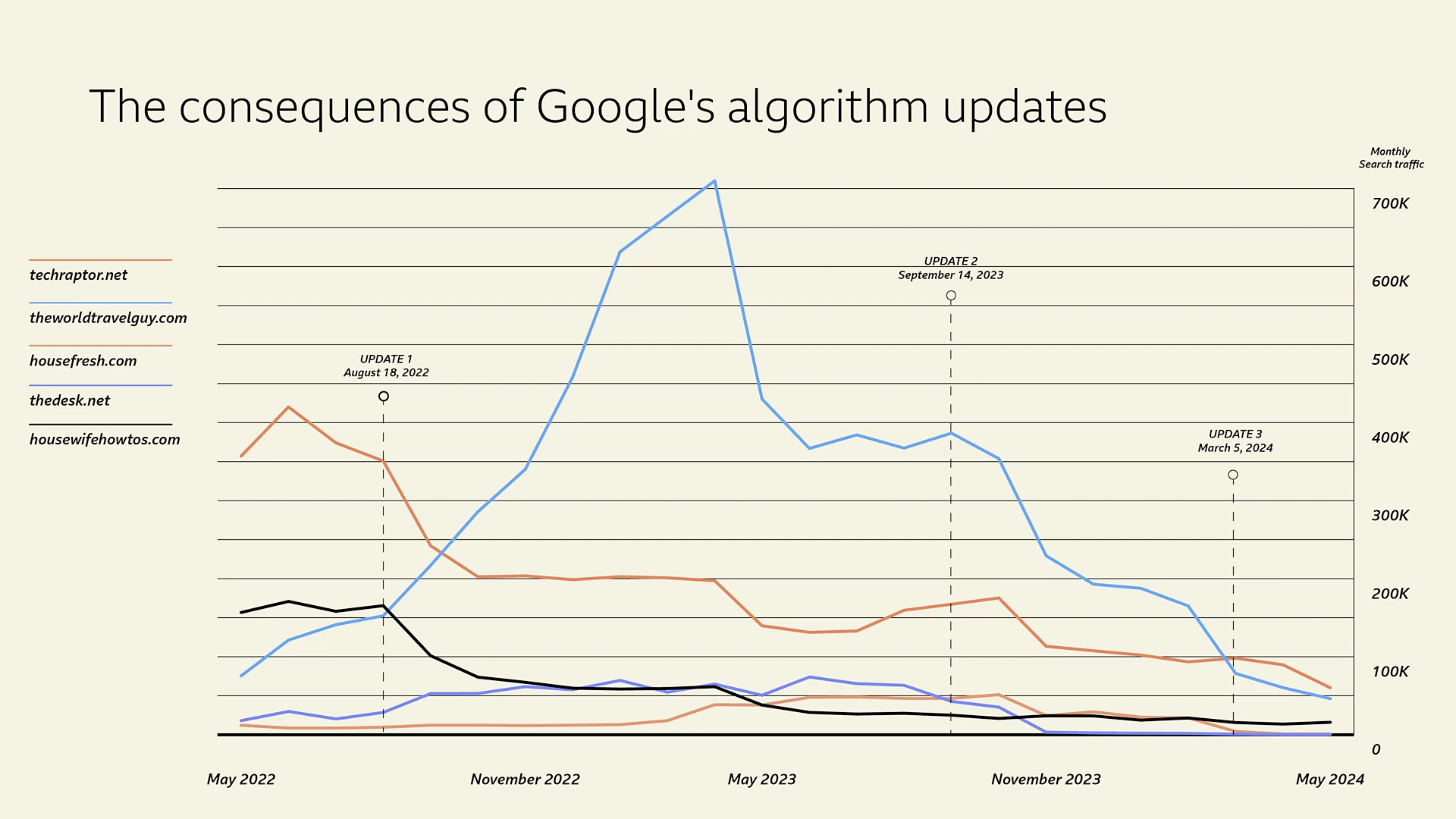
Google’s requirements (and whims) determined everything from the length of an article to the words used in it. Writers stopped writing for people and started writing for Google. All of us here at Rogue were shaped by it at our previous job and we’re all still unlearning how to write that way. It was simply unavoidable when a site’s continued existence relied on view count and the resultant ad revenue. But Google moving from providing links to providing answers meant that traffic was decimated.
There have always been other search engines. There will always be other search engines. But a 90% market share means, in the cyberpunkest way possible, Google shapes the reality of the internet. And if you don’t believe that, turn off your ad blocker, accept cookies, and then buy a toaster on Amazon. Within a day, you’ll be convinced that the entire point of the internet has forever been to deliver toaster-related content. The internet you experience is always filtered through their lens.
Independent and reader-supported media is fighting against that (have you heard about our Independent Media Collective bundle!?). The reemergence of newsletter culture is a reaction to that. It’s a return to an earlier version of the internet, where the reader decides where to go. It’s a response to the dictates of The Algorithm. It’s a response to the version of the internet that Google created.
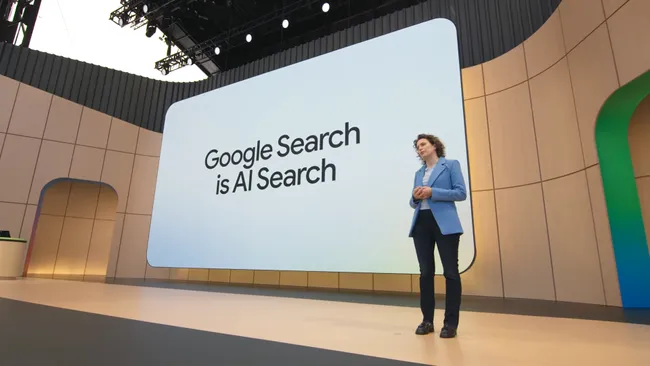
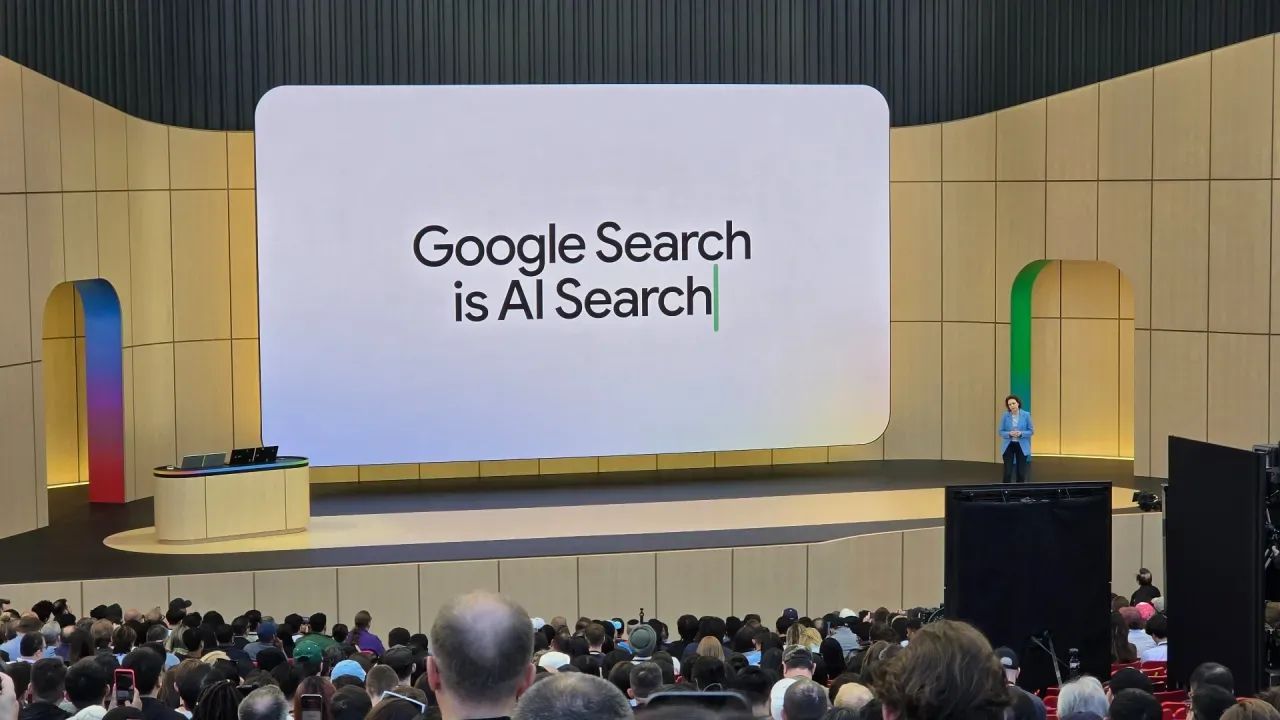
And now, in the “biggest upgrade in over 25 years,” Google’s going all-in on AI. As TechCrunch points out, “Instead of returning a simple list of links, Google Search will drop users into AI-powered interactive experiences at times.” It’s got big plans for how its AI Mode will keep you engaged with its AI instead of directing you to sites, provide “Search agents” that will complete ongoing tasks (which sounds a lot like boiling a lake to set up a Google Alert), vibe code apps right from the search bar, and worm AI even deeper into your personal information.
To be clear, the vanilla Google search isn’t going away. Typing a search query into your address bar or Google toolbar or the website itself will still get you the (admittedly already AI-plagued) search experience you’re used to. But Google says that, one year after launch, its AI Mode has 1 billion monthly users and it’s growing rapidly. And that means, no matter how little you or I personally care about AI Mode, there are a billion people who care a lot and use it as their default search experience. So Google’s emphasizing it, developing it, and the writing on the wall says it might not be default yet, but it’s going to be soon.

I say all of that to put some context behind all of the people calling this update “the death of the internet.” The internet is not dying, obviously, but the way we collectively interact with it is transforming in a profound way. Because those 1 billion users per month are shaping the future whether we like it or not. (Quick aside: literally as I’m typing this paragraph, I just got an email about a Lowes x MrBeast collaboration which feels apropos in a way I can’t quite put to words.)
There’s this sense of inevitability in almost every implementation of AI, and this update to Google is no different. That is by design. It’s propaganda being pushed by techbros, CEOs, and billionaires. AI (and, by extension, data centers) are a way to consolidate their control and wealth. And they’ll take every opportunity to remind you of that.
This podcast from 404 Media is long, but it brings up some great points. Namely, they talk about three commencement speeches from this month. And, as I’m writing this, a fourth just popped into my feed. I’m going to embed short versions of them here because they’re worth the watch.
This is Eric Schmidt, ex-CEO of Google with a net worth of $42 billion, giving a commencement address at the University of Arizona last week. His address is scolding, threatening, and condescending. He talks like someone certain of his position of power. He smirks at the students’ booing like it gives him life.
The second one is Gloria Caulfield, Vice President of Strategic Alliances for Tavistock Development Company, a real estate and/or private equity company(?). In her speech at the University of Central Florida, she called AI the next industrial revolution. She was immediately met with resounding boos and it baffled her. She turned around as if she thought something boo-worthy had snuck up behind her. “What happened?” As Juniper puts it, “the tech world has genuinely not grappled with how many people despise them and what they make.” Gloria Caulfiled bought into all the hype and propaganda. It’s her unassailable reality.
The newest one is Scott Borchetta, CEO of Big Machine Records, speaking at Middle Tennessee State. As an aside, Borchetta is the guy who first signed Taylor Swift. She once described him as an “incessant, manipulative bully.”
For his commencement address, he tells the graduates, “AI is rewriting production as we sit here.” When they boo, he chides, “Deal with it,” and adds, “You can hear me now, or you can pay me later.” A bit later, he says, “The things you learned in your first year here may already be obsolete.” Interestingly, both his delivery and appearance are what you would get if you asked ChatGPT to generate a sleazy record executive.
Finally, here’s Magic Johnson speaking at Stillman College’s commencement. This one didn’t have a vertical, short-attention-span version, so the part we’re talking about is at 5:05. I’m going to write out the quote because it’s important. He says, “Make sure that you learn AI” with a sad shake of his head. “See, AI is not coming for your job, but those who know AI are coming for your job.”
It’s worth noting that, while Magic Johnson is (technically) a billionaire, he was delivering his remarks at a HBCU as a Black man. There’s no scolding or mocking in his voice. He’s almost apologetic. Magic Johnson did not get booed for mentioning AI.
The booing was never about AI’s real or, more likely, imagined usefulness as a tool. The booing was putting voice to the “no one asked for this” sentiment of everyone outside of the C-suite. The booing was in reaction to the presumption of AI’s inevitability.
So what, besides booing, can we do about it? Three things — one is easy (you’re already doing it), one is inconvenient, and one is hard.
The easy one is to support independent media outlets. Being reader-supported means that a site doesn’t rely on Google for traffic (we, for example, get less than a quarter of our traffic from search engines while other places we may or may not have worked used to get 90% or more), making us independent from media corporations and from algorithmic dictates. Yes, we’d love your subscription, but supporting any independent outlet benefits us all.
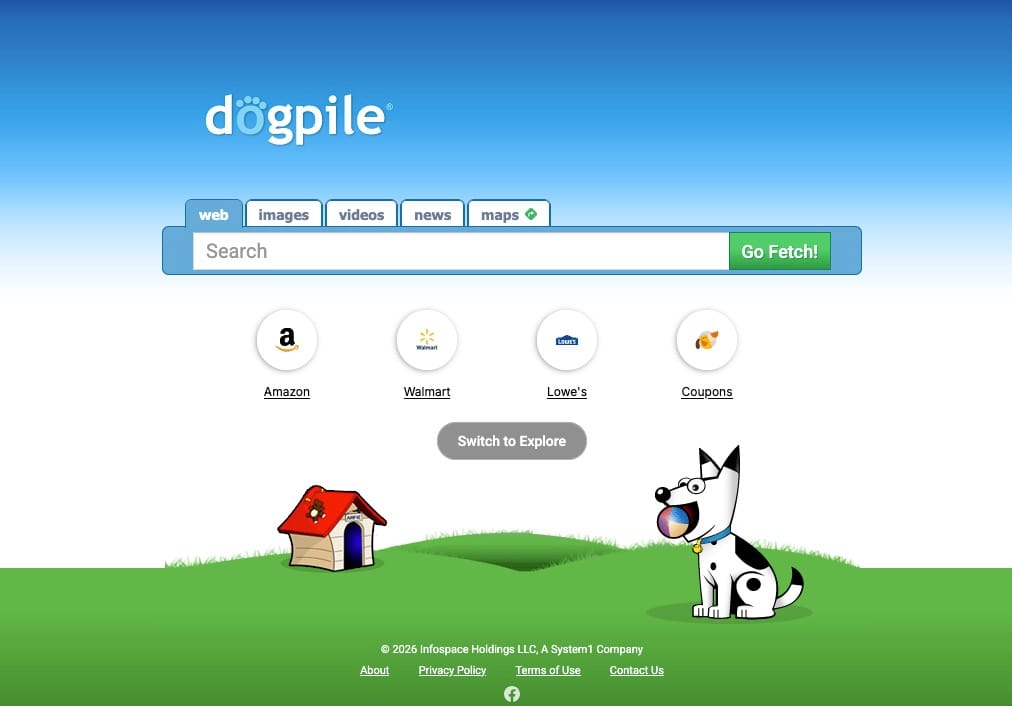
The inconvenient one is learning to use a different search engine, preferably one that doesn’t force AI features onto you. You can do things like adding “-AI” or just typing swears to short circuit the AI results on Google. You can download extensions or use things like &udm=14 to revert Google search to a more useful version. But the better answer is to use something else entirely. Almost every alternative, though, still wants to add AI features. The difference is in how easy those features are to turn off. Some options are:
- Ecosia (Settings > Overviews) — has the added benefit of planting trees and funding climate action
- DuckDuckGo (Settings > AI Features) — there’s also a setting to hide AI-generated images
- Brave (Settings > Answer with AI)
- Holy shit, Dogpile is still a thing (no settings required)
Switching, frankly, sucks and it’s harder than you’d think. I’ve been learning how to Google for 25 years and starting over has a really annoying learning curve. More accurately, though, Google has been training me on how to use it for 25 years — kind of like how Starbucks quietly trains you to say your order in a specific way. That lack of familiarity with other search engines is awkward, but I know that’ll pass.
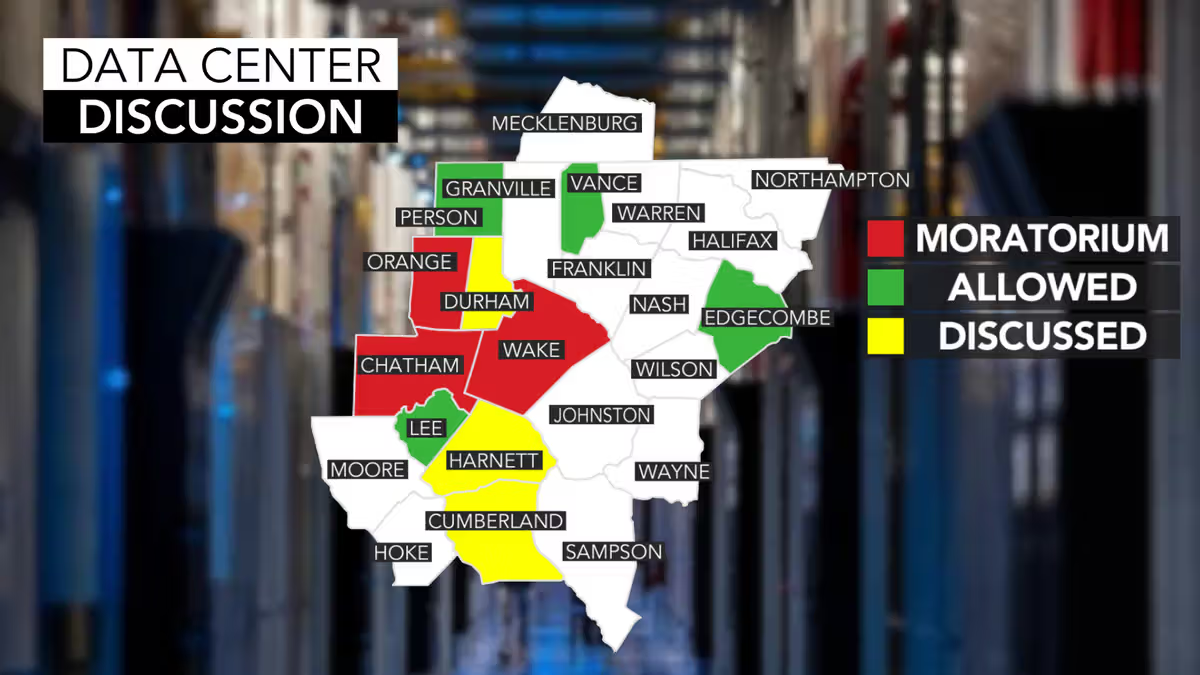
The third way is the hardest, but it’s also the most impactful — and you’ve probably heard it before. Annoyingly, it’s “get involved.” Last month, I went to a county commissioners meeting for the first time ever. It was a hearing on a one-year data center moratorium (which passed, for the record). For almost three hours, I listened to people from my community stand up and berate elected officials about how bad data centers are. It was refreshing. It was invigorating. (And only one person included any xenophobia or conspiracy theories in his statement, which felt like a win for rural North Carolina.)
Those moratoriums are happening all over the country on both the state and local levels. But decisions like that don’t just happen and it’s not fair to rely on the — let’s be honest here — NextDoor-pilled retirees who usually attend those meetings to do the right thing. Elected officials, especially hyperlocal officials, are just people. Hell, they’re your neighbors. And sometimes, they can be convinced to do the right thing.
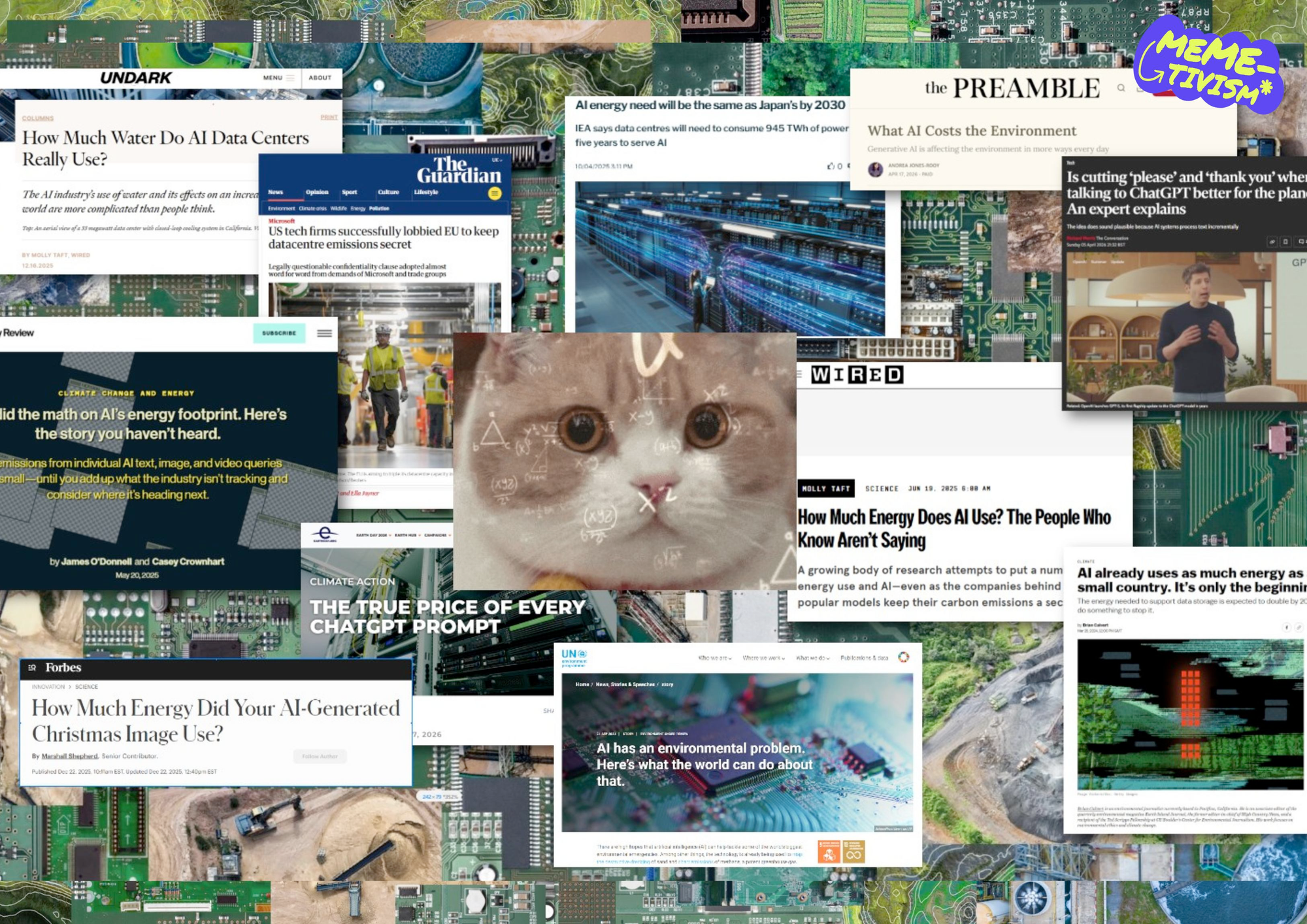
The secret fourth thing — the zeroth law of it — is to remember that it’s not inevitable. It doesn’t have to be this way. Karen Hao, who wrote Empire of AI, is part of a project called The AI Resist List. I’ll close with quotes from that site:
Nothing about the current trajectory of AI development is inevitable. It was shaped by the thousands of subjective decisions of a tiny elite, and continues its march based on the active participation and tacit consent of people globally.
It doesn’t have to be this way. As AI researchers, journalists, and critical scholars, we have built, documented, and imagined radical alternatives that do precisely the opposite: center community, celebrate human agency, honor local context and history, and rejuvenate the planet.
They include a quote from Ruha Benjamin — whose work I’ve mentioned before — that’s the best takeaway from all of this.
Remember to imagine and craft the worlds you cannot live without, just as you dismantle the ones you cannot live within.