Crushed In Time devs talk about what it takes to build a Sherlock Holmes game unlike any other
Crushed In Time takes a familiar genre (and hero) and stretches it to its breaking point

There Is No Game is one of the most interesting titles of the last several years. It's best left to be discovered exactly why that is, but suffice to say that the experience is unique, delightful, and "meta." But it's also the type of game that's quite hard to follow up. Do you build something else that defies expectation? Do you go with another meta game in the same vein? Or perhaps something more traditional?
Developer Draw Me A Pixel has just answered "yes" to all three of those questions with their next game, Crushed In Time, a Sherlock Holmes point-and-stretch adventure that feels both familiar to point-and-click fans and delightfully subversive.
Ahead of the game's Steam launch on June 10, we sent over a few questions to Draw Me A Pixel HQ. Freddi Malavasi, the game's associate producer and communication manager, gave us some thoughtful answers all about breaking expectation and allowing players to discover answers for themselves.
Rogue: There Is No Game is a title that lives to break convention and jumps between so many different creative avenues. Crushed In Time seems to be intentionally not that, and focuses more on taking one big mechanic and finding creative new ways to use it throughout the journey. What did limiting yourself in that way do for you after There Is No Game? Did you struggle to color in the lines more? Or was it refreshing for your creativity?
Freddi Malavasi (Associate Producer / Communication Manager): The game may seem more traditional at first glance, but that’s not the case, because
Crushed In Time brings a paradigm shift to its gameplay.
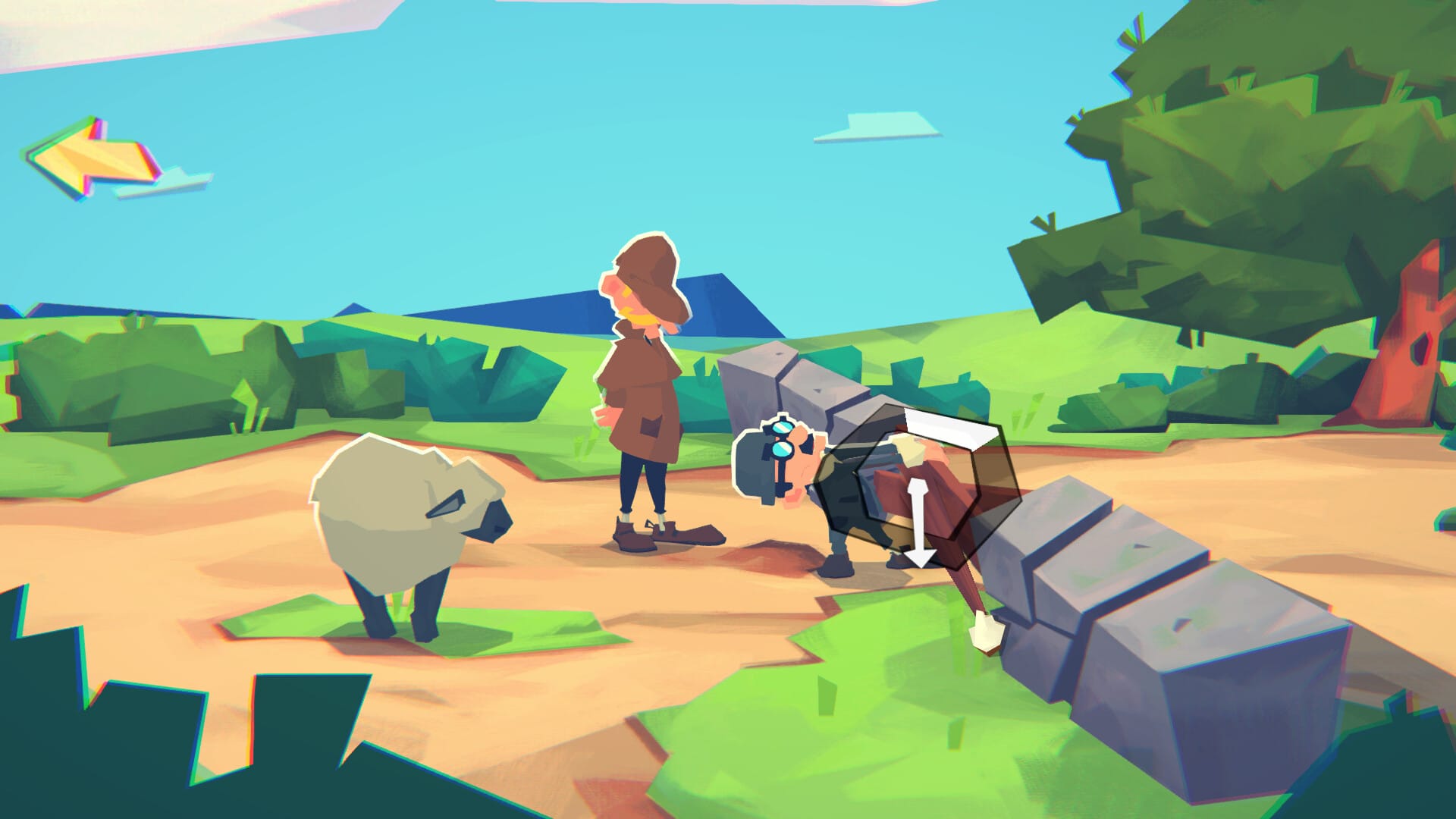
In a classic point-and-click game, you move your character, use objects, and trigger actions as you see fit. In Crushed In Time, the big difference is that you aren’t playing a video game—you’re stuck inside it.
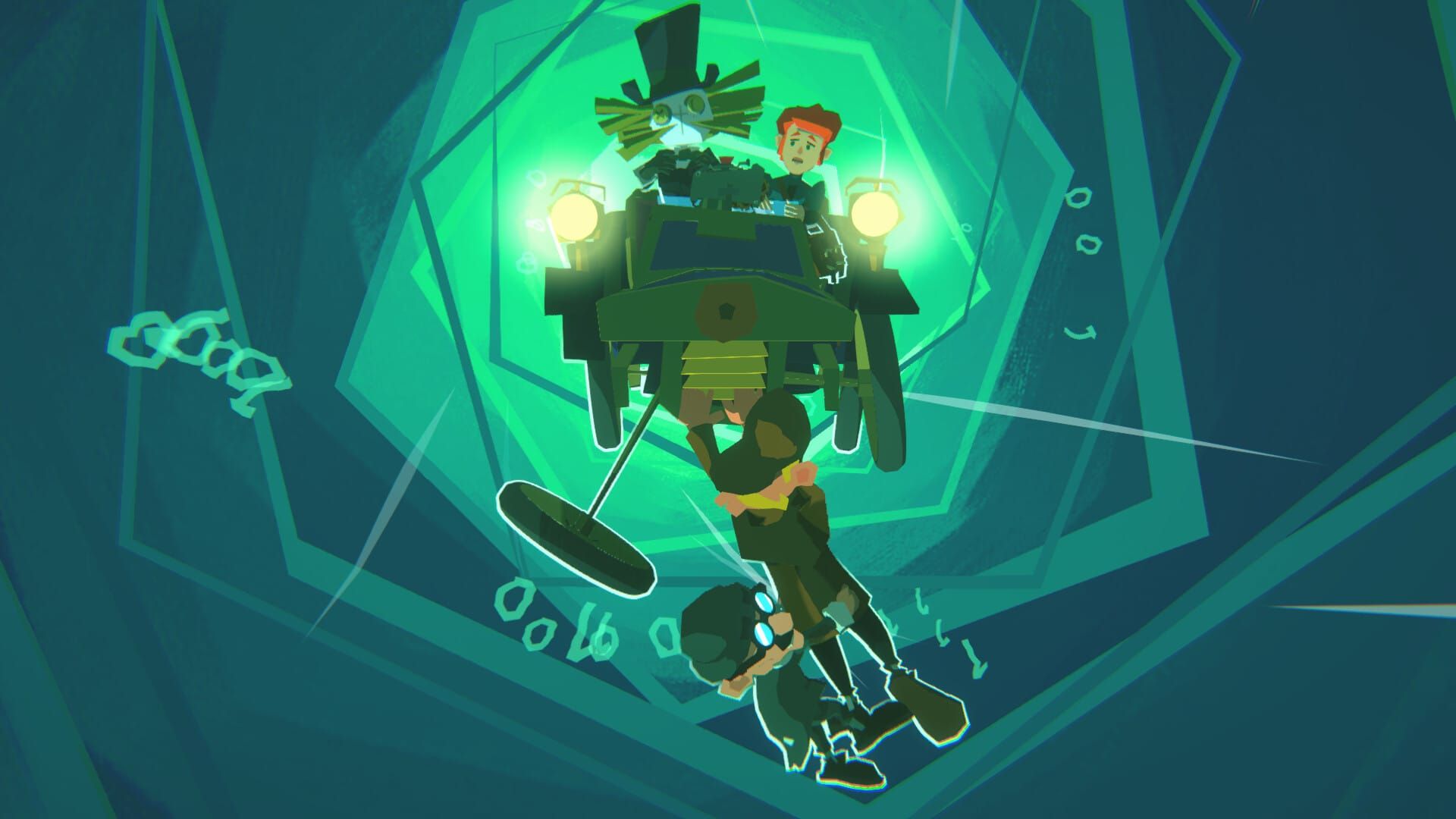
The introduction depicts the game’s launch party at Draw Me A Pixel’s offices when suddenly, everyone goes back to work because of a bug that has mysteriously made an NPC disappear. And you, as a guest, are mysteriously sucked into a screen. You’ll therefore see the game “from the inside” and interact as best you can thanks to its strange elasticity, in order to guide and assist Sherlock Holmes and Dr. Watson as effectively as possible throughout their adventure.
This choice, seemingly innocuous, imposed many constraints on us that forced us to be very creative, if only to compensate for the lack of an inventory, for example.
Rogue: Similarly, you’re dealing with very old and well-known characters in this game. What stresses does that ease as a creator? Where does it constrain you in ways that make things tough?
Malavasi: Working with such well-known characters as Sherlock Holmes and Dr. Watson offers the undeniable advantage of a much quicker introduction for players. In 2026, there’s no need to spend hours explaining who these characters are: everyone has at least a basic idea.
On the other hand, we’ll have to combat the misconceptions of people who don’t know them well enough. For example, we’ve had many players who were surprised to see that Sherlock Holmes wants to drink coffee at the beginning of the game because, “as an Englishman, he should want tea.” However, we shouldn’t forget that in the original works, Sherlock Holmes regularly drinks coffee, which he considers a stimulating beverage that helps him think.
Well, he was also a user of cocaine and morphine, but we wanted to keep the game suitable for all audiences.
Rogue: When working on puzzles with a unique mechanic like stretching the world, I’m curious about playtesting. How do you teach players to start thinking in a very different way when they’re playing inside a familiar sandbox?
Malavasi: That’s a question we asked ourselves often during the game’s development. Then we discovered that we shouldn’t underestimate the adaptability of the vast majority of players, because very few people—if any—got stuck or felt uncomfortable with the gameplay in Crushed In Time.
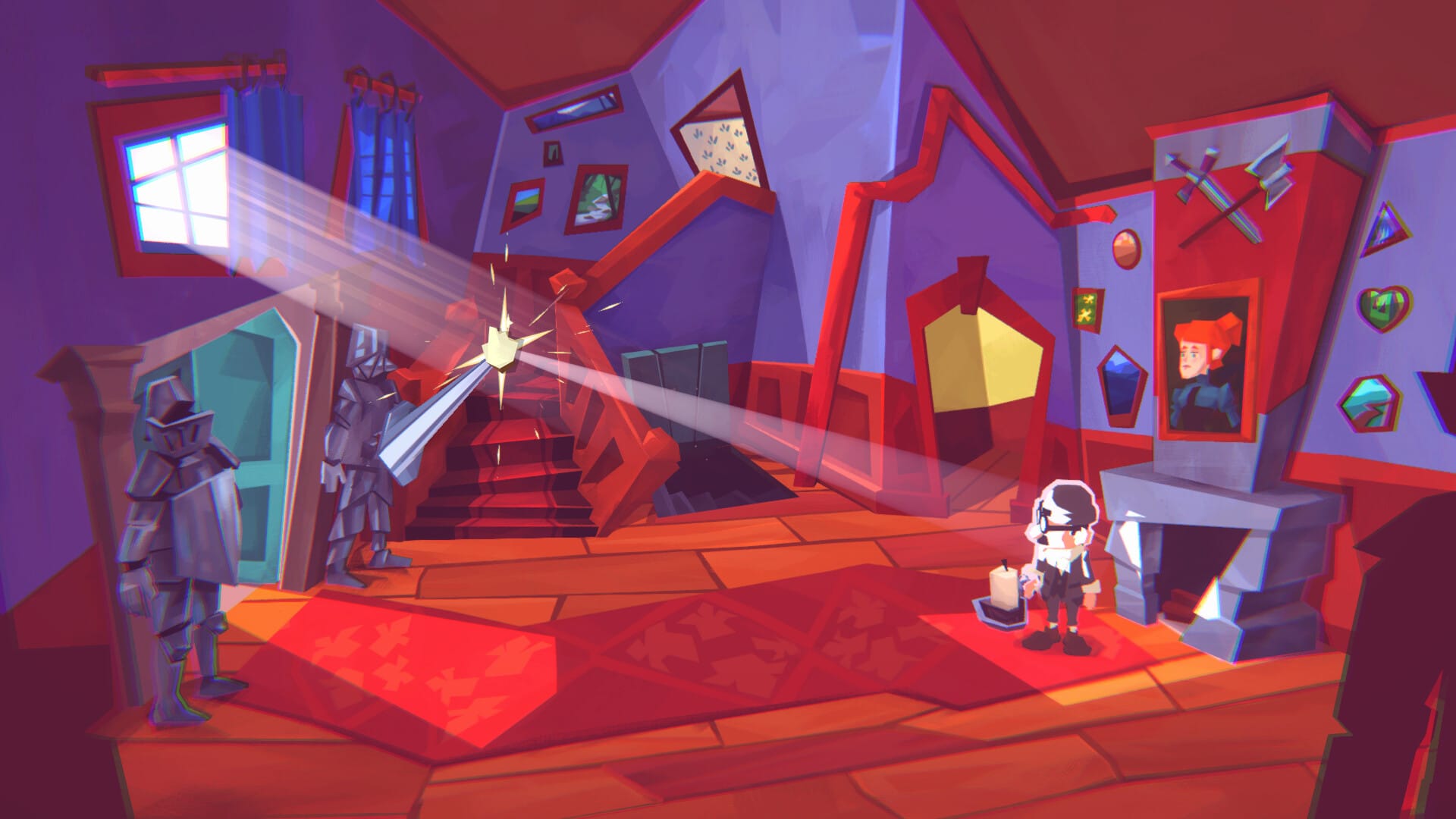
In reality, our role is a bit like that of a facilitator. We introduce a gameplay mechanic, let the player experiment with it, and then gradually make the puzzles more challenging. Then a new mechanic comes along, and we start over. And so on until the end of the game, where you put into practice everything we’ve taught you throughout the adventure.
In the end, the hardest part is coming up with a good idea, and we hope that’s the case for Crushed In Time.
Rogue: Something I try to ask folks in interviews is: what is something you wish more people knew about game development that might impact how they think about the process or the final product?
Malavasi: Developing a game is a bit like being an alchemist of fun.
You mix things together—sometimes it explodes, sometimes it doesn’t work out, and sometimes it miraculously becomes fun. More practically speaking, developing a game means asking yourself a ton of questions while battling an incredible number of bugs. People don’t often realize it, but things as mundane as a save file can require a lot of work.
So the next time you run into a minor, harmless bug, just remember that the developers spent months fixing hundreds just like it.