


Cyberpunk 2025: It has come to be our war
Part 9: The Defenders by Philip K. Dick

In July of last year, the AI Futures Project published AI 2027. It paints a bleak picture of rampant AI development past artificial general intelligence (AGI) to artificial superintelligence (ASI) and beyond. Spoiler: It (probably) doesn’t end well for humans.
AI 2027 was written by a team of AI researchers and executives along with writers (to punch up the boring bits), forecasters, and people who took part in the “tabletop exercises” that led to a lot of their conclusions. (I’ve reached out about getting the scenarios from the AI Futures Project, but haven’t heard anything yet.)
Even AI 2027 kind of fell prey to the AI hype, though. They’ve already revised their timeline for AGI out a little from 2027 to closer to 2030 — and I’m not particularly convinced about that timeline either. But they address a few things in their immediate-future-speculative fiction that I think are worth talking about.
And talking about those things brings us back to my favorite super-problematic misanthrope, Philip K. Dick.
The Defenders
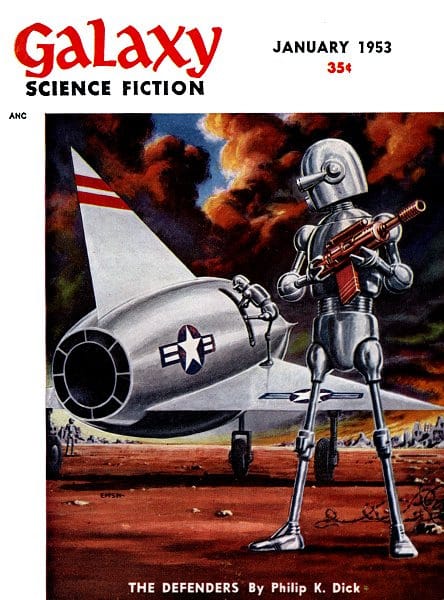
Once again, Philip K. Dick wasn’t writing cyberpunk when his story, “The Defenders,” was published in Galaxy Science Fiction in 1953. But he still kind of nailed the vibe and the tale had a couple really prescient moments.
Quick aside: I first heard an adaptation of “The Defenders” on an episode of X Minus One from 1956. I’m not quite old enough to have heard it on the radio, but you can find a lot of the old scifi radio shows from the tail end of the Golden Age of Radio on the internet and I highly recommend them.
“The Defenders” would eventually form the basis for Dick’s novel, The Penultimate Truth. For now, though, I’m going to focus on the original short story. (Surprisingly, this story doesn’t involve any blatant ableism or misogyny like Dick’s other works, but … dude had a real distaste for women. Especially wives.)
Sometime in the indeterminate future, Russia and the US finally kick off World War 3 and it’s apocalyptic. Within weeks, any remaining humans on both sides of the conflict moved underground (“undersurface”) into bunkers to avoid the radioactive wasteland that the surface became.
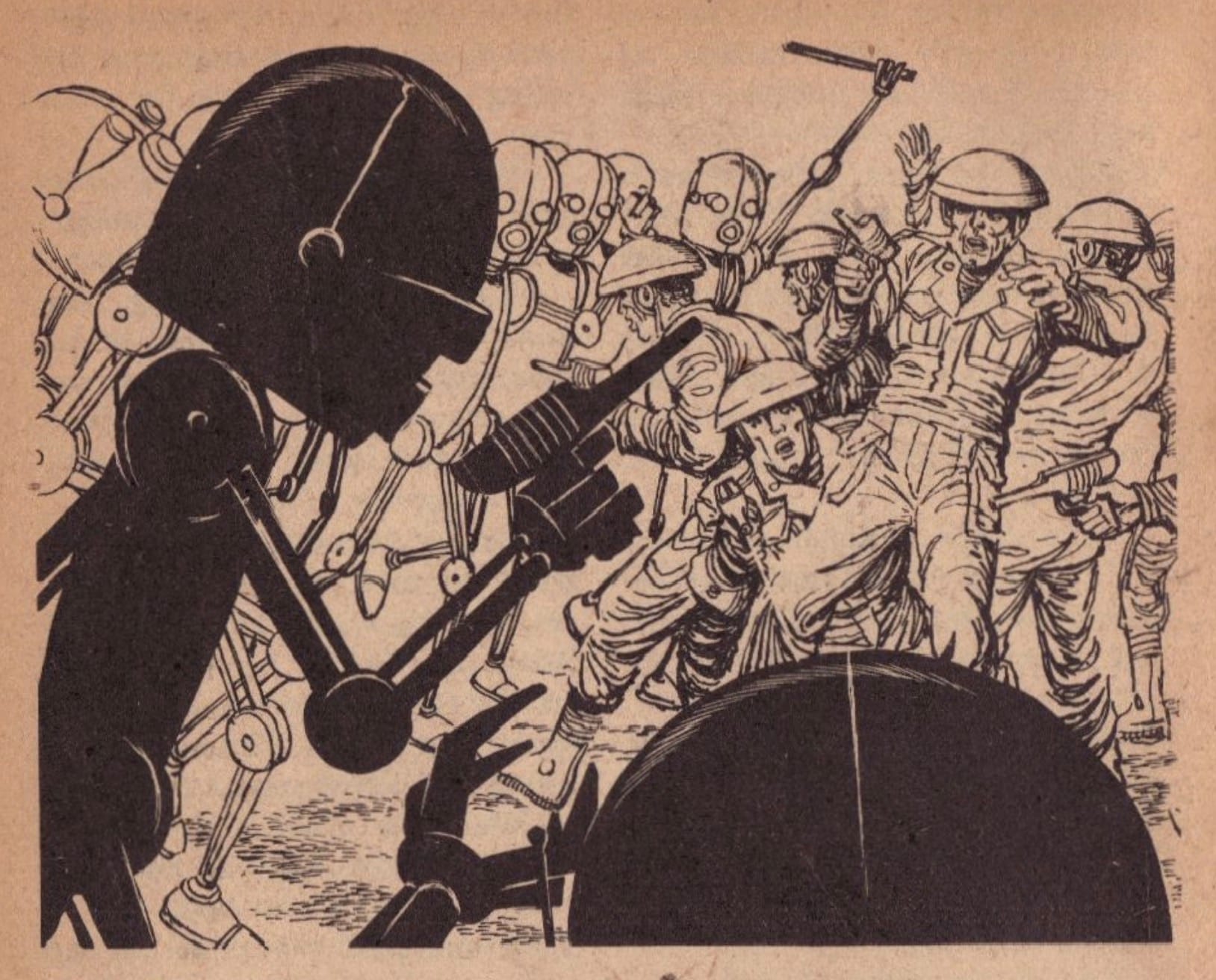
But the war didn’t end. Instead, humans built robots called “leadys” — robots made of lead so that they’re immune to radiation (don’t think about it too much) — to fight their war for them. And all of the bunker-dwelling humans on both sides of the war spend all their time underground manufacturing weapons of war for the robots up top.
The war between the eastern and western hemispheres has been raging for eight long years. Humans toil away underground, devoting everything to the war effort, while the robotic leadys on the surface fight for the causes of their respective sides. Humans dream of the day the war is won (by their side, obviously), so that they can return to the surface.