


Games are allowed to be messy and miserable
There's merit to controversial and ugly stories

This week, I played a game that stuck with me, and not because of a neat mechanic or satisfying loop. Instead, I was treated to a more unpleasant experience: a sickening pain in my gut, prickles of paranoia in my mind, and the dreadful knowledge that everything I was witnessing was incredibly plausible. In an era where games are increasingly focus-tested, streamlined, and built for the broadest possible audience, there’s something especially striking about a mean, ugly game that aims for clarity of message.
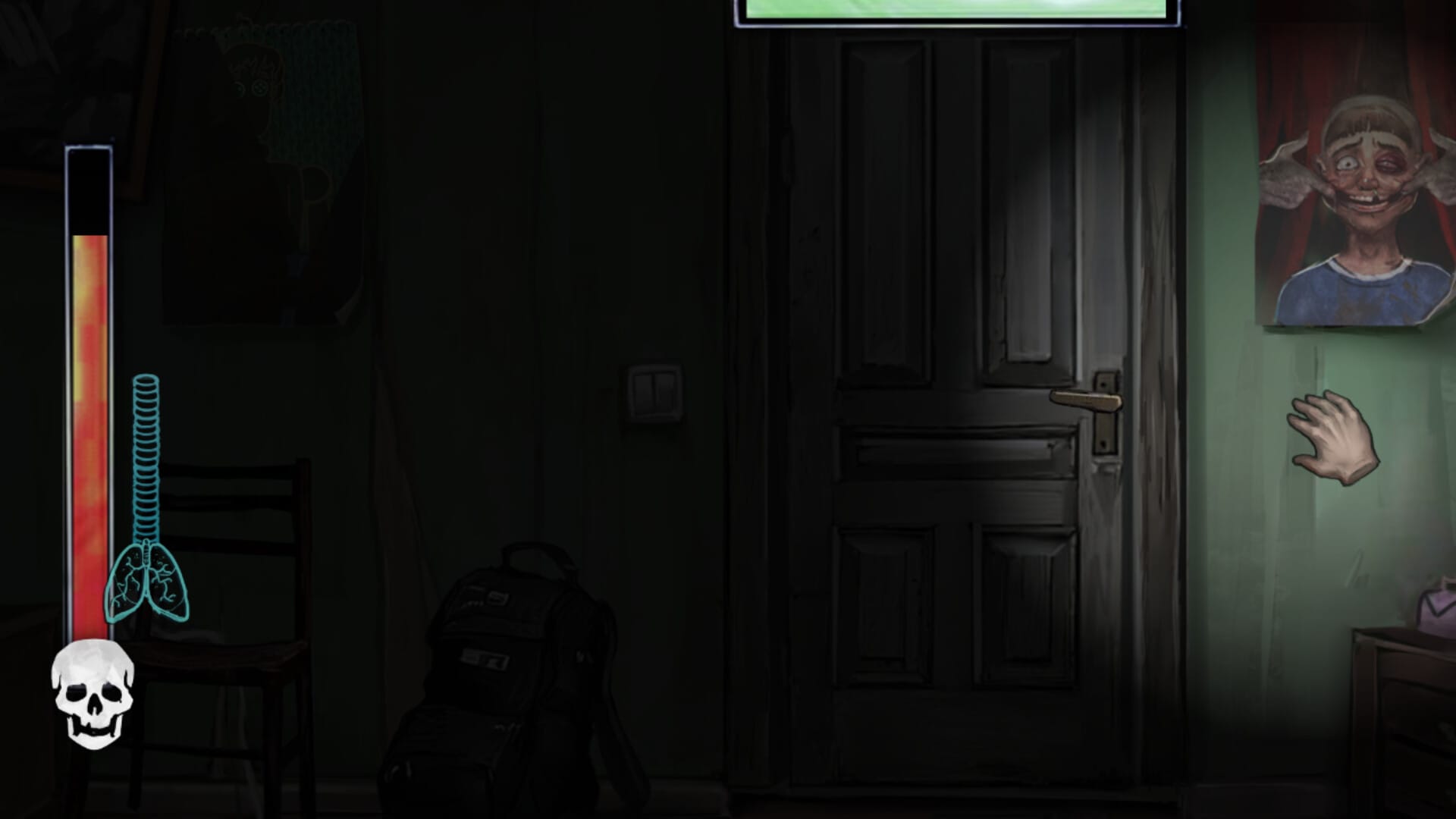
Hi, What’s Your Emergency? is a game in the Violent Horror Stories 2 anthology, which I picked up on sight since the first iteration included the banger No, I’m Not a Human. I “played” the “game," felt a sickening rush of fear, frustration, and sadness, and then went and laid down to stare at a wall for thirty minutes. In this game by the Bober brothers, I am an abused child hiding in my room, barricading the door, and desperately trying to dial 911. Not only is there the imminent threat of my parent, but the 911 operator ranges from apathetic and detached to actively malicious.
It’s hideous, humiliating, and an actual depiction of some of the agonies that abused children experience. This game is created by people who experienced something similar to this, who are trying to share that story in hopes it reaches others in the same boat.
Needless to say, all of this is extremely relevant to the discourse du jour: indie game Horses, which has been banned from Steam, Epic Games, and the Humble store. The reasons for this are unclear; Valve provided a statement to PC Gamer that claimed the game was inconsistent with their “onboarding rules and guidelines” and the game contains depictions of sex, suicide, abuse, and other sensitive topics. Ash Parrish wrote up an excellent explainer at the Verge, and Nicole Carpenter provided further reporting for Aftermath. This follows a furor earlier this year in July, where conservative activists group Collective Shout targeted payment processors in an attempt to stem the distribution of games with sexual content.
Itch.io was particularly affected, as the platform for indie games is an open market; developers can upload projects without requiring admin approval – which is different than Horses, which was denied listing by Steam. There was a considerable backlash from gamers and activists, who responded with a range of arguments from pointing out that this policy would not protect women to arguing that applying puritanical standards to media would unfairly affect trans and queer developers.
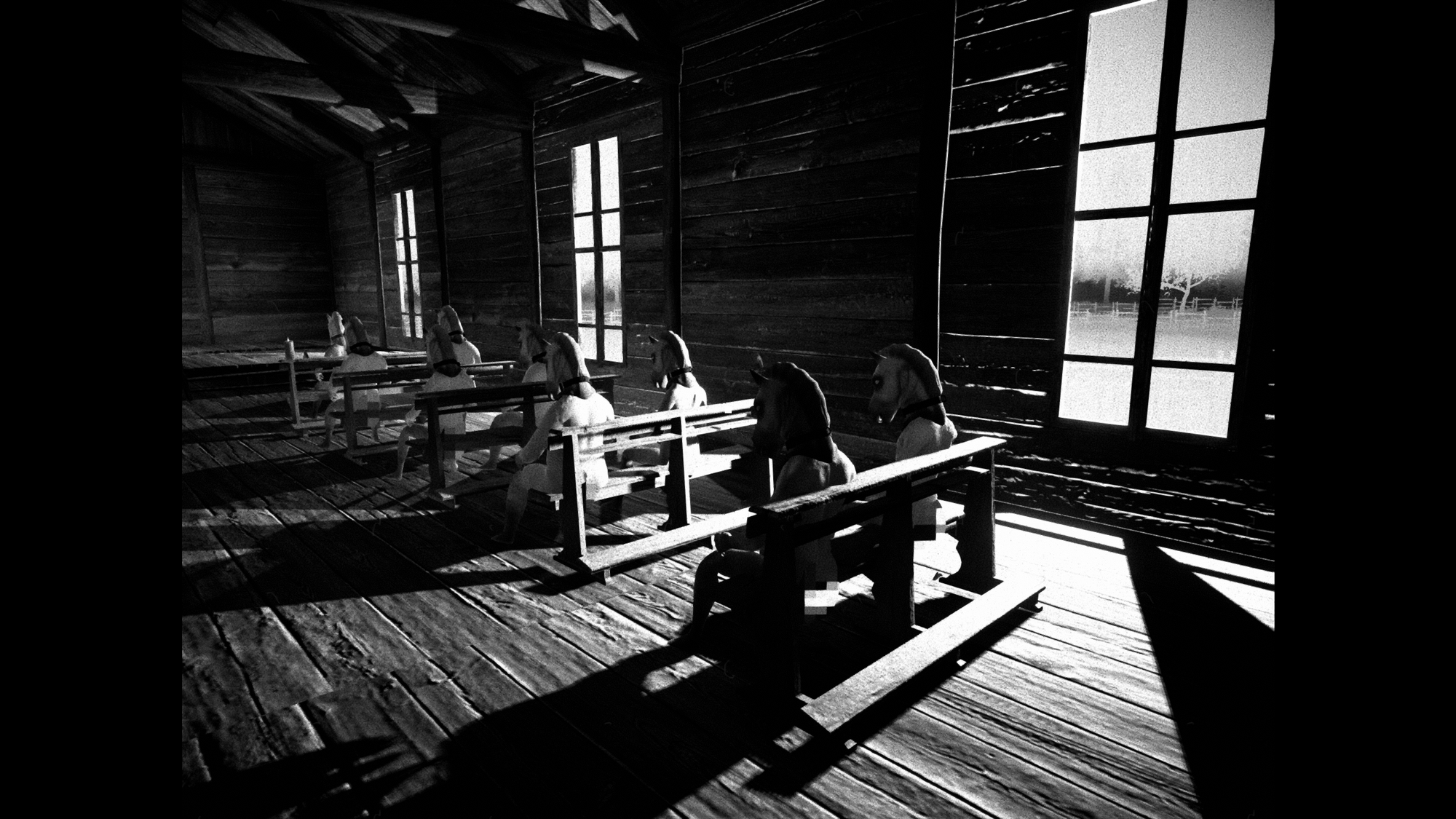
Horses is, in some ways, a harder game to defend. Not because it lacks merit or artistic intent, but because it is a homage to the Italian arthouse films. There is no juicy gameplay loop, no unlockable sexy scenes, no stacked succubi. Much like Hi, What’s Your Emergency?, Horses is a grim play. I take the role of a 20-year old man who has been sent to help out on a farm for a couple of weeks, only to find that the stable of prized horses is actually full of naked people wearing horse masks. The proprietor of the farm lets me ride the “horses,” give them hay, and even treat them to a tasty carrot – but I must report any signs of fornication immediately.
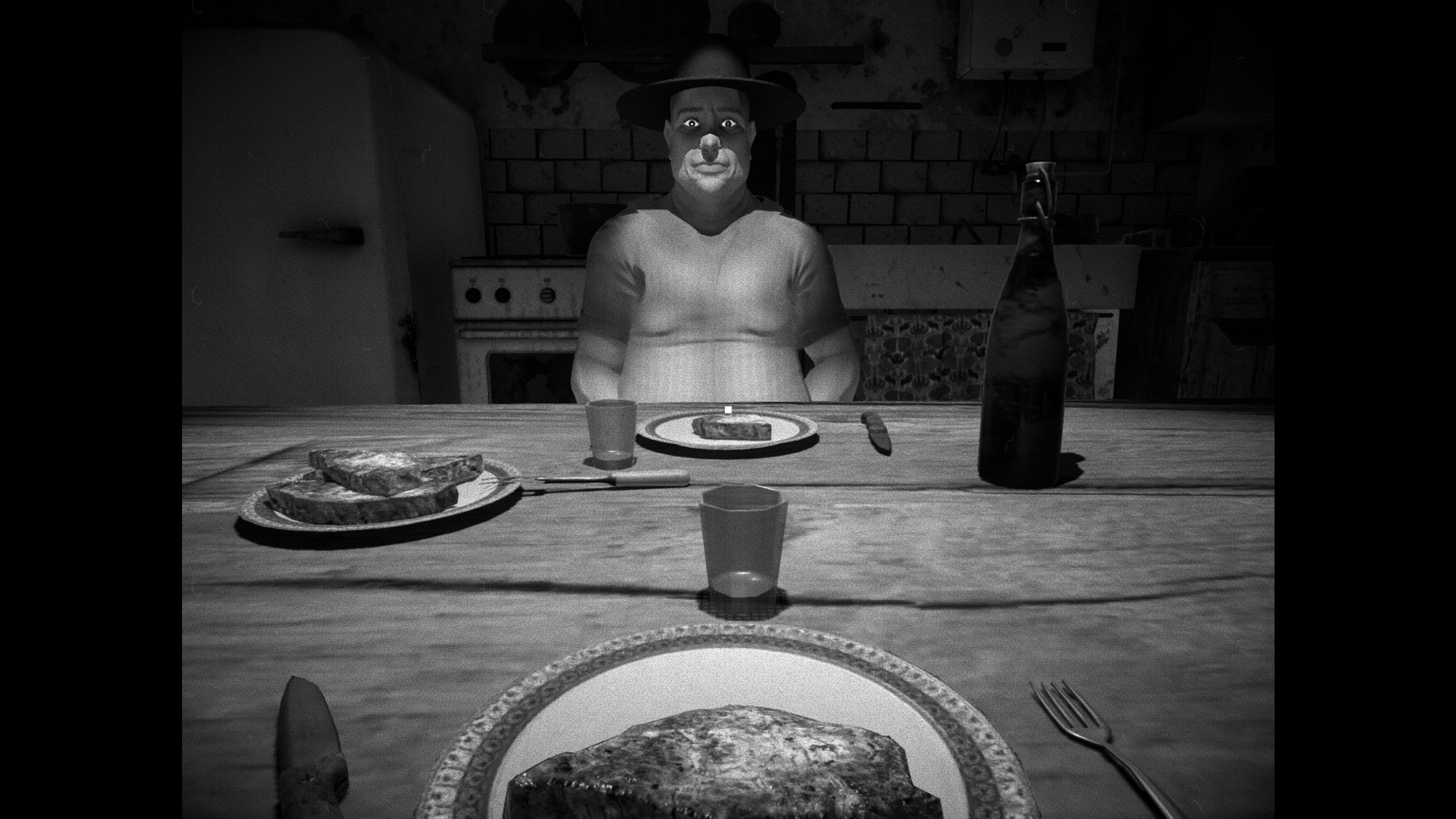
It raises questions of complicity, modern slavery, and dehumanization. I would not say I am “enjoying” Horses in the same way I’m enjoying, say, the new Helldivers 2 update. But, at this point, the gaming market is so broad and focused on top-heavy titles that the two hardly seem like the same medium. It’s like looking at a picture of a natural banana, sour and crammed with seeds, and then examining the genetically modified banana we buy in bunches at the grocery store. Sure, they’re both bananas, but one is much more pleasing for consumption. The other is gritty, raw, and unpleasant, but just as real.
So, I worry that the Horses controversy won’t burn brightly, or for long, because the game at the center of the conversation is kind of a bummer. Games with extra side quest content, pleasing serotonin-spawning loops, and color-coded loot are easy to love and admire. Titles like Hi, What’s Your Emergency? and Horses don’t offer a pleasing, simple explanation for their existence.
And yet that is exactly why both games hit me so hard, and why I want to see more devs make these deeply personal stories. I just worry that between the pressure from payment processors, the stringent standards of storefronts, and publishers focusing on profit, these experiences will only become fewer and further between. Every artform has these controversial, confrontational pieces that turn people off — gaming deserves its own space for these kinds of work to thrive.