


Pull-Ups and power-ups
On parenting, gaming, and screen time when your Player 2 is still in diapers

The weather the day we brought her home was an anomalous 70 degrees at the end of February, and the sound from our open windows tipped me off to the postman tossing a package onto our porch. As a diehard physical game collector, I had finally ordered a copy of Final Fantasy 16 to coincide with Jennah’s due date. Ostensibly, because I’d have some downtime to sink into a flagship JRPG; since babies are famously low-maintenance.

After I opened the package, I had a fun idea: a gaming buddy had texted me earlier to ask, “What are you up to lately?” So I replied with a picture of my newborn next to the jewel case as shorthand that I was about to embark on one of life’s most massive and rewarding adventures (and that I’d also had a kid a couple days prior).
That afternoon, the game installed while we learned how to dress someone so fragile and I jumped into the game’s opening 15 minutes during naptime. Despite the allure of Ben Starr’s smouldering exile prince, I couldn’t come back to it for weeks. Turns out the hardest superboss is 10 pounds of belly rolls and neonatal fury.
When I finally had the time to get back to gaming proper (no disrespect to the nostalgia-tinged, “this is how I remember PS1 horror” Crow Country or Tango Gameworks’ swansong Hi-Fi Rush, both of which I experienced in broken bursts through an infant-induced fugue state), four months had passed.

I pulled the disc off my shelf and a thought flashed: “Didn’t she used to be smaller than this case?” FF16 took long enough that when I got to the next game on my backlog, Final Fantasy 7 Rebirth, she was an entirely new person both physically and developmentally. She still couldn’t play with me, but I wanted to somehow document her role in my and Cloud’s journey to stop Sephiroth.
From there, the momentum was self-propelling: new game, new photos, new Jennah. Laying down holding Stellar Blade, leaning against a pillow clutching Astro Bot, independently sitting while swinging Mario and Luigi: Brotherhood, crawling (to the Dark Place?) with Alan Wake 2, and eventually walking with Clair Obsur: Expedition 33. It went so fast. Tomorrow certainly comes.
Screen time is a hot button topic among millennial parents; even if their dad didn’t have to sneak them into The Matrix: Reloaded. Before we even had a child, my wife and I had both decided we wouldn’t want an “iPad kid" — language acquisition is delayed, praxis (picking up new skills) requires more repeated attempts, and attention spans disappear. Aside from the well-documented effects our pocket Torment Nexus has on toddler brains all the way to adolescent brains (and even adult brains, if we are all honest with ourselves), the reality of having a child is that they demand to be the locus around which you reconstruct your life: they need your attention, your energy, and that most premium currency, your time.

As much as I have always loved video games (and thought how great it would be to be the cool dad who knew what Pokémon was), it’d have to be on a back burner until Jennah was old enough that we could carefully introduce her to electronic entertainment. Even if she doesn’t get it yet, I’ve loved this project as a bridge to connect with her partway, a chance to unbox a new game or console together and something that my wife has very charitably tolerated (why do you have to photograph me holding our kid in front of the Sword of the Sea title screen? Because they didn’t do a physical release and I need this for the collection, honey).
Complicating the social consequences of not wanting to seem like a bad parent at the daycare meetups is the more serious pressure, as a physician myself, of not wanting to seem like a hypocrite. Raising a child is nature’s roguelike and so research-backed advice by associations such as the American Academy of Pediatrics helps to mitigate how often I screw up this run. Some of my colleagues' clearest advice, until recently, was simple: no screen time until 2, with exceptions for things such as family interactions via FaceTime.

The good and bad about science is that it never stops, though, and, just recently, the advice changed to lower the age where screens can be introduced or to even remove the age minimum entirely and instead suggest the context or quality of content consumed is more important (think Ms. Rachel instead of Ms. Marvel).
My specialty is anesthesiology; my patients are mostly adults who are asleep the majority of the time I am with them. Thus, while I’m inclined to defer to the expertise of the pediatricians about best practices for rearing a young child, I certainly won’t lie and say that it’s been fun or easy having to distract Jennah from being glamoured by every screen we pass or getting by without the crutch of some Bluey time during the worst tantrums.
So how do I share my favorite hobby with my little Big Boss when the only controller she has used is from Fisher Price? I organized all those photos into an album on my phone and kept a list of the dates I started and ended each title. From there the logical extension was to take notes about who she was and what she was doing during all those days where I was playing at night. And my memory is only going to get worse, so why not jot down a bit about each game too, and then print that all as an album.

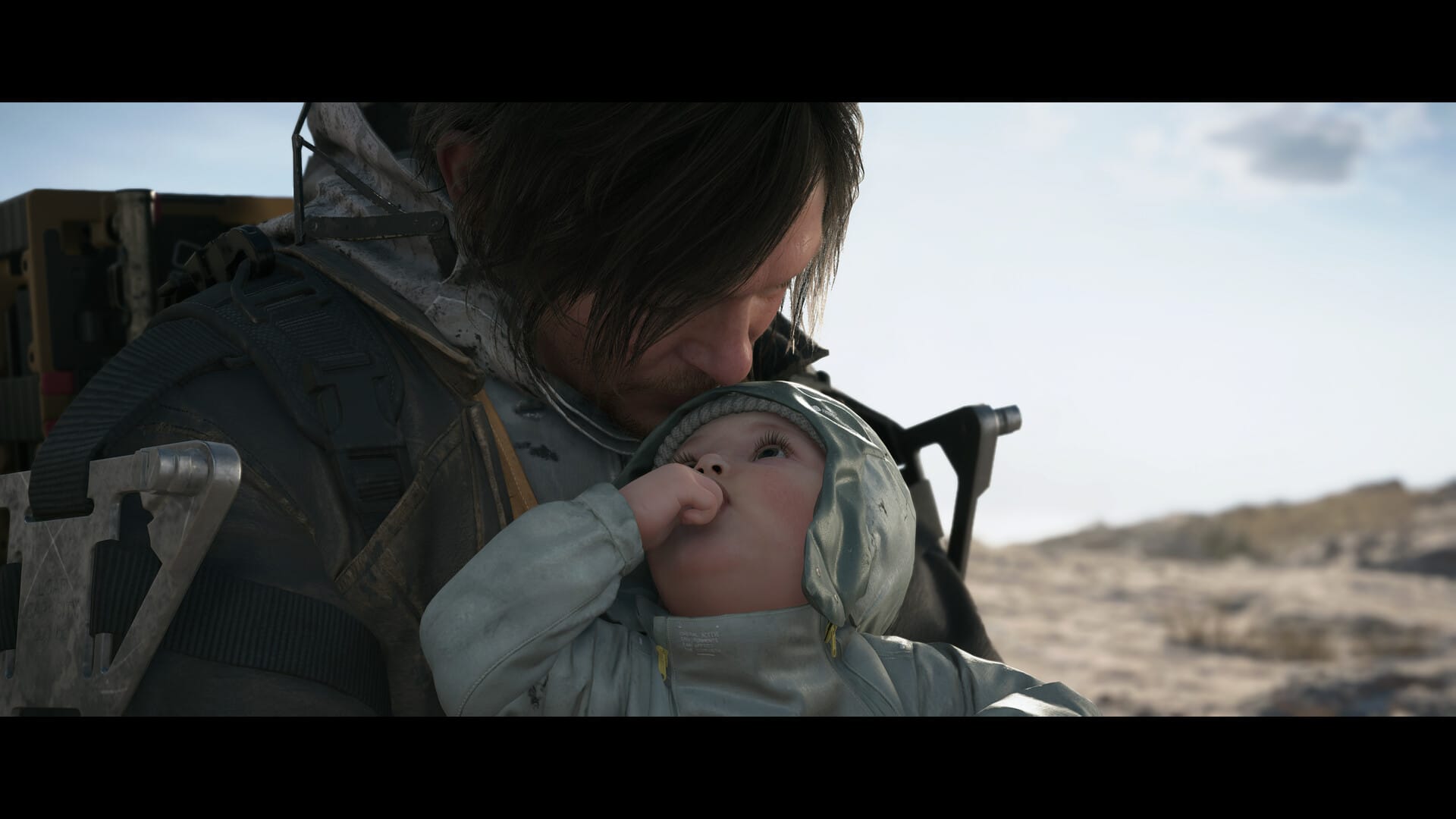
Like most aspects of my life, “sharing” video games with my daughter has changed how I consumed them and what they mean to me; this way, when we can, we’ll know what’s worth replaying together. So, when she’s older, she’ll understand why I was reduced to tears by Tomorrow telling Sam Bridges in Death Stranding 2: On The Beach that she could recall their journey together when she was his Bridge Baby.
So I’ll carry you to Terminal Knot City because you’re my Bridge Baby, Jennah. And I’m glad we’re connected.