


Warhammer 40K: Dark Heresy is an early alpha, but a promising start
Dark Heresy still needs time in the oven, but it's a promising start to Owlcat's next 40K CRPG.

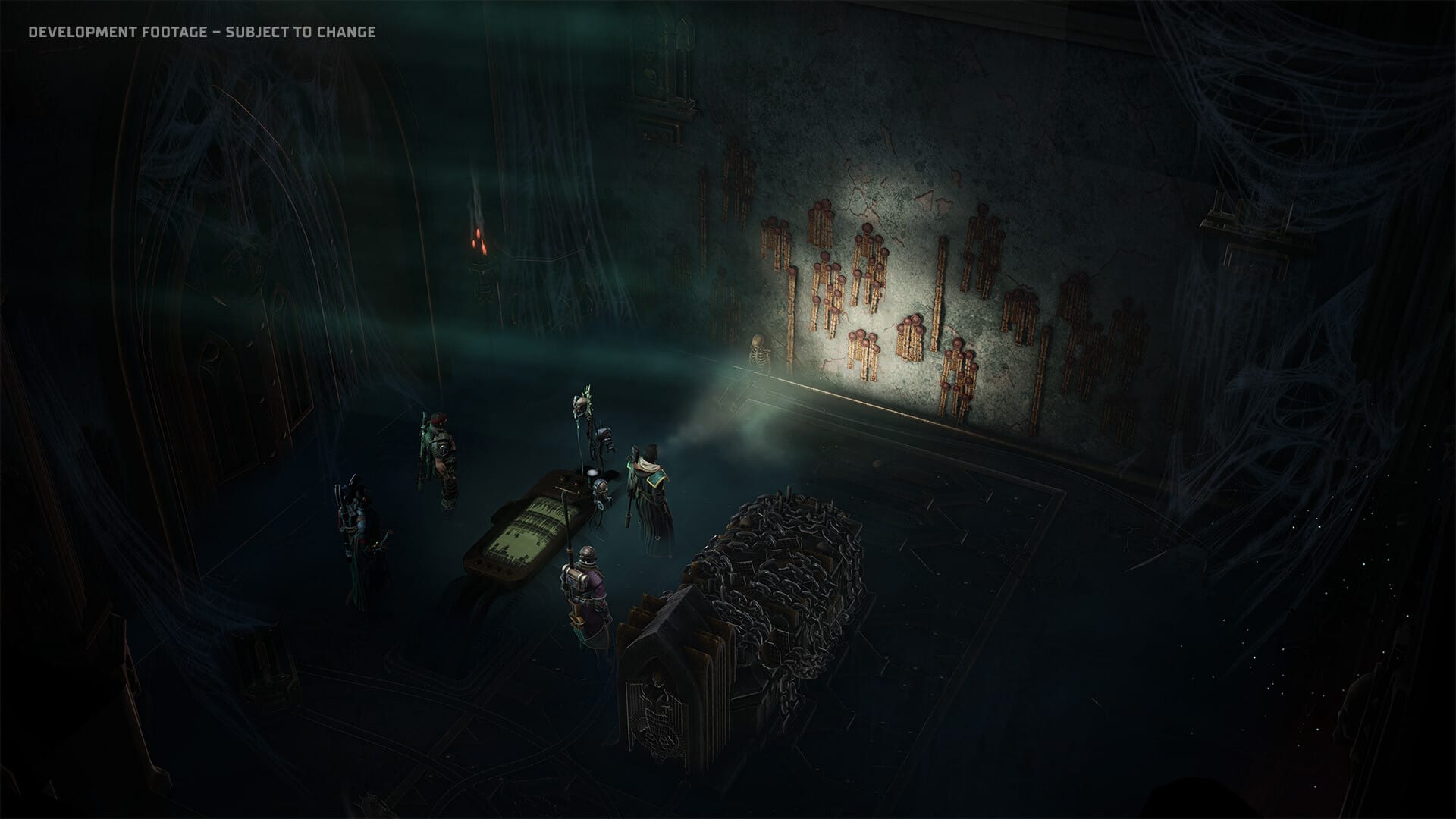
Owlcat has released the alpha of their next massive Warhammer 40K CPRG, Dark Heresy, and I’ve been exploring the game so far to see how it holds up to Rogue Trader. Dark Heresy is based off the classic pen and paper RPG of the same name, and shares the Calixis Sector as its setting. This is a huge plus for me — the first pen and paper game I ever played was a Dark Heresy game DM’d by my now-husband, and I spent hours poring over the lore in those books, reading every scrap of fluff. I also really enjoyed Owlcat’s previous CRPG delve into 40K, Rogue Trader, so Dark Heresy (the video game) has some big shoes to fill.
Similar to Baldur’s Gate 3 when it first launched into early access, it’s clear this game has a long way to go, and the developer will be actively soliciting feedback from the community. I can’t customize my character — I’m stuck playing as beefcake with a gun, Acolyte Acolye, as I explore the ruins of a drowning city on the edges of a cruel and uncaring galaxy. There’s only about a dozen hours of content, and the current build of the game begins en media res, which is confusing. I’m asked to pick one between one of two timelines, which will later be playable. In one, I rescued a mentor of mine at great cost; in the other, I left him to die, which earns me more time. This choice, and its surrounding context, is just a text menu for now; later, it’ll be a full playable segment.
This kind of “work in progress” signage is about what you would expect from an alpha, so I chose not to worry about that and set about exploring what is in the game: a rundown ocean-side settlement on the verge of drowning, a place where the populace survive by fishing enormous sea monsters and butchering them for goods. There is no central authority, just criminal syndicates, bands of suspicious zealots, and a few reliable contacts. The Emperor’s light is dim this far out, and I have none of the luxury accommodations I came to expect as a Rogue Trader.

Dark Heresy has the player working for an Inquisitor, a very interesting role in the Imperium of Man. Inquisitors are the secret police of the Imperium, wearing rosettes that denote their absolute authority. An Inquisitor has limitless power, up to and including the ability to straight-up destroy a planet that is deemed too far gone. The only thing that can stop a rogue Inquisitor is, well, another Inquisitor, so the job requires a good deal of politicking. In theory, I should have a similar amount of swagger as my previous protagonist, an Imperium privateer endorsed by the Emperor of Mankind himself.
In practice, I’m the low man on the totem pole, and I have to start sucking up to my colleagues if I want anything done. Rogue Traders can just shoot anyone who disagrees with them; Inquisitors have to maintain relationships with contacts in the sector, other Inquisitors, and their own people. There is no divine right of kings here; I gotta follow my superiors’ instructions, or I’ll probably get shot out of an airlock. This is really fun! It sounds like it’d be limiting, and I suppose it is, but the tension keeps things interesting. If I show my rosette to everyone I meet, there’s a non-zero chance a paranoid criminal or heretical official decides to quietly dispose of me. It’s a big perspective shift from Owlcat’s previous 40K CRPG, and one I enjoy.
Of course, any detective worth their salt also has to do some paperwork, and this is an interesting part of Dark Heresy. As I collect information, Acolyte Acolyte dutifully files it all away. Dialogue, environmental clues, and other pieces of information are recorded. Then, I need to prepare my report, which is initially heavily redacted. I fill in the redacted fields with my discoveries. For instance, there was an assault on an Inquisitorial base. I check for signs of forced entry, the targets the attackers chose, what was stolen and what was left behind, and draw my conclusions from there in the report.
It can be tough to keep the material trappings of a detective without overwhelming a player. Many games use the red-string board approach, allowing players to organize their own notes and clues. Dark Heresy does something similar, if far more futuristic, with a board that links the various quests and the mysteries therein. It feels more dynamic and involved than simply checking my quest log, and it sets up some of the plotlines that will unfurl over the finished, much longer game.
I wouldn’t recommend Dark Heresy quite yet; it’s in its very early days, and Rogue Trader is a much more appealing alternative since it’s complete and has some post-launch DLC. But I’m very excited to see how Owlcat is preparing an alternate take on 40K fiction, and I think this story has the potential to be as jam-packed with intrigue, betrayal, and mystery as I could hope.