


How to ruin your game with AI voice acting
The high cost of a cheap solution

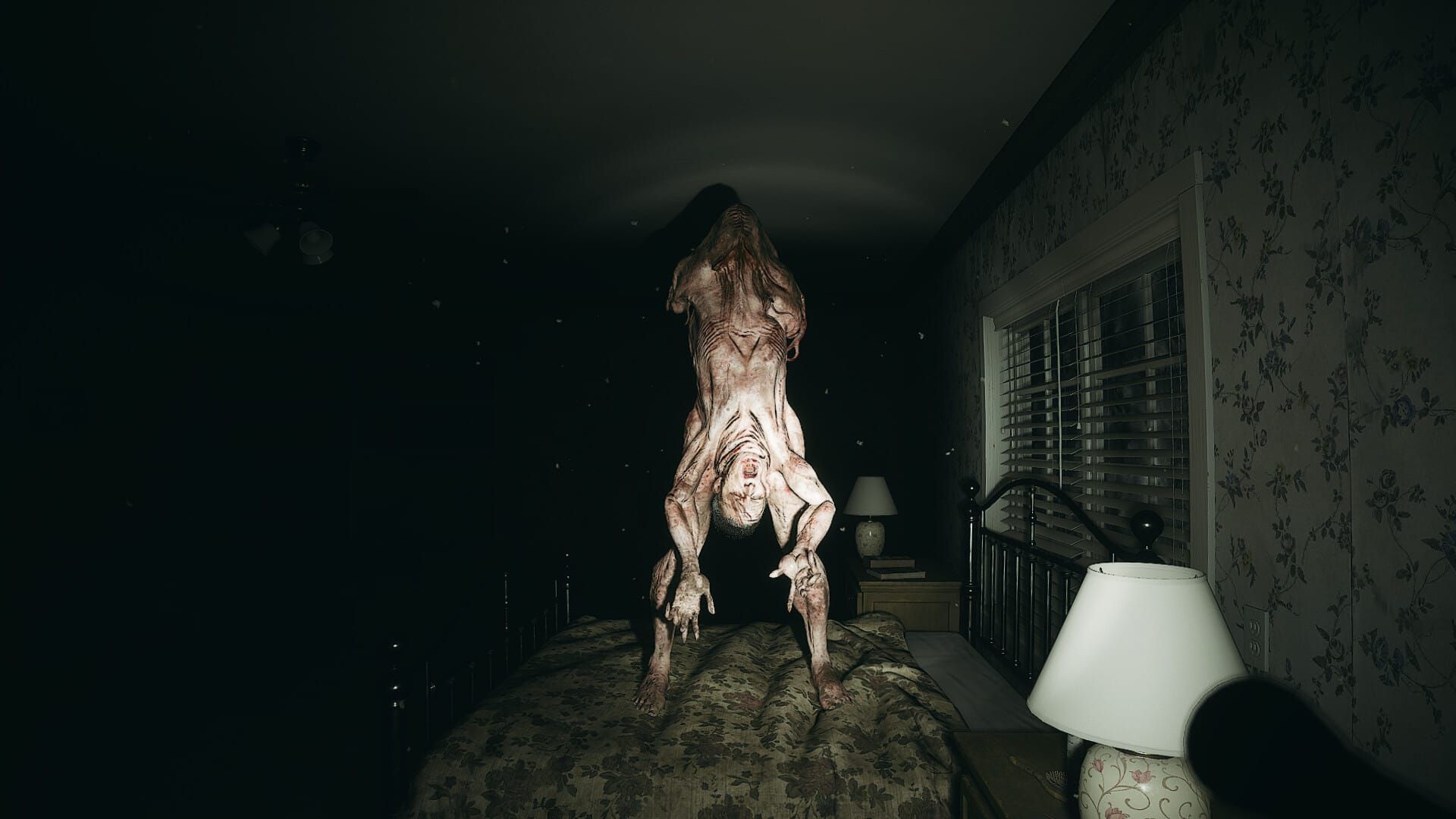
I like a good horror game. I like to be creeped out. I tend not to like jumpscares, but sometimes my partner sits with me while I play and every time I jump at a ghost or a monster, she laughs hysterically. And I love that.
So I have a collection of silly little horror games curated specifically for those nights. Just a pile of those streamer-friendly, startle-shock, jumpscare games like The Mortuary Assistant, The Cabin Factory, The 18th Attic, and Dread Neighbor. I tend to buy them when they’re on sale and then forget about them until we get to have one of our laugh-at-Jeff-for-being-jumpy nights.
Last night was one of those nights and I found Obey The Voice in my Steam library. It’s a creepy jumpscare game in the same vein as Cabin Factory that released in January of this year. It’s got a “mostly positive” on Steam and seemed like it had a pretty good premise.
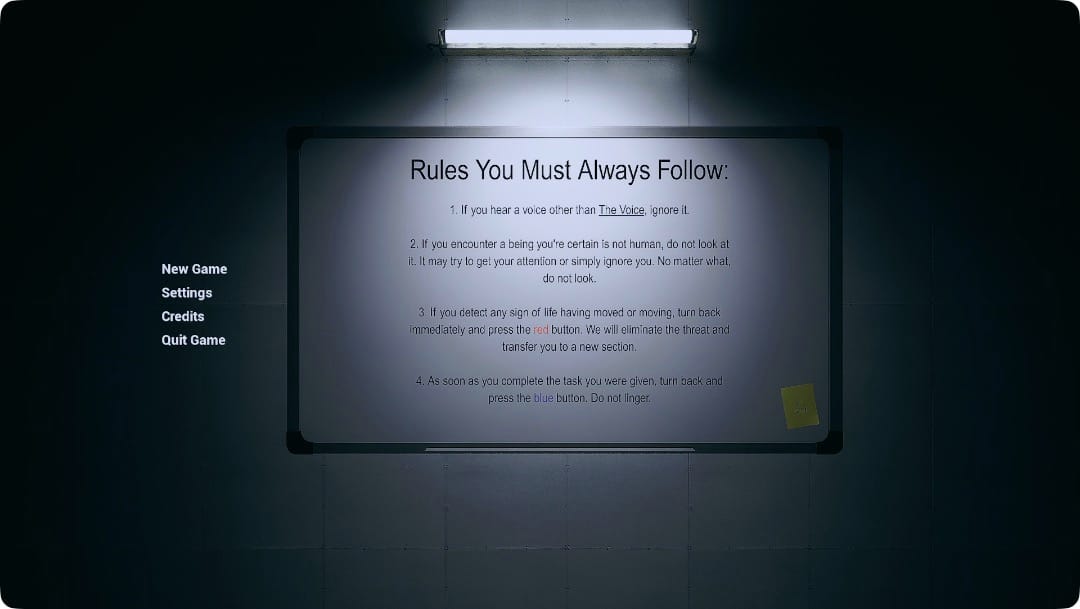
There are four rules, laid out on a helpful poster right there on the title screen: Ignore any voices other than The Voice, don’t look at non-humans, push the red button if you see something creepy, push the blue button when finish your job. The promise of The Voice and the threat of imposter voices creates lots of potential for creepy shenanigans. There’re good monster designs in the promotional screenshots. We were set.
When you hit start, the titular The Voice pops on to restate the rules out loud this time. And right away, something felt off. We started talking about the choices the voice actor was (and, more importantly, wasn’t) making in his delivery of the lines. Quiet emphasis that would’ve made the rules sound both more creepy and more memorable. Instead, the dialogue was monotone and measured. It was featureless. Robotic even.
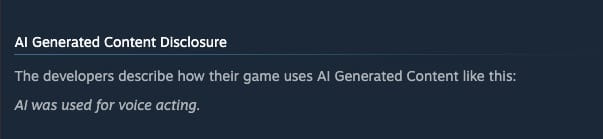
And that’s when it clicked. I’d forgotten to check for the AI disclosure on the Steam page. When I pulled it up, there it was. “AI was used for voice acting.”
Obey the Voice was made by a solo dev. It might not necessarily be a labor of love, but making any game is a massive undertaking. And it, frankly, sucks that my experience with this one was immediately torpedoed by a soulless line delivery. Now, before it seems like I’m just picking on a solo dev making a (reasonable) financial choice for a $5 game, let’s talk about Portal for a minute.
At its core, Portal is a good, physics-breaking puzzle game. Just the puzzle mechanics alone might even qualify it as a really good game. But Ellen McLain’s performance as GLaDOS elevates the game into something else entirely. GLaDOS’s constant harassment and commentary immediately makes the game one of the greatest of all time.
In the video above, Ellen McLain (who is just freaking adorable) talks about how the license to use a purely artificial voice in the mid-aughts was prohibitively expensive for Valve. It was cheaper to hire a human and manipulate her voice to sound artificial than it was to start with an artificial voice.
That’s no longer the case, obviously. But it’s not because the licenses got cheaper or competition between artificial voice licensors got more robust. It’s not the case any more because, over the last couple years, generative AI companies have completely ignored the concept of copyrights and ownership. They get sued about it a lot. Like, a lot. And most of the time, if they don’t get sued, it’s because some huge company decided to get in bed with them instead.
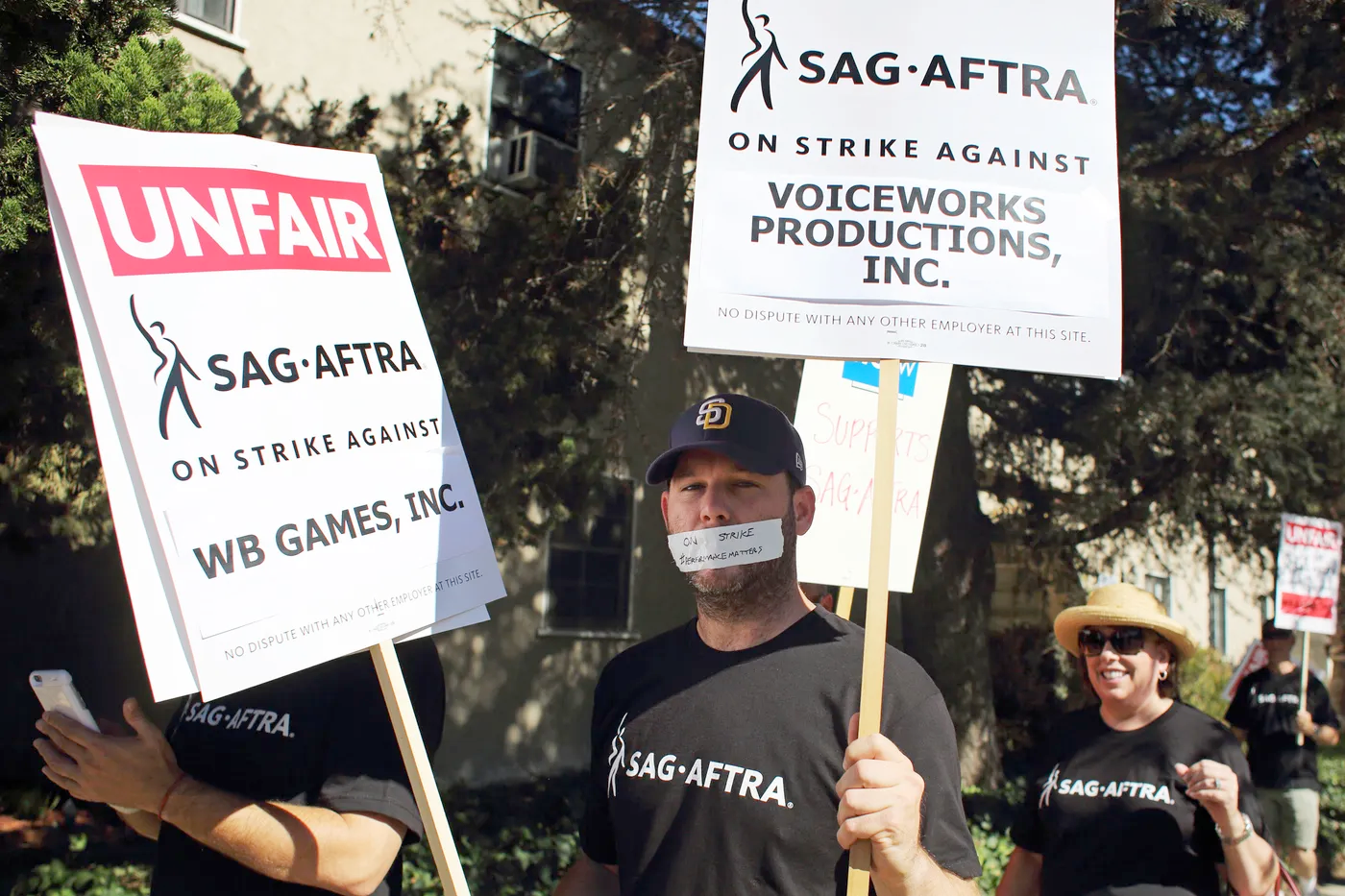
It’s extremely rare that a voice actor gets to reach celebrity status. Voice actors tend to be invisible — just voices disconnected from the humans attached to them. That’s why it’s so funny to hear GLaDOS’s voice coming out of a sweet old lady. It also makes them extra vulnerable to the kind of theft that generative AI companies rely on. There was a SAG-AFTRA strike about it. Other voice actors are suing about it.
Imagine Portal if GLaDOS spoke with one of those ubiquitous Tiktok AI-generated voiceover voices. Or Portal 2’s Wheatley. Or 2001’s HAL. Or Anthony Daniel’s C3-PO. Or Majel Barrett’s performance as the USS Enterprise’s computer that spanned more than five decades (including after her death). And that’s just AI and robot voices I can think of off the top of my head.
A solo dev using an AI-generated voice isn't a cheap solution — it’s a solution that cheapens the work of immensely talented professionals whose voices have defined pop culture.
It might cost less money, but the price is still too high. And it will keep me from playing your game, no matter how good it might have been otherwise.