


Cyberpunk 2025: Piece As Promised
Part 11: Max Headroom, Transmetropolitan, and All The President's Men

There isn’t really a lot that's cyberpunk about journalism. But there sure is a lot of journalism in cyberpunk. I can think of three examples off the top of my head. And, while three isn’t a lot, it’s still way more than I’d expect for a genre so focused on high-tech dystopias.
There’s probably a reason for that, huh?
I only invent the bomb, I don’t drop it
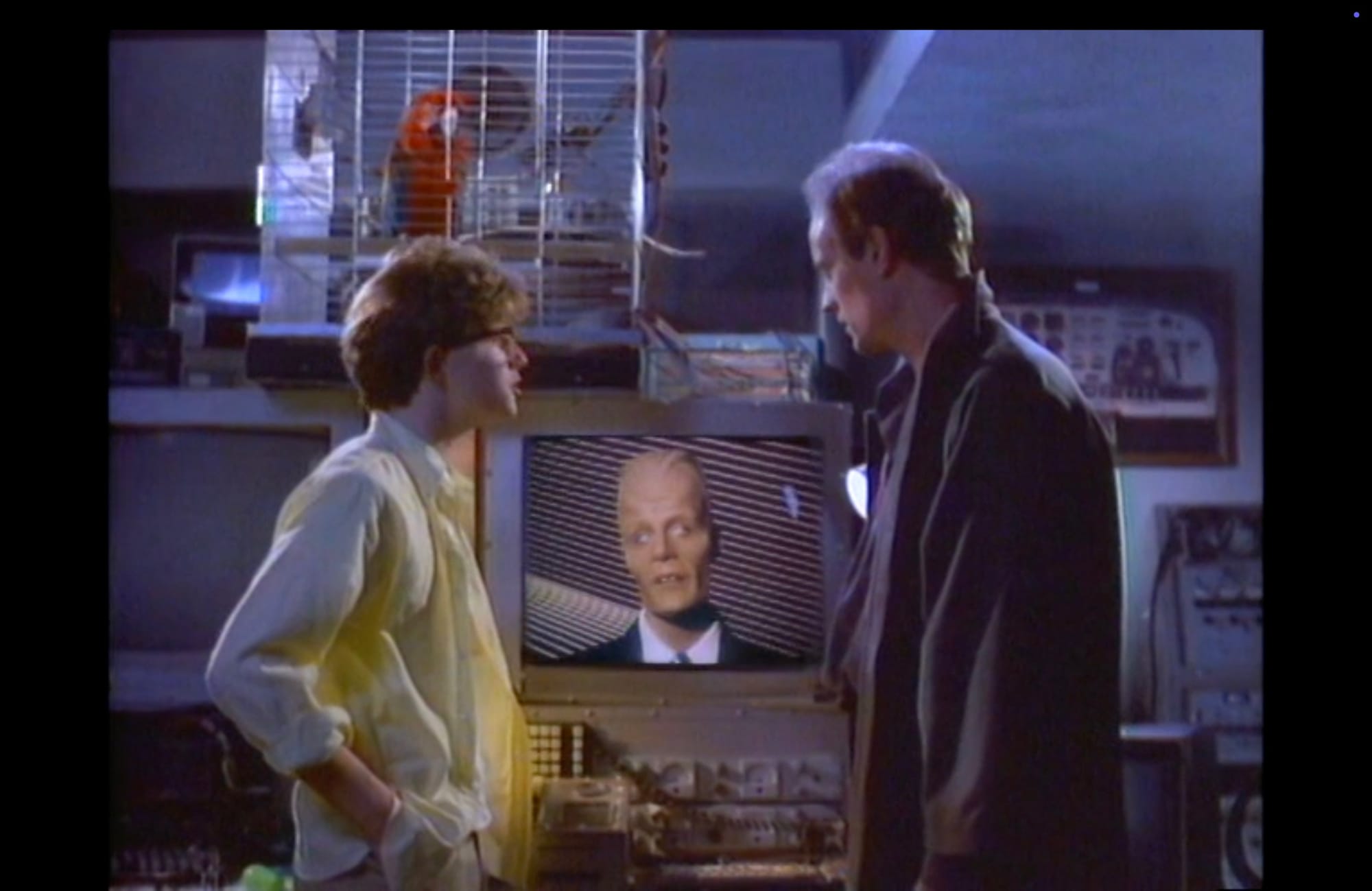
Every version of the Cyberpunk TTRPG lists Max Headroom in the “other hot cyberpunk sources” inspiration list. (Every version also lists Overdrawn At The Memory Bank, but we’re not going to talk about that.) As someone who survived the 80s, my memory of Max Headroom is that of a marketing gimmick that became iconic, but (at the time) not much else. I was vaguely aware of a backstory, but he was mostly just a cool visual (I was admittedly a child, so the nuances were lost on me).
Set “20 minutes into the future,” Max Headroom’s origin was laid out in the 1985 British movie, Max Headroom: 20 Minutes into the Future. After a couple years as a VJ, marketing spokesperson, and, frankly, not much more than a cool visual, Max’s story was repackaged and retold for an American audience in 1987’s Max Headroom.
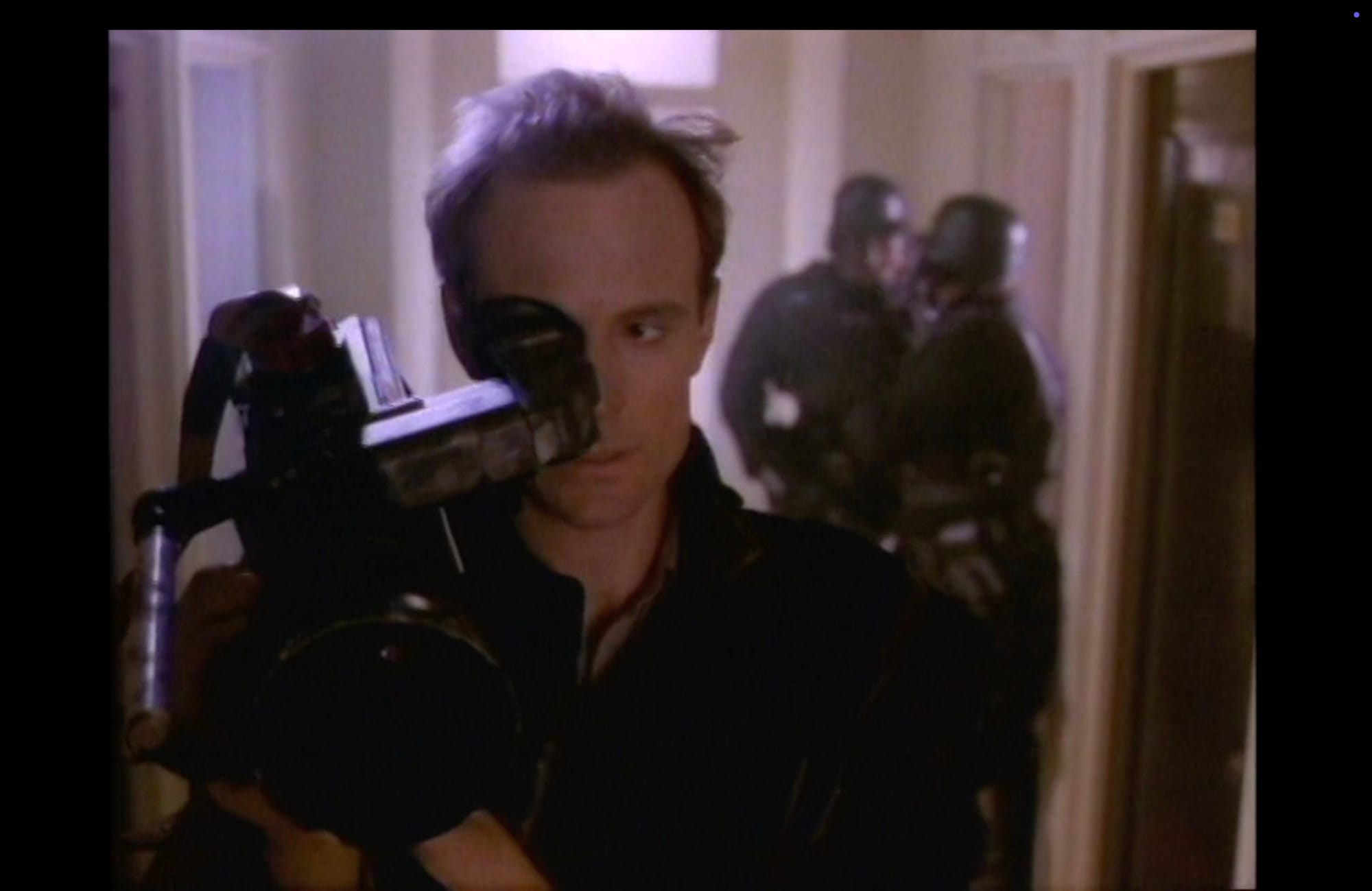
Max’s story starts with investigative journalist Edison Carter. Carter is an extremely popular TV personality in a corporate-controlled future where TV is basically the be-all and end-all of civilization — it’s actually illegal to turn off your TV. Carter is both a reporter and his own camera operator, using a mobile broadcasting setup that fits into a conveniently portable camera that looks like it weighs approximately 50 pounds.
I’m going to rush through some points because the plot isn’t actually what’s important here. In both the movie and the series pilot, Edison Carter starts investigating some mysterious deaths. Over the course of his investigation, he links the deaths to his own employer, Network 23.
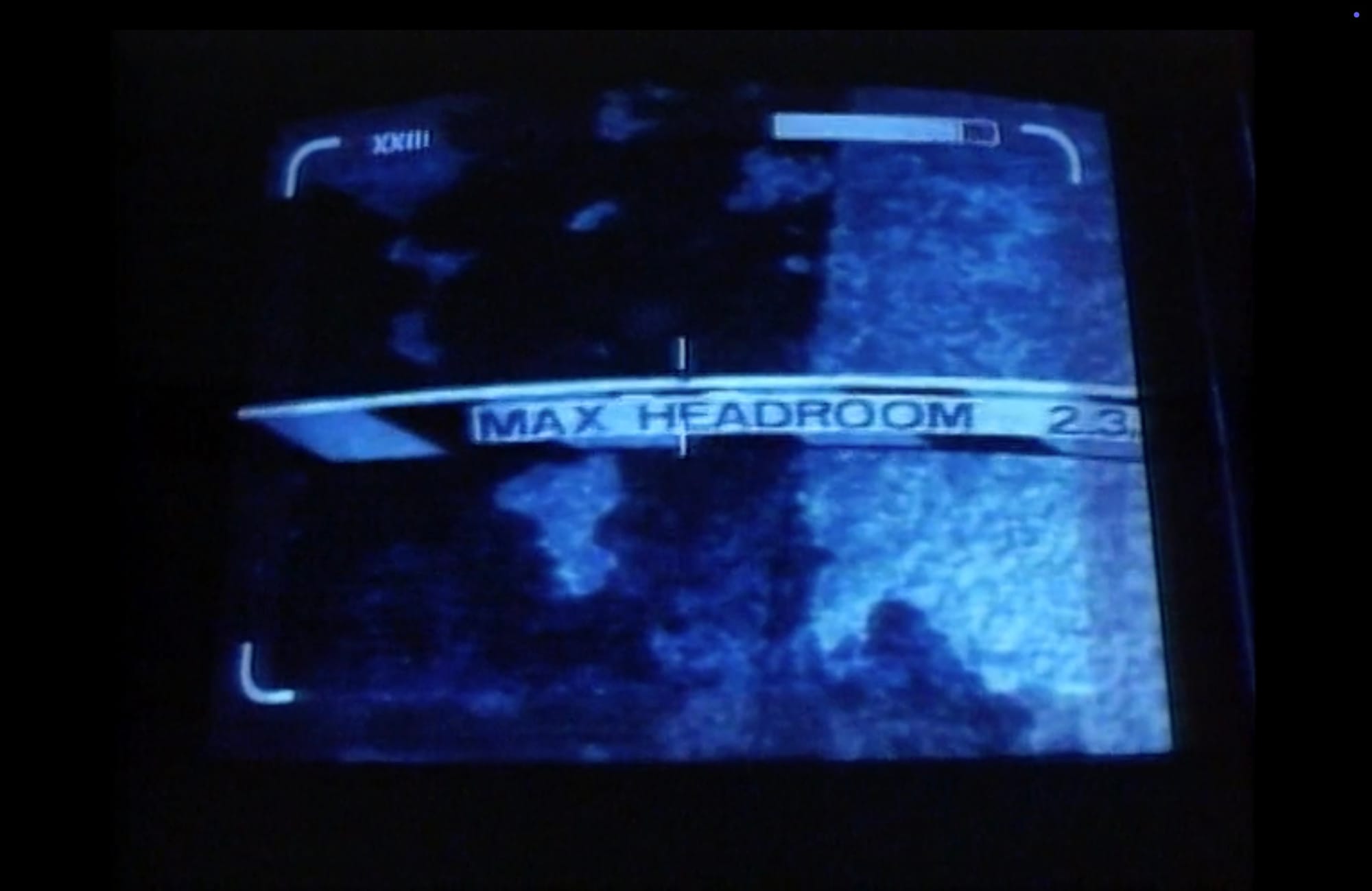
The suits that run Network 23 spike Carter’s story — a journalism term that just means to kill the story and not run it. Carter continues poking around, though. When Carter gets too close to the truth, the higher-ups at Network 23 try to have him killed. In the ensuing motorcycle chase, Edison gets cornered in a parking garage. In his desperate attempt to escape, he crashes into a sign that indicates the clearance height for the garage, or, as the British put it back in the 80s, the max(imum) headroom.
I’m actually going to leave Max Headroom there for now — there’s a lot going on in the series that we’ll come back to later. The part I wanted to focus on today was the (cyberpunk) journalism.
Muckraking and xeroxing
Around the turn of the 20th century, journalism was playing two roles. On one side, you had yellow journalism with its sensationalism, exaggeration, and inflammatory headlines all designed explicitly to sell more newspapers. On the other was investigative journalism or muckraking — digging into the muck to find the truth with an explicitly progressive agenda.
Yellow journalism might occasionally expose corruption or examine social problems along the way, but it wasn’t the intent. Muckraking aimed directly at abuse and corruption with the intention of reform. While it can be used as an insult, muckraking also includes famous and influential writers like Ida B. Wells and Upton Sinclair.

In 1906, President Theodore Roosevelt said:
“There are, in the body politic, economic and social, many and grave evils, and there is urgent necessity for the sternest war upon them. There should be relentless exposure of and attack upon every evil man whether politician or business man, every evil practice, whether in politics, in business, or in social life. I hail as a benefactor every writer or speaker, every man who, on the platform, or in book, magazine, or newspaper, with merciless severity makes such attack, provided always that he in his turn remembers that the attack is of use only if it is absolutely truthful.”
Muckraking journalism grew out of the US’s Progressive Era in the early 1900s. This era was marked by reforms to social issues and just a general aim to make life better. This is when the National Park Service was formed, women got the right to vote, many of the US’s antitrust laws were enacted, and when senators started getting elected instead of appointed by the state legislators. It was also, however, the time of Prohibition, Jim Crow laws, and the formation of the US Border Patrol.

In the decades after World War I and the Great Depression, challenging and investigative journalism kind of fell out of favor. “Journalistic conformity” and “deference to authority” became the standard. It wasn’t until the 1960s that muckraking and investigative journalism was reborn as “New Journalism.”
This is when the Freedom of Information Act was enacted (1966) and when shows like CBS’s 60 Minutes brought investigative journalism into prime time. It is also, the Encyclopedia of Journalism notes, when photocopiers became accessible and widespread enough to allow whistleblowers to leak copies of evidence.
That last part is going to become oddly important here in a second.
The Credibility Gap
In the United States, only Congress has the power to declare war. And that power has been used only five times. The US has technically not been at war since the end of World War II.
Except that’s obviously not true.
Especially when it comes to the US’s crusade against communism — mostly in the forms of Russia and China — following WWII. The Cold War kicked off in 1947 with President Harry S. Truman and his policy of containing communism through proxy wars like the Korean War (which is technically still not over) and the Vietnam War.

The US’s involvement in Vietnam spanned five presidents. It started in 1950 when Truman sent military advisors to help the French colonial government against communist revolutionaries (it didn’t work). Eisenhower sent the CIA (it didn’t work), Kennedy expanded the number of advisors from 1,000 to 16,000 (it didn’t work), Johnson escalated the war with bombings and ground troops (it didn’t work), and Nixon first artificially prolonged the war and then finally pulled the US out entirely in 1973.
Starting in 1967, Secretary of Defense Robert McNamara created the Vietnam Study Task Force to write an “encyclopedic history” of the war and maybe figure out some of the (many) failures of the last two decades. The result was 7,000 pages of history, analysis, findings, and documents collected in 47 volumes.
These Pentagon Papers laid out a lot of the shady shit the US had been doing — from backing an assassination and coup d’etat to secretly bombing Cambodia and Laos to exaggerating (read: full-on fabricating) the Gulf of Tonkin Incident that led to the US’s direct involvement. None of it was reported to or by the US media. Most of it was outright lied about by the various administrations (especially Johnson’s).
![r/vintageads - The Xerox 914 Copier [Fortune Magazine, 1960]](https://i.redd.it/u05d9dwqv4241.jpg)
One of the researchers on the Pentagon Papers started sharing some of them with a New York Times reporter named Neil Sheehan. When Sheehan got a full set of the report’s volumes, he immediately set about making photocopies (presumably at the blistering pace of seven pages per minute). The Times started publishing reporting on the Papers in June of 1971 followed closely by the Washington Post.
The Times published three articles before the Nixon administration asked them to stop. When they didn’t, the government got a judicial injunction to make them. Nixon’s government also tried to get an injunction against the Post, but failed. The issue made it to the Supreme Court by the end of the month where it was decided in favor of the newspapers. [Ed. note: phew! I'm glad that issue has been solved, probably permanently. now, time to take a big sip of coffee -]
As knowledge of the Pentagon Papers became widespread, it became clear just how much the government had been flat-out lying to the American people. The discrepancy between what the administrations had been saying and what they had actually been doing came to be called the “credibility gap.”
They're bending the truth out there
Ever since the first edition of the Cyberpunk TTRPG in 1988, journalists — called Media — have been a part of the game. It’s been a full-on role (like a class in other tabletop games) for your character every edition since. While Media isn’t a background you can choose for V in Cyberpunk 2077, one of the fixers we’ve talked about in this series, Regina Jones, is a prominent character who used to be a Media.
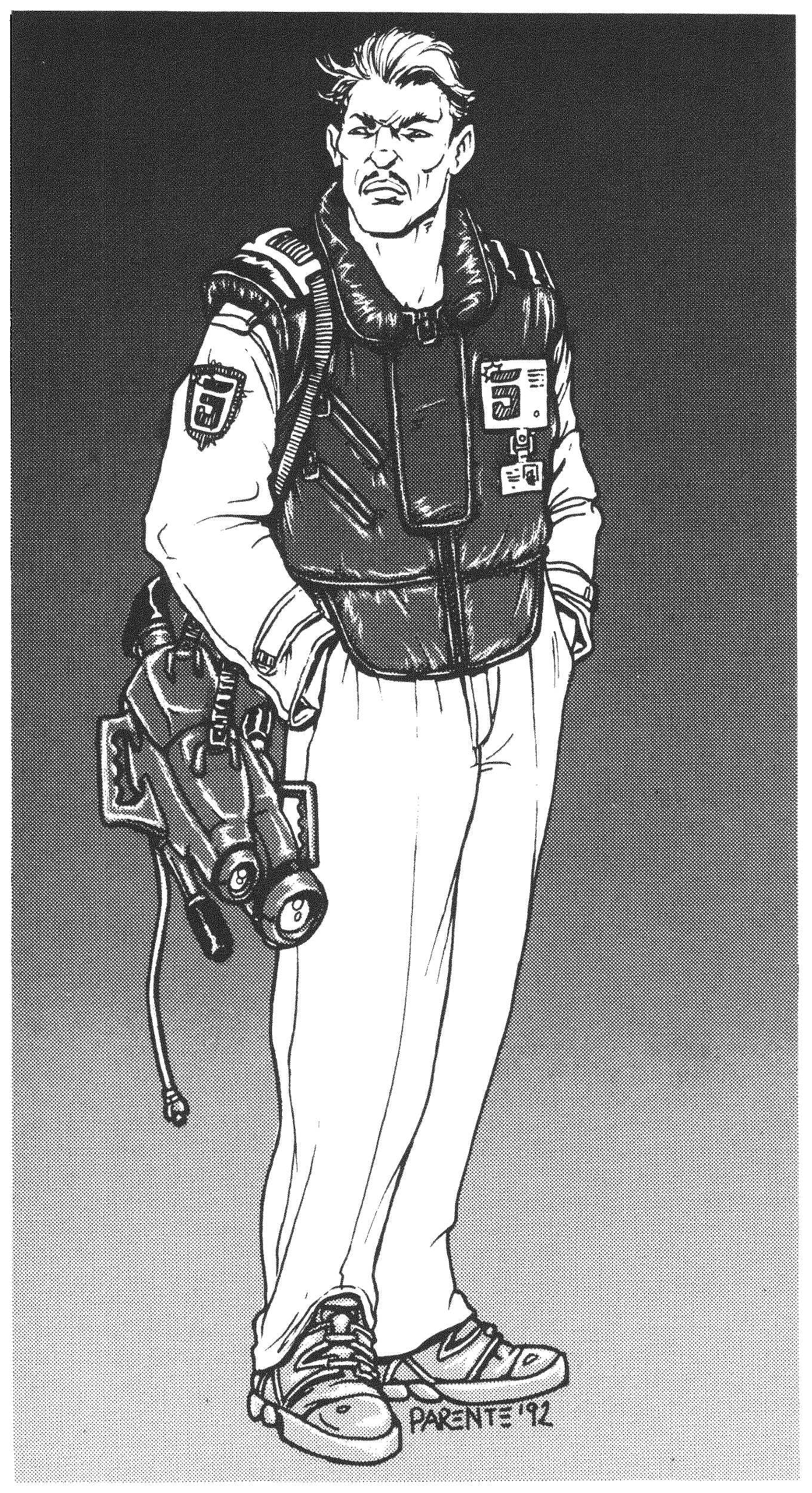
In-game, a Media’s main skill is their Credibility. This is a measure of their believability and their ability to convince others of the(ir) truth. It runs from exposing minor scandals to national news to affecting global power structures.
The 1990 version of the game, Cyberpunk 2020, has an interesting quote in its description of Credibility. “At level +9, you can successfully expose a scandal of Watergate proportions.”
Ratfuckery
Ratfucking is a term from southern California in the 50s and 60s that basically just means “prank.” At the University of Southern California, though, those pranks evolved into elaborate and underhanded political machinations as part of the USC student government elections. “Hit the other guy hard––using inventive, over-the-top dirty tricks––and then laugh about it. Take no prisoners, don’t forget payback, do what’s necessary to win.”

In 1971, the Nixon administration didn’t just rely on the courts in its attempts to shut down the Pentagon Papers reporting. Within a week of the first story, Nixon had established the White House Plumbers, a special investigation unit of shady fixers whose job was to stop leaks (GET IT!? Nixon was never exactly subtle).
/https://tf-cmsv2-smithsonianmag-media.s3.amazonaws.com/filer/National-Treasure-file-cabinet-631.jpg)
Their first task was to discredit Daniel Ellsburg, the researcher who originally leaked the Papers. They broke into Ellsburg’s psychiatrist’s office looking for his file. They didn’t find it. Ellsburg was looking at as much as 115 years in prison for espionage, but the bungled robbery led to all charges against him getting dropped because of governmental misconduct.
The Plumbers weren’t done, though. There were a lot of proposed operations all designed to hurt Democrats during Nixon’s 1972 reelection campaign — ranging from sabotaging air conditioners to staging compromising photos of Democratic leaders with prostitutes to straight-up kidnapping people. None of those ever got approved, though. A lot of the people involved in the various schemes had come from the USC culture of ratfucking.

The one plan that did get approved, though, was the burglary and bugging of the Democratic National Committee office in the Watergate Hotel. It didn’t work. The burglars got caught. It was kind of a big deal.
Is there any place you don't smoke?
The Nixon administration destroyed evidence, obstructed investigations, bribed people, and generally did everything it could to cover up its involvement in the Watergate robbery. And it worked. Nixon was reelected in 1972 with the largest share of the popular vote of any Republican ever.
In the following two years, though, the trial of the burglars ultimately led to a Senate investigation and, eventually, to Nixon’s resignation in 1974. In total, 69 (nice) people were charged in connection with Watergate.
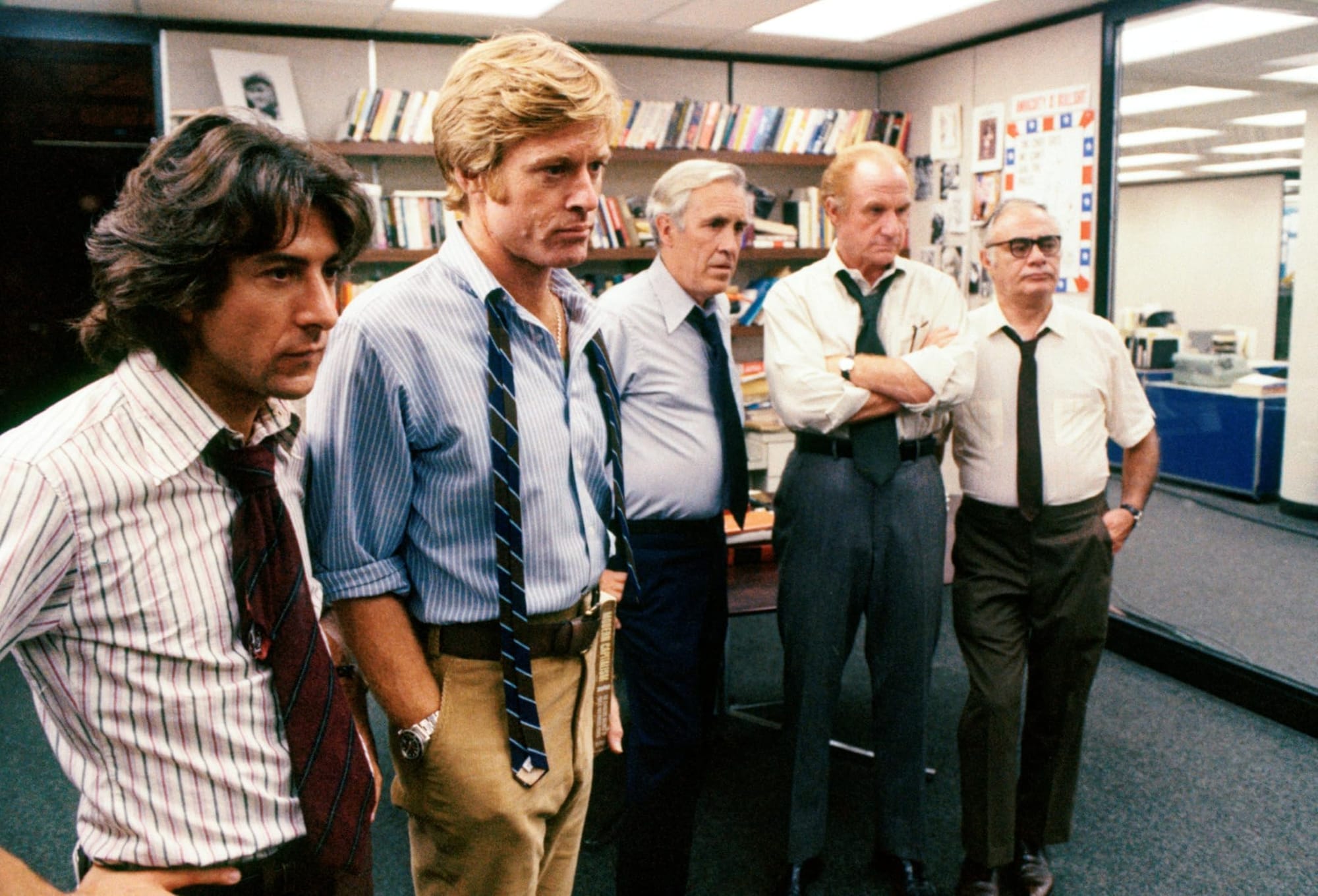
While it wasn’t the investigative reporting of Bob Woodward and Carl Bernstein that singlehandedly led to Nixon’s downfall, their writing for the Washington Post put the Watergate scandal at the forefront of American culture. This too was kind of a big deal. They made a movie about it.
I’d never watched 1976’s All The President’s Men before. It’s not cyberpunk, obviously, but it is a really good movie. Also, as an aside, Dustin Hoffman’s version of Carl Bernstein smokes a just heroic number of cigarettes over the course of the story. Like, he’s just constantly smoking and it’s equal parts fascinating and distracting.

So, All The President’s Men and Watergate aren’t cyberpunk, but I’ve spent so much time talking about them because they established some important vibes for the subsequent decades. Just like Reagan and Reaganomics in the 80s define so much of the socioeconomic landscape of the genre, the credibility gap exposed in the 70s defines the sociopolitics. There was a new sense of general (documentably justified) mistrust and an assumption that everyone in power is lying.

Nixon’s circle’s very real threats against journalists — one of the Plumbers was ready to murder journalist Jack Anderson, but went to jail for the Watergate burglary first — made journalism dangerous and sexy. That plus the celebrity status of Woodward and Bernstein brought investigative journalism into the cultural milieu of cyberpunk’s birth.
I Hate It Here
Before we get into this next section, we have to acknowledge something. We’re going to talk about the comic series Transmetropolitan because it is both very cyberpunk and very journalism-focused. But it was written by Warren Ellis, who, starting in 2020, has been accused of “manipulation, gaslighting, [sexual] coercion, and other forms of emotional abuse.”
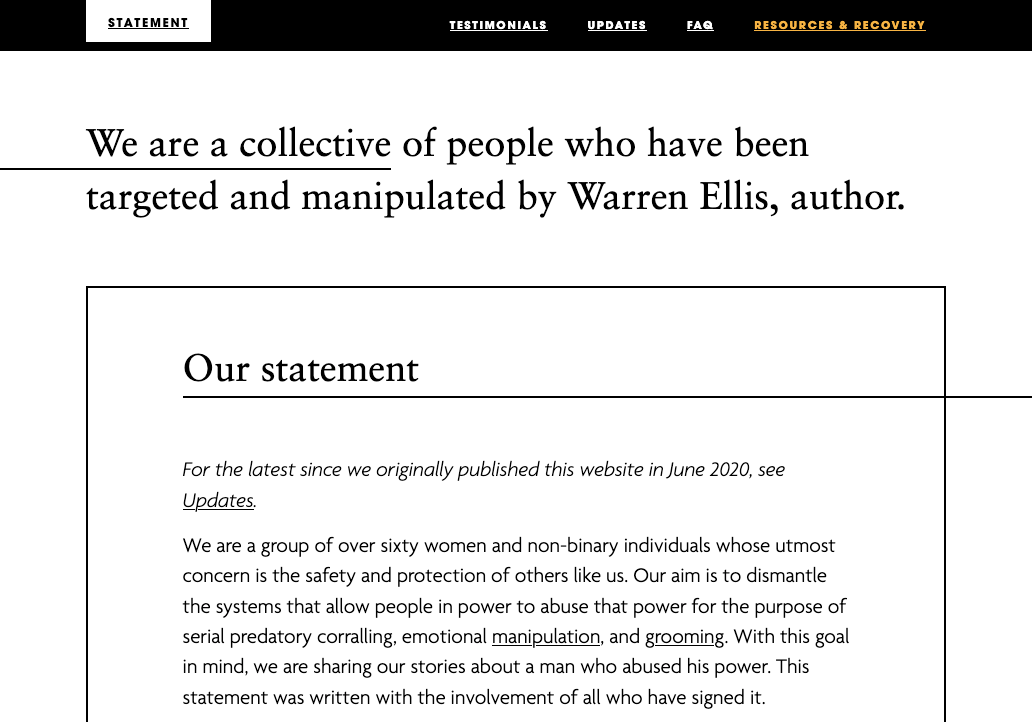
Over sixty individuals have come forward with their stories of Ellis’s behavior. After an initial, self-pitying nonpology, Ellis promised to work with his accusers to be better. As of 2023, though, SoManyOfUs reports that “A mediated accountability process with Warren Ellis is not possible at present, and we do not anticipate our involvement in any progress he might make in the future.”
I was unaware of these allegations until I reread Transmetropolitan earlier this year in preparation for this series. I do think Transmet is still worth talking about, but it very much requires separating the art from the artist and I wanted to make sure that I acknowledged that Ellis is an abuser. (And I will be making a donation to RAINN to offset any attention this article might give him.)
It’s really upsetting because Transmet still mostly holds up (shocker: it’s super problematic in its depictions of women) and is, frankly, perfect for this article.
Journalists do not cry
Set sometime in the 23rd century and in an unnamed city (“The City”), Transmetropolitan follows gonzo journalist Spider Jerusalem as he returns to his job as a muckracker and opinion columnist. Spider’s whole schtick is really just Hunter S. Thompson (of Fear and Loathing in Las Vegas fame) transposed into the future, but it works.
Because of the previous section and not wanting to give more air than necessary to a(n alleged) sexual predator, let’s speedrun the important points of Transmet’s story and link them to things happening in the world today.
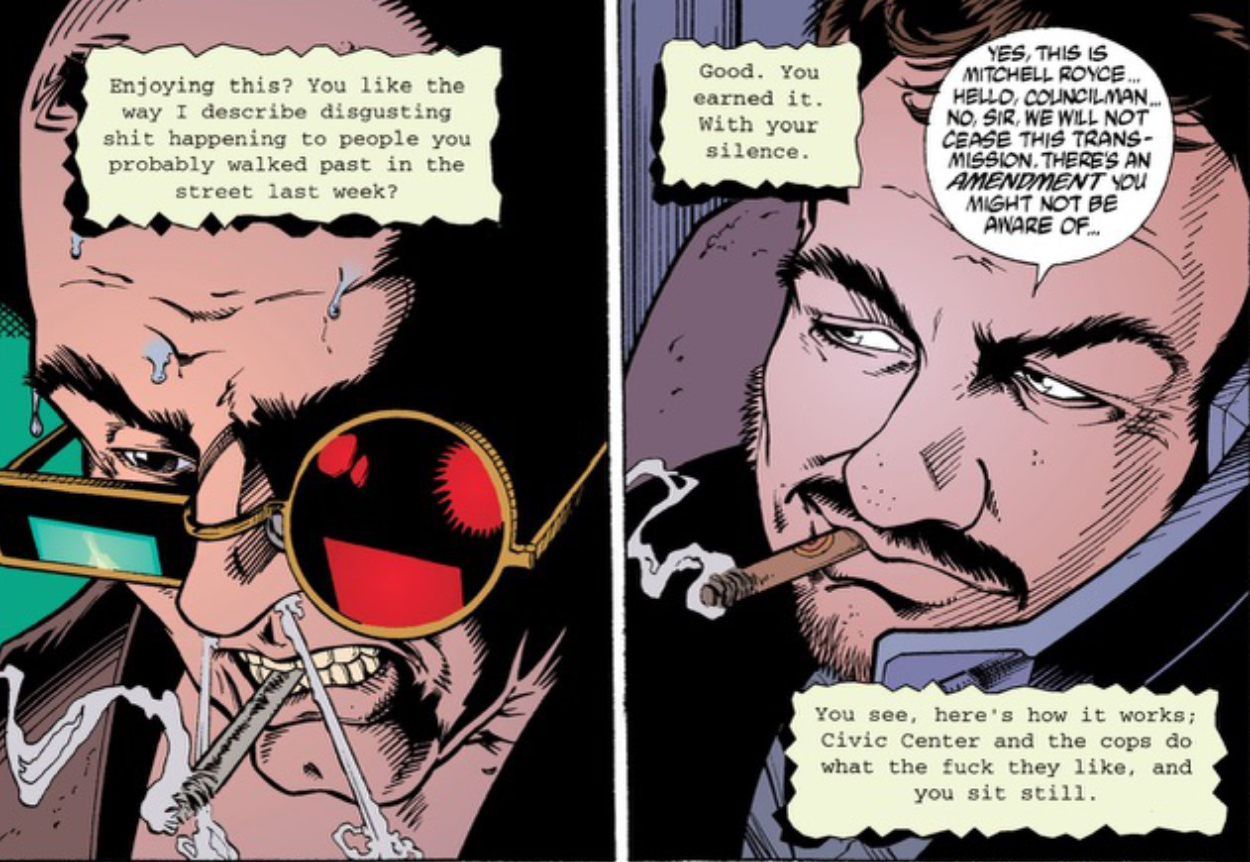
Spider Jerusalem wears an iconic pair of “live shades” — glasses that record audio and take still photographs. He uses them throughout the story for his articles. They’ve got two gigs of onboard storage and he has to manually download the data.
Here in the real world, we got Meta’s Ray-Ban smart glasses. They’ve got headphones, a camera and microphone, a small screen built into one of the lenses, and a connection to Meta’s AI. Rather than being of any use to journalists, though, they’re mostly used by manfluencer types to post non-consensual videos, harass strangers, and just generally be perverts about things. Oh, and all of the “AI-annotated” video they take ends up being sent to Meta employees in places like Kenya to fake the AI part with low-cost (exploited) human labor.
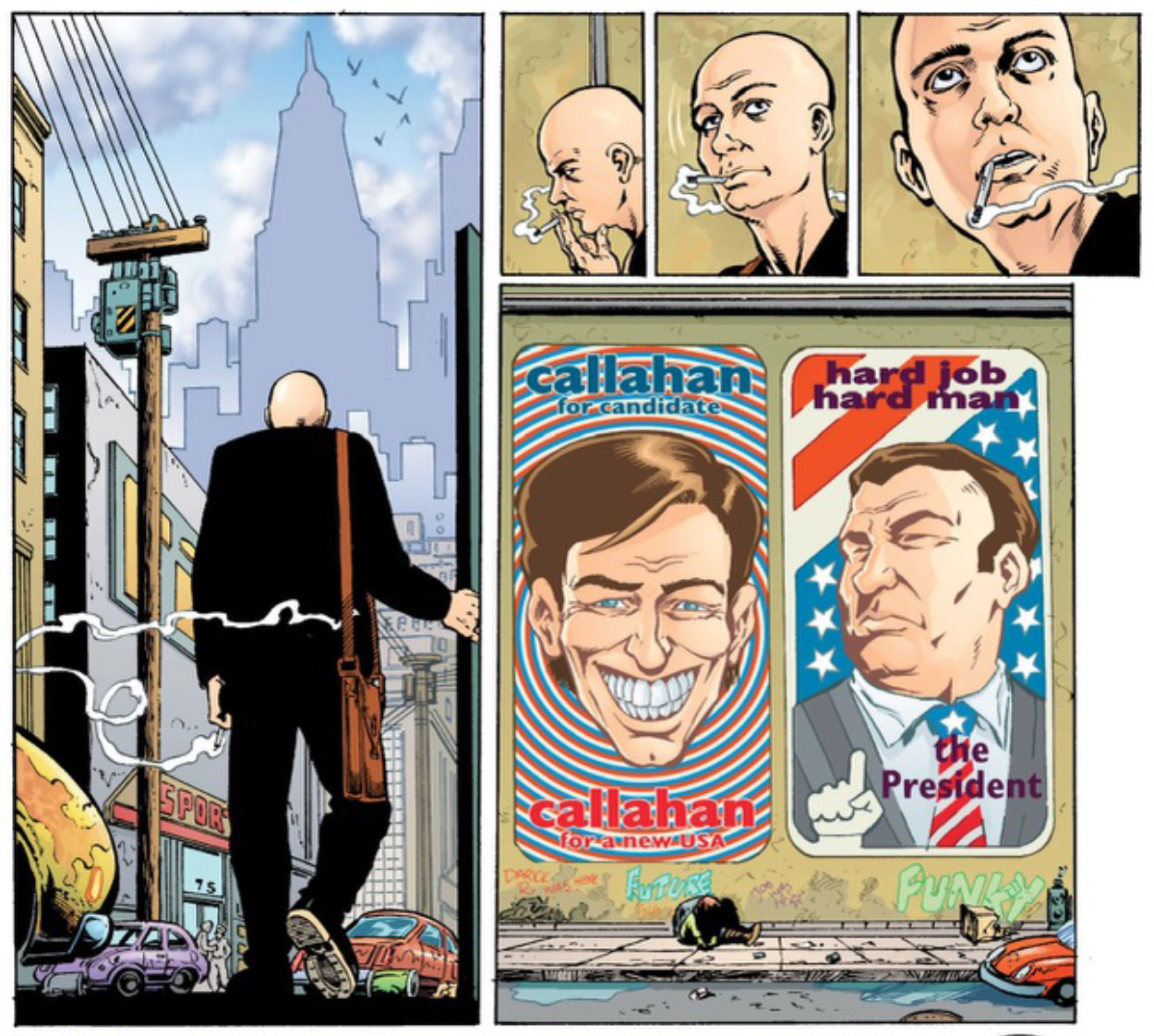
The majority of Transmetropolitan is an ongoing fight between Spider and the president of the United States. Their war starts local with a staged police riot that’s used as an excuse to claim some real estate. The US has a long history of police riots that continues to today — here’s an off-duty police officer at an anti-ICE protest in Phoenix staging assaults to get children arrested just last week.
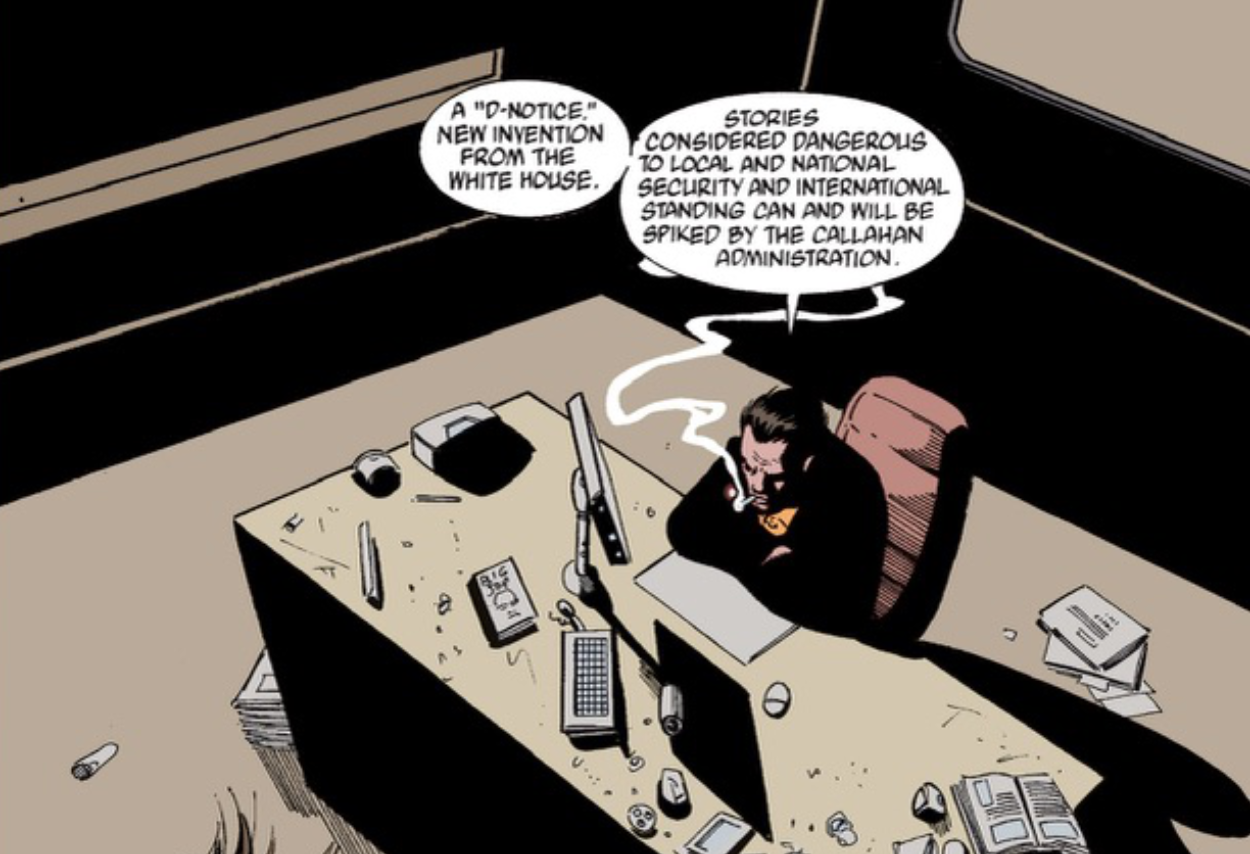
As Spider becomes more and more of a problem for the newly elected president — like exposing one of his advisors as a pedophile (I’m not even going to bother linking anything here) — the president escalates their conflict. The tipping point for Spider is when President Callahan has one of his stories spiked. Jerusalem leaks the story anyway and gets fired.

As part of his retribution for the leak, the Callahan administration leaves the City defenseless during a ruinstorm — a hurricane-like “near superstorm.” Just a couple weeks ago, a severe storm passed through the midwest spawning (at least) two tornados. The tornado warnings went out late, though, and lives were put in danger according to US Representative Sharice Davids. The National Weather Service that should’ve been issuing those warnings has had its funding and staffing cut by the Trump administration.
Ultimately, Jerusalem’s reporting exposes and takes down the president, completing the Nixonian analogy.
Banana Republican
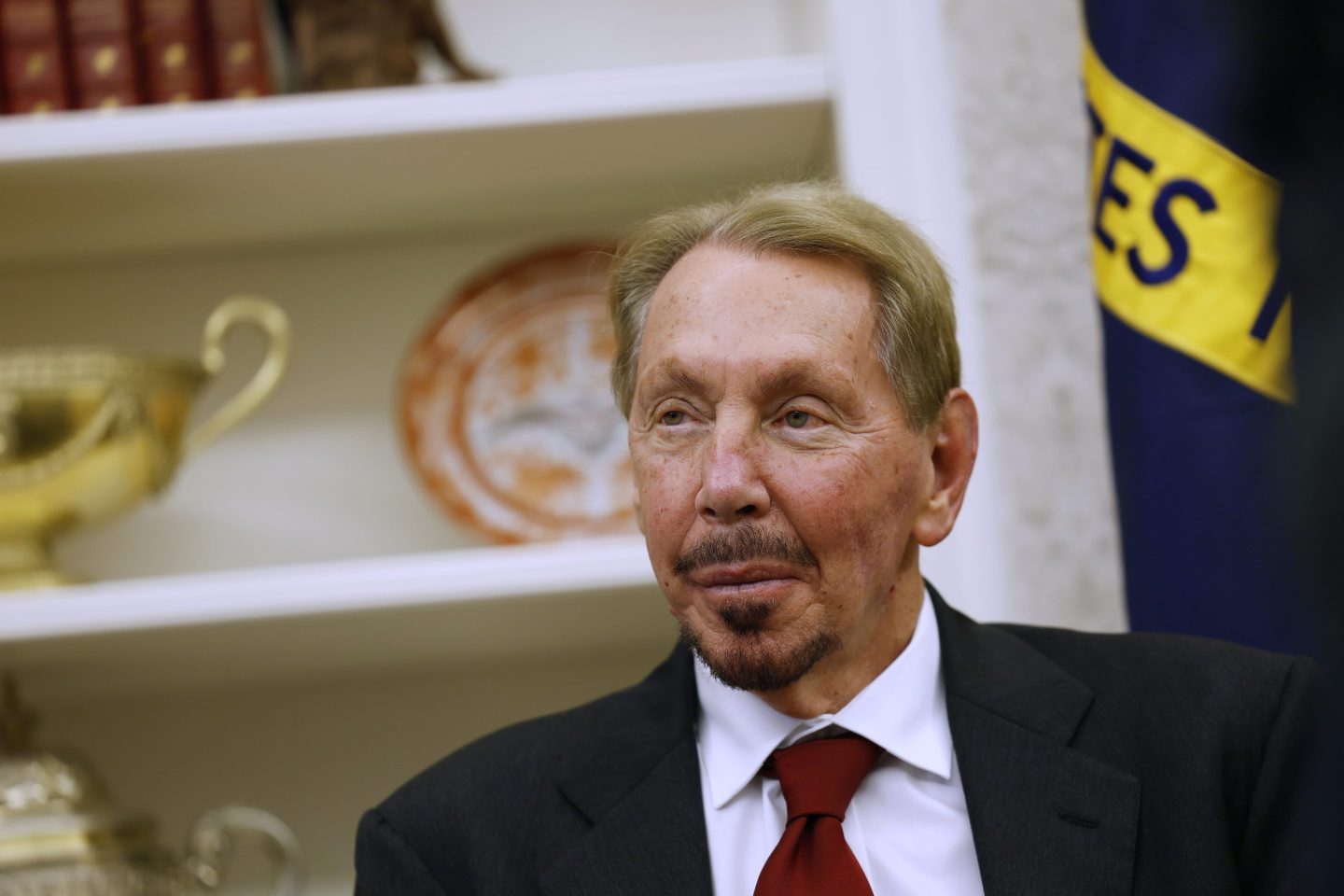
Billionaire, sixth richest person in the world, and cartoon supervillain Larry Ellison has come up in this series before because of his “citizens will be on their best behavior” quote. But he’s not just a fan of surveillance abuses. He’s also been accused of insider trading, was an early investor in Theranos, owns a bunch of Tesla stock and was a board member for a few years, thinks that Marco Rubio is a centrist, is a 2020 election denier, is part of the definitely-not-a-scam Project Stargate, was sued as a conspirator in the ethnic cleansing of Palestine (even before the current ethnic cleansing of Palestine), is buddies with war criminal Benjamin Netanyahu, and owns 96% of the land on Hawaii’s Lānaʻi island.
Another interesting quote comes from a 2013 interview Ellison did with Charlie Rose:
“This whole issue of privacy is utterly fascinating to me. … Who’s ever heard of this information being misused by the government?”
In 2006, Larry Ellison invested heavily in his son David’s production company, Skydance. In 2025, David Ellison acquired Paramount Global (the parent company of CBS) and then performed a hostile takeover on Warner Bros. Discovery (the parent company of CNN). We’ll come back to that in a second.

This year, Larry Ellison’s Oracle is part of the TikTok USDS Joint Venture LLC, the US-based investor group that is taking over majority control of TikTok. The other partners in the deal include Silver Lake, a private equity firm cofounded by an ex-Oracle VP, and MGX, the Abu Dhabi state-owned investment firm that’s linked to the Trump family’s cryptocoin.
Tiktok’s new ownership plans to “retrain, test, and update the content recommendation algorithm on U.S. user data. The content recommendation algorithm will be secured in Oracle's U.S. cloud environment.” Meanwhile, as of late 2025, somewhere between 25% and 50% of American adults report regularly getting news from TikTok.
That puts TikTok’s news delivery on par with other social media platforms like Twitter-but-with-more-Nazis X (owned by the richest person in the world), Facebook (owned by the fifth richest person in the world), and Truth Social (owned by the literal president).
That is an alarming number of billionaires with direct control over the news.
Bari the lede
In 2024, then-candidate Donald Trump sued 60 Minutes in a frivolous and baseless case where he accused the show of deceptive editing in order to make his opponent, Kamala Harris, look better. It was obviously a bullshit lawsuit and an attack on the free press. At the time, Paramount (owner of CBS which airs 60 Minutes) just so happened to be in negotiations for their merger with Skydance.

Instead of defending themselves and their reporting, Paramount chose to settle the case by donating $16 million to Trump. That settlement (read: precompliant capitulation) was announced in early July of 2025. In late July, CBS announced that it would be cancelling The Late Show with Stephen Colbert, a move praised by Trump. The merger was completed in early August.
With the Paramount Skydance merger, David Ellison was in charge of CBS News. He appointed Bari Weiss as editor-in-chief. There are a lot of words that can be used to describe Weiss — grifter, sexual predator apologist, bigot, racist, professional victim, right wing toady, liar — but “person with experience as a broadcast EIC” are not any of them. Suspiciously targeted layoffs followed her appointment.
On January 5, 2026, on newly appointed CBS Evening News host Tony Dokoupil’s first night at the desk, Weiss rewrote the script to paint Trump’s internationally criminal kidnapping of Venezuelan president Nicolás Maduro in a positive light.

The month before, 60 Minutes correspondent Sharyn Alfonsi had prepared a story titled “Inside CECOT” that documented the human rights abuses at the Terrorism Confinement Center (CECOT) in El Salvador — the prison that the Trump administration was using to detain migrants deported from the US.
Bari Weiss spiked the story.
Holy fucking dumpster fire
Throughout this series, we keep coming back to the concept of cyberpunk being defined by “high tech, low life.” The overarching theme that those concepts keep bringing us back to, though, is control. Surveillance is control. Information is control. Entertainment is control. Laws are control. Body image trends are control. Advertising is control. And, above all, money is control.
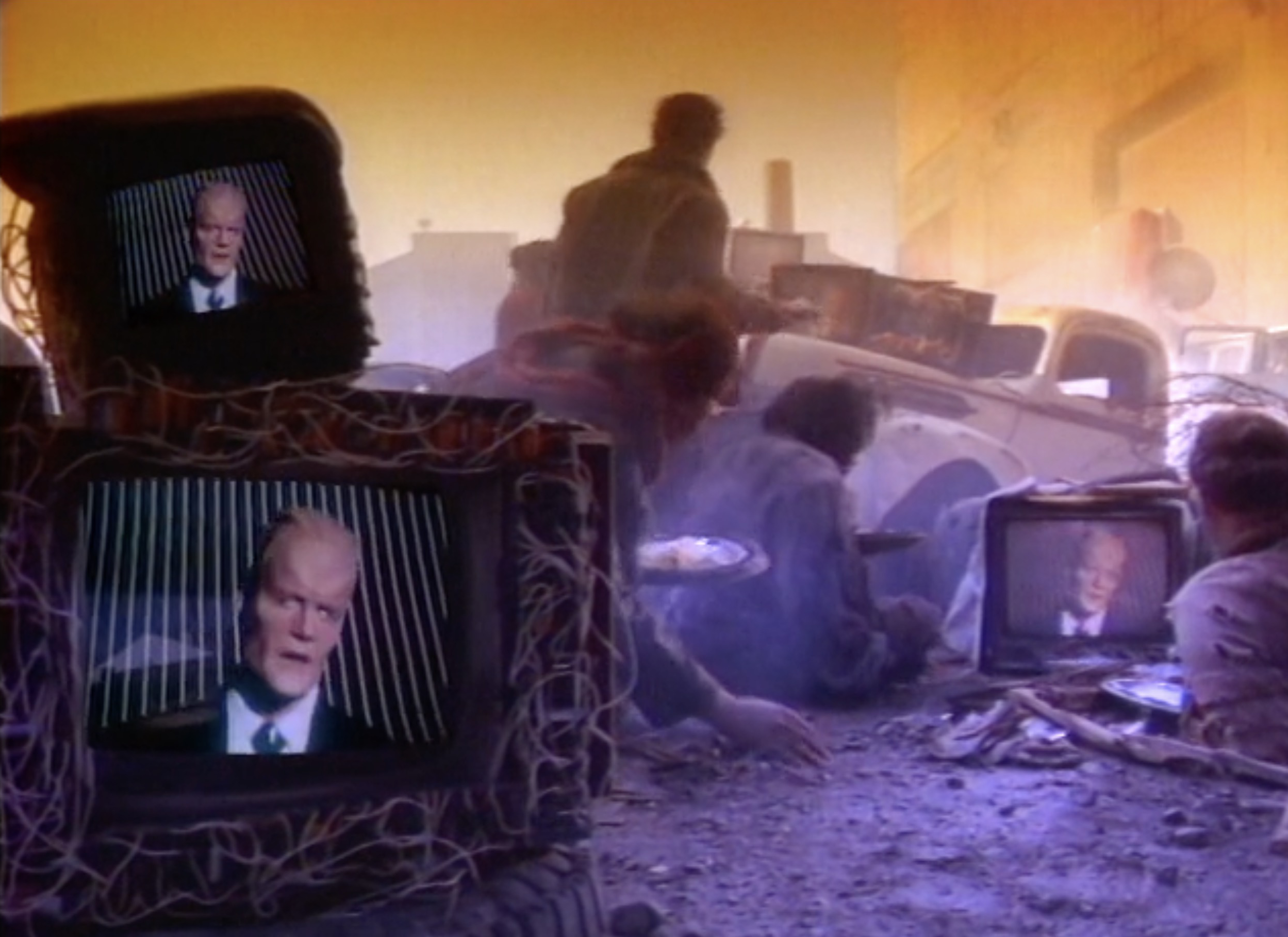
It’s not that cyberpunk and journalism are inextricably linked by any means. But (investigative) journalism — especially journalism in a post-Watergate world — is a threat to that control. None of the fictitious or real news stories that were spiked in our discussion — Edison Carter’s, Spider Jerusalem’s, Tony Dokoupil’s, or Sharyn Alfonsi’s — were untrue. But they did challenge the control of those in power.

At the White House Correspondent’s Dinner in 2006, host Stephen Colbert assured then-president George W. Bush that “reality has a well-known liberal bias.” He was joking, obviously, but there’s truth to it if you flip it around.
Attempting to control and contort reality — through entertainment, advertising, influence, threat, and coercion — has a well-documented right-wing bias. And sharing the objective truth through any means is a threat to that.