


I feel like I've been waiting years for Gambonanza
Gambonanza finds clever ways to twist chess into a roguelite

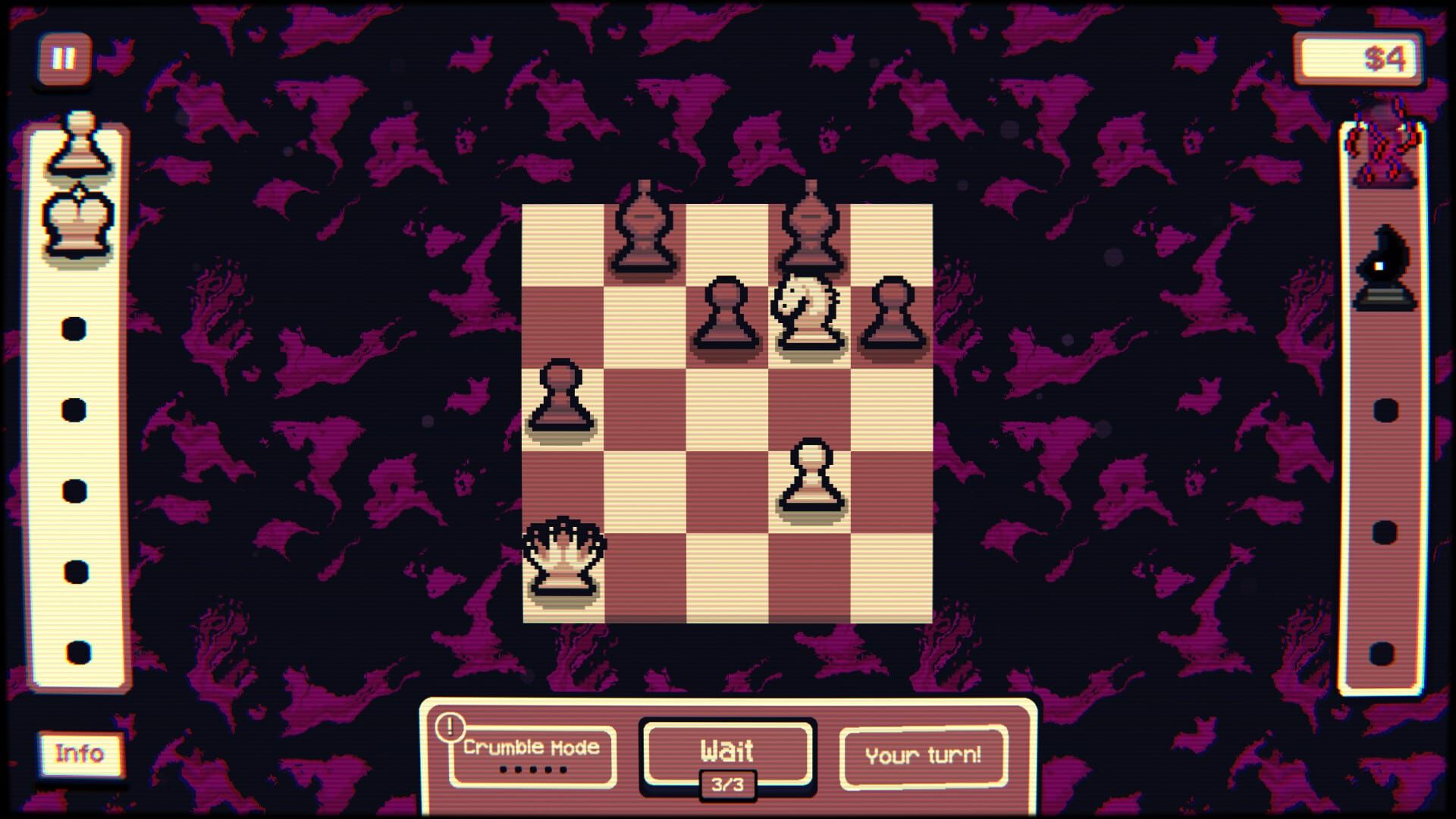
Gambonanza is a chess roguelite. And I feel like I’ve been waiting for a good one of those for forever.
In the great genre wars of indie roguelites, Gambonanza falls more into the Balatro camp. The idea is that you’re playing a real weird version of chess – complete with the classic pieces, that all behave like they should – and then you’re able to augment your synergies via some items you can buy between rounds.
To win Gambonanza, you need to remove all of the enemy pieces from the chess board before they remove all of yours. The grid starts much smaller than a traditional chess board, at only 5x5. To win your run, however, you’ll need to win five matches, each of which have five boards for you to complete – including an end boss. The board grid grows over time, but it never quite reaches a full-sized board in normal chess. Instead, the game keeps your pieces and the enemy pieces close together, with almost zero no man’s land in the middle of the board.
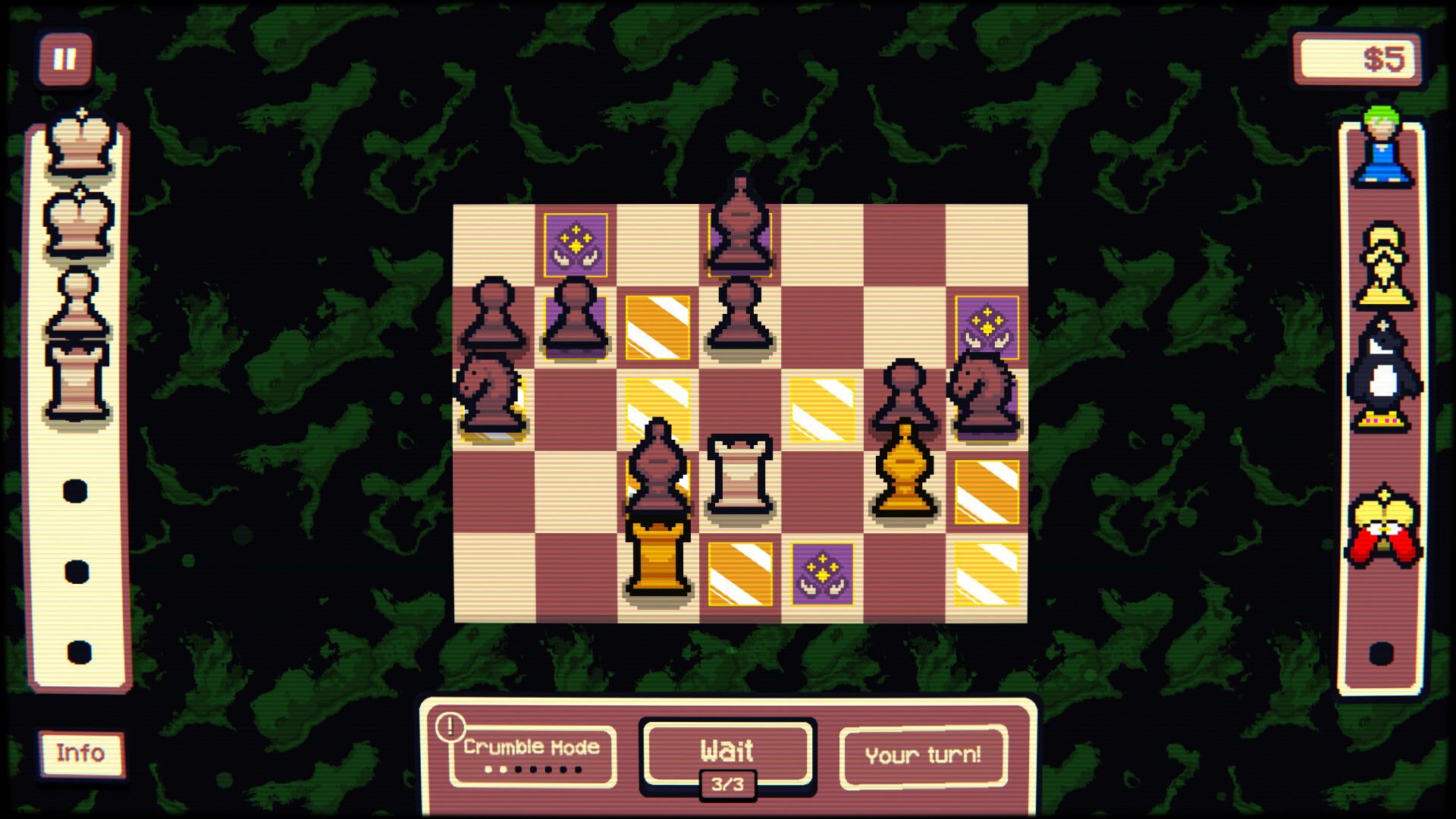
“How are you supposed to fit all the pieces on a smaller board?” I can hear you asking. Well, you don’t. Gambonanza limits how many pieces you can put on the board at once, and you’ll only start with the ability to place three. Those three pieces will be chosen for you randomly at the start of a run, and they all have permadeath, meaning you won’t get them back for the next game if they get captured. On the flipside, however, there is a piece bench on the side of your screen where you hold a few pieces in waiting that you can add to the board during a match in exchange for your turn.
Capturing your opponent’s pieces while sacrificing as few of your own as possible is the name of the game here – very much like real chess. But if you take too long roaming around the map or avoiding your opponent in Gambonanza, the board will start to crumble. This not only changes the landscape of the board, as tiles begin to fall out – even a queen can’t jump a gap, for example – it will also instantly kill any piece on a platform that falls. This is great when you’re in a pickle, and only have one piece left on the board. But you have to be careful not to maneuver yourself into a corner and get dropped.
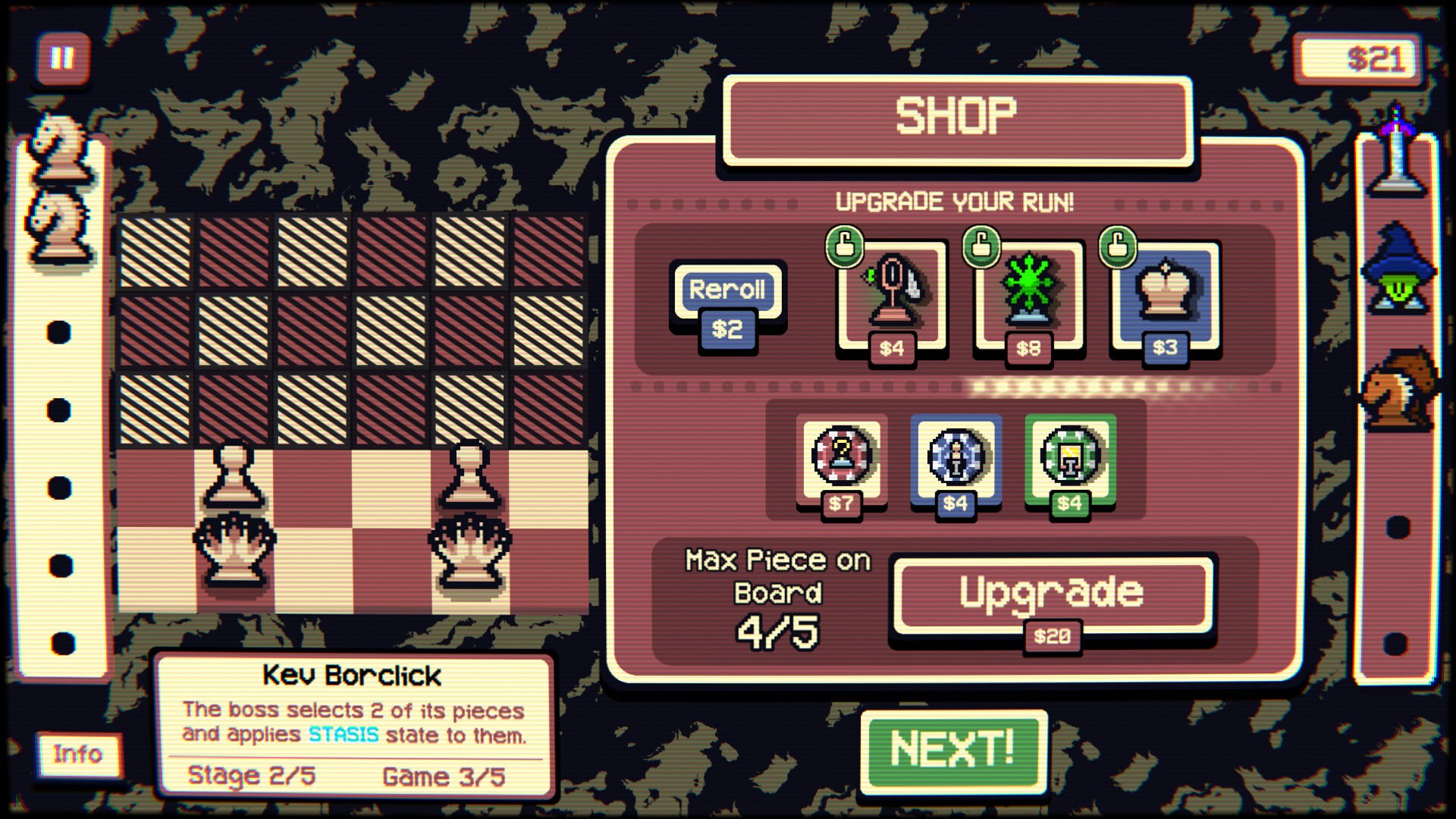
The moment-to-moment gameplay of Gambonanza is as fast or as slow as you like to play chess. And, without any augments, it basically feels like getting dropped into a chess puzzle. But where the game really starts to get weird is in the augments – called Gambits, of course – you can buy, which drastically change how you play the game..
The first run I ever won in Gambonanza consisted of a pawn/king Gambit build. Basically, every time I hit wait – which you can only do three times a match – I’d forfeit my move but instantly promote a random pawn on my board to a queen. And every time a king on my board would get taken, I’d get refunded a pawn. And, to top off the loop, every time I promoted a pawn, I’d earn a king.
It was a really excellent and easy to build feedback loop. I’d start each run by waiting all three times, and then intentionally sacrifice a few kings along the way while I wrecked the enemy board with triple queens. Thankfully chess is still chess, so any piece can take any piece if you’re not being careful enough, which keeps matches from feeling boring. But it is pretty amazing what you can do with three queens if you’re at all familiar with chess. And my dad kicked my ass at chess often enough while I was growing up that I’d at least describe myself as “familiar.”
There are, however, ways the game fights back against your tools, similar to Balatro. There are some pieces that you have to take last on the enemy board, which is particularly annoying when they’re a queen. And there are pieces that will duplicate themselves if you hit the wait button.
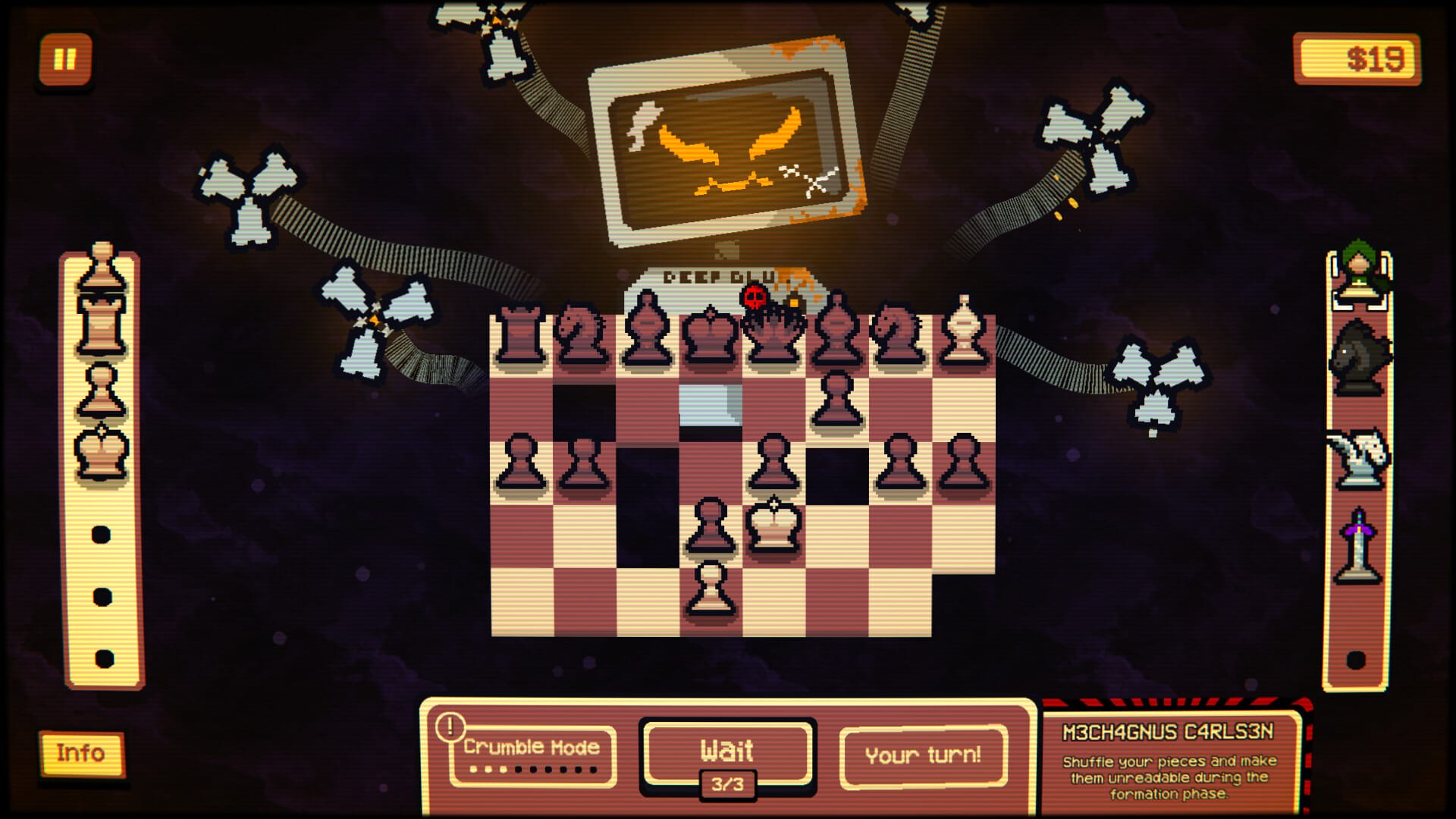
What really impressed me were the bosses. Not necessarily the mechanics themselves – they’re all pretty easy on an initial run – but their vibe. The art for them is really fun, and their names are all references to famous chess players (so I won’t spoil them here).
The only real negative thing I have to say about Gambonanza is that I haven’t felt that compelled to go back to it and complete higher difficulties after my first win. But outside of narrative roguelites like Hades or Blue Prince, that’s kind of the norm for me. I’m not really the guy grinding the different difficulty levels in Slay the Spire, as I’d much rather just learn another character and run it back on normal.
Chess was one of the physical games I spent the most time playing as a kid, and I’ve always felt like a game with such rigid rules – which is what makes it so good – would be hard to twist into a roguelite formula the way some others have. But Gambonanza really does find some clever ways to allow you to make builds. And, much like Balatro, the game still feels just enough like the source material to keep it feeling familiar.