


Inscryption’s bespoke, two-player board game is a fusion of aesthetics and adaptation
Leshy Deluxe
Perhaps one of the most effective ways to make sure that your game is playable is to ask your grandparents for help. “I knew I was done [with playtesting] when I gave it to my grandparents, who'd never played any board games and never heard of Inscryption,” said Nathan Hockridge, the game designer and founder of studio CrypticCrafter, in a call with Rascal. “I didn't say anything. I just let them work out how to do it, and they could work it out. Then I knew that it was pretty set, [and] the rules were understandable.”
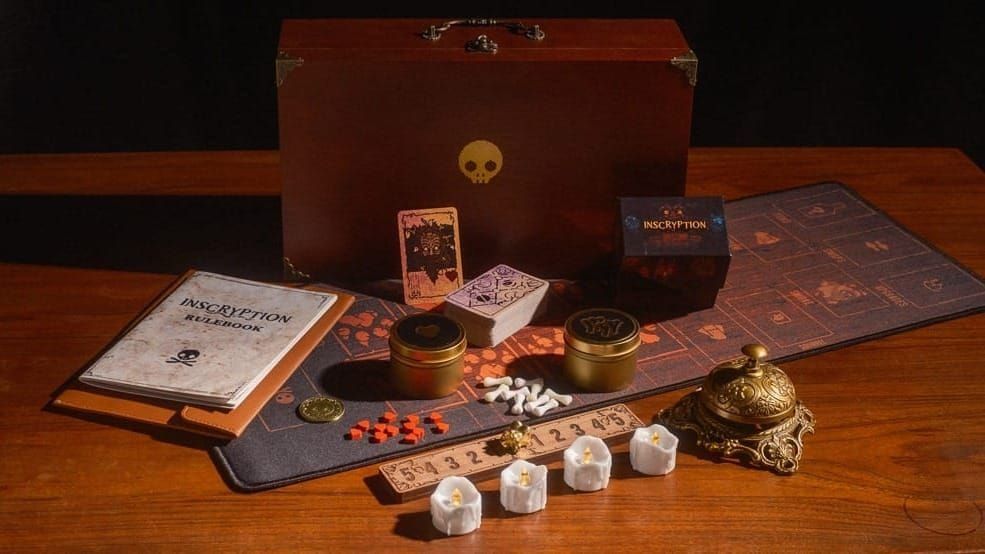
Hockridge was referring to CrypticCrafter’s board game adaptation of the Inscryption video game — to be specific, the video game’s first act. The Inscryption board game is impressively well-made and lavish, furnished with a set of instructions that were specifically designed for two players, and handcrafted pieces that replicate the aesthetics of the first act (light spoilers: subsequent acts have a very different veneer altogether). This includes at least 200 cards, a wooden scale, and even a brass bell. These are all housed in a custom, weathered wooden chest. According to Hockridge, every part of the game is assembled by hand at his studio, from the stickers pasted on individual tins to the miniature pieces that he and his wife manually weigh and pack. “This is quite a labor intensive process,” he said. “I can't really get an accurate estimate for how long it takes because we do so many things, but it's a long process. It's probably about one to two months of getting the initial components, and then two months of solid making [the game] full time, and then one to two months of shipping out to everybody.”
CrypticCrafter’s resplendent recreation of Inscryption is only the most recent addition to an ongoing phenomenon. Since the release of the digital deckbuilding game five years ago, a community of fans has been replicating big chunks of it in real life, from printing the cards and totems used in the eponymous roguelike deckbuilder, to crafting the masks worn by its sinister game master, Leshy. One creator even forced players to sacrifice their cards by feeding them to an altar — essentially a paper shredder hidden in a box. Unlike many of these recreations, Hockridge wanted to create a version that’s “playable by two people, and as fair and balanced as possible”. This feat wasn’t as straightforward as playing the version of Inscryption portrayed in the video game. “It's designed asymmetrically where Leshy has the advantage, and you almost have to break the game to win,” Hockridge explained. “That doesn't work in a two player game.” Maintaining this sense of outwitting a more advantaged player, but still keeping the game playable and fair for everyone, proved a significant hurdle.
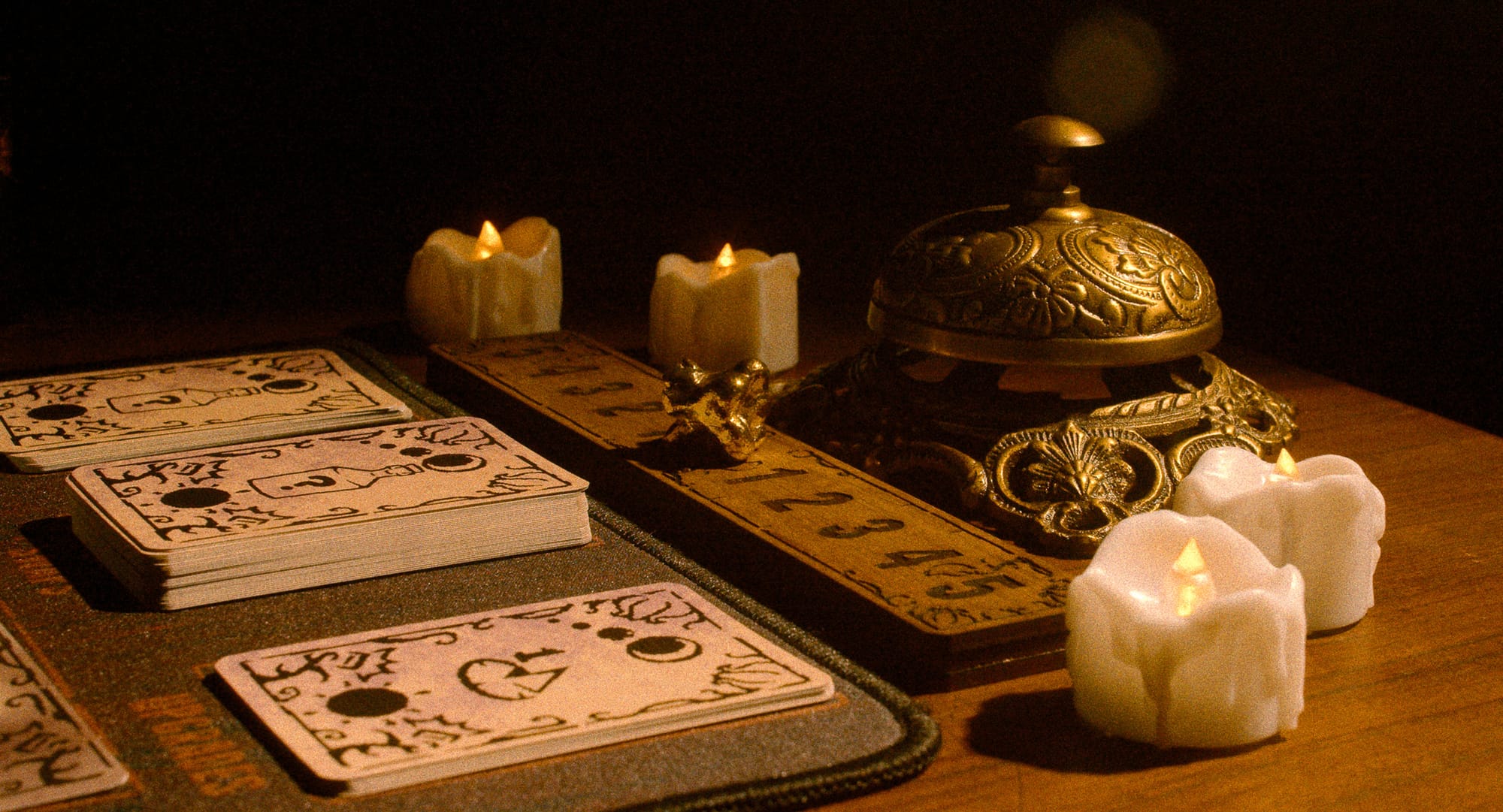
At the same time, many rules don’t translate well from the video game to an analog one, even with Inscryption’s deckbuilder skeleton. The cards’ attack and health points are variable, and can change depending on the Sigils — an effect that imbues the card with unique properties — printed on them, as well as through certain in-game events. Even the Sigils themselves can render certain strategies unfeasible in real life, such as the “fecundity” Sigil, which lets players infinitely create copies of a card. CrypticCrafter tackled these challenges through several modifications to the board game. For instance, both players choose their preferred creature cards at the beginning instead of building their decks incrementally over the course of the game.
Other significant changes to the game include limiting first-turn aggression to just three damage, and the removal of overkill damage — a feature that, in the video game, allows you to damage Leshy’s cards that will be played in his next turn. These are to prevent the other player from losing even before the turn begins. Events are not part of the playthrough, so there are no campfires, boss battles, or any other encounters. Certain cards are also omitted for being too strong and difficult to adapt into a fair two-player game, such as the Great White, Mothman, Grizzly, Ouroboros, and Starvation. These are reasonable adjustments to make. After all, the events will include too many variables to be tweaked in real life, and the sheer power of some cards can render the play too unfair; the Great White is essentially impervious to attacks with the Waterborne Sigil, which allows the creature to avoid damage, especially with the removal of overkill damage. As such, the board game focuses on distilling Inscryption to just the card game in act one.
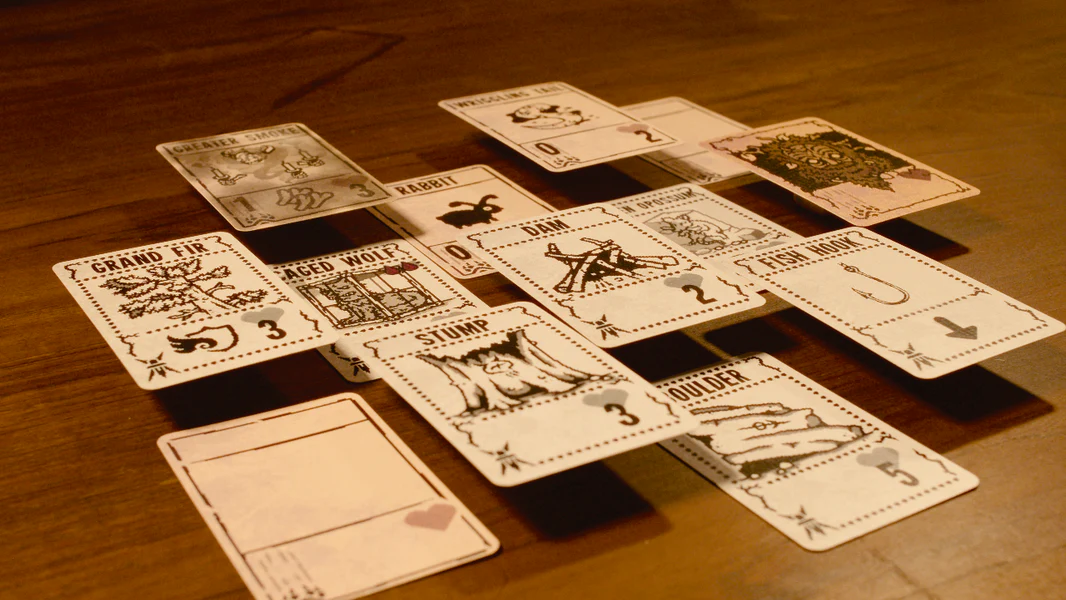
Hockridge shared that he didn’t design this adaptation from scratch, but instead worked off a version of a free rulebook by Redditor huligan37. Subsequently, the process involved tweaking the rules, lots of playtesting with various groups of players, and readjusting the game until the instructions clicked. This led Hockridge to realize that the board game should be played across three rounds. When a player loses their first round, they are also awarded a powerful card called the Greater Smoke, and will start the next round to even the playing field. “It's sometimes quite easy to just have a powerful card and win really quickly. By turning the game into three rounds and giving the losing player an advantage, it becomes a bit of a back and forth,” he said. These, along with the prior tweaks, effectively make the game fair for the two players.