


Forbidden Solitaire's true horror lies in the grind of game development
Forbidden Solitaire mixes a classic cult mystery with the perilous process of game development

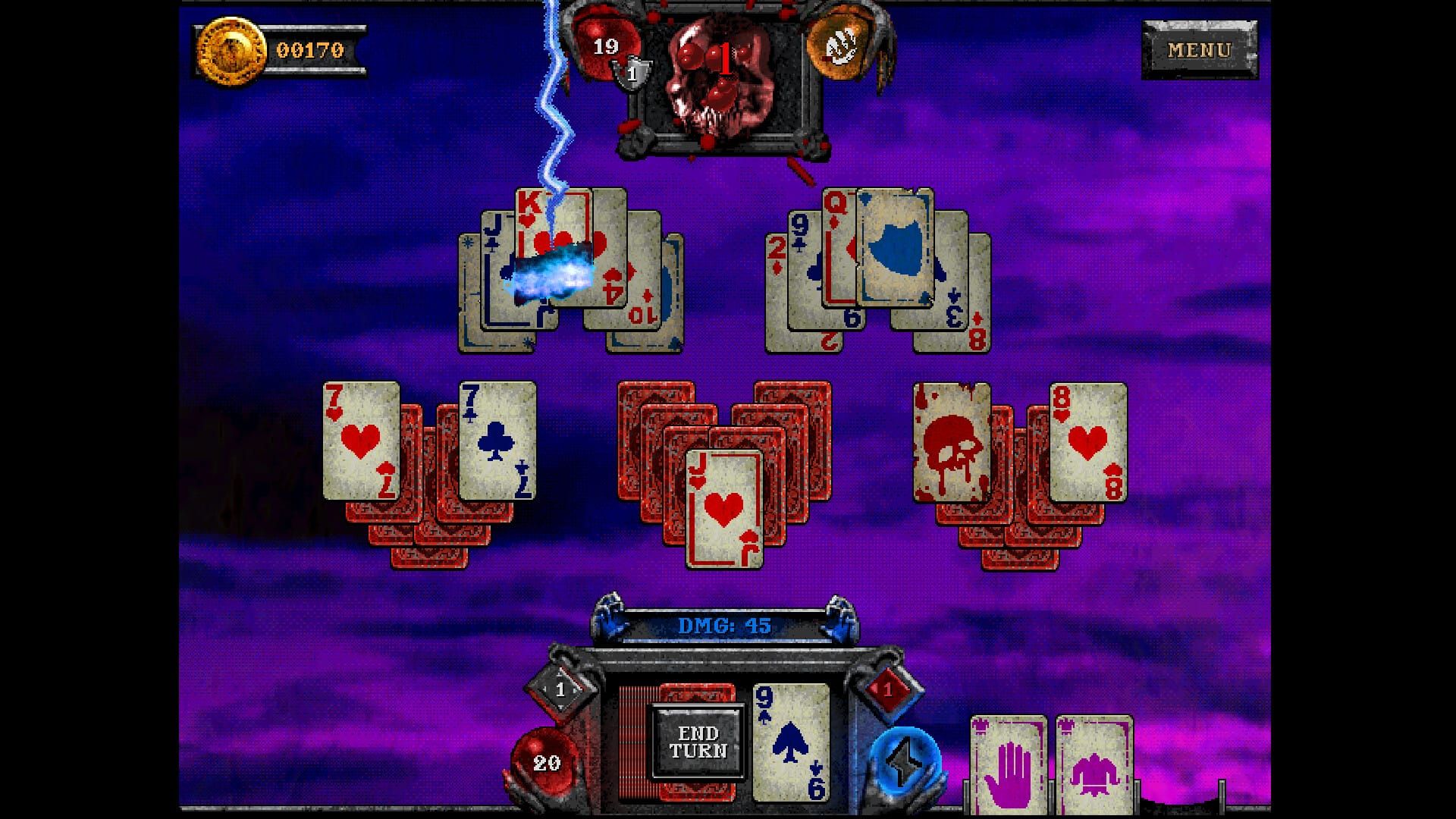
Forbidden Solitaire has a story that unfolds on two fronts. You play as Will, an unassuming gamer who just picked up an obscure game from the 90s that disappeared off store shelves after a heated controversy from concerned mothers. Your sister, a cheerful girl with an interest in gaming history, is jazzed to hear that you're digging into such a rare gem. As you delve deeper into a terrifying tomb, playing an arcade-y twist on Solitaire, Will's sister Emily uncovers more about the game's alarming reputation and disturbed development history.
I enjoyed Forbidden Solitaire when I first played the demo because it has some framings I very much enjoy. The game within a game, played within a fake 90s-era OS, is extremely charming. I was all in on the mystery behind Heartsteel Studios and their doomed release, and Solitaire makes for a surprisingly solid basis for dungeon crawler gameplay. I earn coins from each match, and an ominous shopkeep — represented by a rolling eye seen through a crack in a brick wall — sells powerful gems and Jokers that allow me to manipulate the board. There are rounds with maggot-ridden cards, a powerful sentry on watch, or poison damage that accumulates when picking up toxic cards.
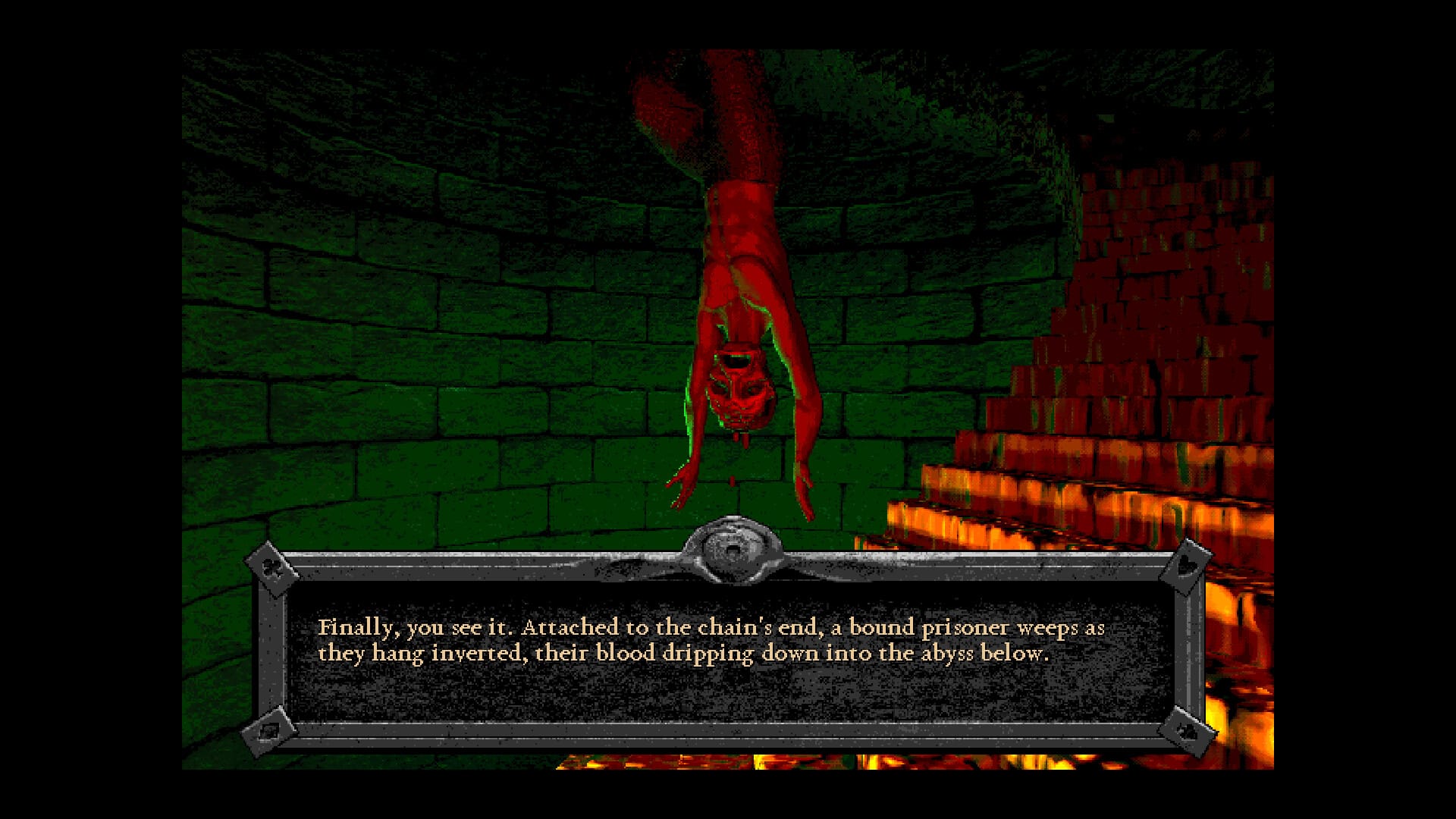
Much like Balatro did a great job at turning poker hands into a roguelike, Forbidden Solitaire keeps the core of a classic game and builds some fun and engaging progression mechanics atop it. Every match concludes with a little more exposition as the hapless protagonist of the game delves deeper into the dungeon, only to find some other cryptkeeper shit lurking around the corner. Someone has clearly put a lot of work into translating 90s-era 3D graphics into ghouls and ghastly visages hunting the protagonist through their journey, and this very much feels like the sort of game you might find gathering dust in a second hand shop. Forbidden Solitaire, the game within the game, is a lot of fun.
What worried me was the narrative outside of the game. As you play, your sister continues to ping with updates via instant messenger. It doesn't take her long for her sleuthing skills to uncover a hidden cult, a mysterious ritual, and a conspiracy behind Forbidden Solitaire. Cults are an easy narrative element to rely on because they don't need to be logical or make sense. You can simply put a lot of weird, creepy stuff in the story and handwave any questions with ‘Ooh, its a cult, they're all craaazy!’
I don't care for this because it feels like a cop out; when used poorly, cults simply paper over holes in the narrative, with creators using shorthands like creepy runes and blood rituals to skip building atmosphere. So, imagine my surprise when I realized that the Forbidden Solitaire cult was a secondary villain. They certainly didn't improve matters, but the real antagonist at the heart of this narrative is game development.